

Launching MoonPay Enterprise: Stablecoin APIs for developers → Learn More

MoonPay
  • Individuals
  • Business
  • Language
  • Get Started
Buy
Buy cryptoUse a card, Apple Pay or Google Pay to buy crypto fast. We also accept bank transfers and wires.
Buy BitcoinBTC
Buy EthereumETH
Buy PolygonPOL
Buy SolanaSOL
Buy DogecoinDOGE
Buy CardanoADA
Buy AvalancheAVAX
Sell
Sell cryptoTurn your crypto into cash. In a flash. Get paid straight to your bank account or Visa card.
Sell BitcoinBTC
Sell EthereumETH
Sell USDCUSDC
Sell SolanaSOL
Sell CardanoADA
Sell DogecoinDOGE
Sell AvalancheAVAX
Trade
Trade cryptoTrade between tokens, even if they’re on different chains (we make bridging seamless too).
Trade EthereumETH
Trade USDCUSDC
Trade AaveAAVE
Trade ChainlinkLINK
Trade Wrapped BitcoinWBTC
Trade DaiDAI
Trade CompoundCOMP
Company
NewsroomNewsroomMediaMediaCareersCareersChangelogChangelogMoonPay DiscoverMoonPay DiscoverNew
Crypto Prices
Bitcoin PriceEthereum PriceSolana PriceDogecoin PriceCardano PriceXRP PriceBNB PriceAll Crypto Prices
Learn
What is Blockchain?What is Blockchain?What are NFTs?What are NFTs?What is Bitcoin mining?What is Bitcoin mining?What is DeFi?What is DeFi?What is crypto staking?What is crypto staking?All Learn Articles
Support
DocumentationDocumentationHelp CenterHelp CenterContact UsContact UsStatusStatus
  • Language
  • All rights reserved. MoonPay USA LLC is a registered money service business (NMLS ID: 2071245). For Law Enforcement requests please direct your official document to our compliance team here.

    English
    • Personal
    • Buy Crypto
    • Sell Crypto
    • Trade Crypto
    • Learn about Crypto
    • Crypto Price
    • MoonAgentsNew!
    • Business
    • Ramps
    • Virtual AccountsNew!
    • MoonPay Discover
    • MoonPay Commerce
    • MoonPay InstitutionalNew!
    • Company
    • About Us
    • CareersWe're hiring
    • Newsroom
    • Media
    • Changelog
    • Support
    • API Docs
    • Help Center
    • Contact Us
    • Status
    • Security
    • Buy
    • Buy Bitcoin
    • Buy Ethereum
    • Buy Solana
    • Buy Cardano
    • Sell
    • Sell Bitcoin
    • Sell Ethereum
    • Sell XRP
    • Sell Solana
    • Trade
    • Trade Ethereum
    • Trade SOL
    • Trade Aave
    • Trade Chainlink
    • Crypto Prices
    • Bitcoin Price
    • Ethereum Price
    • Dogecoin Price
    • XRP Price
    • Cardano Price
    • Learn
    • What is Blockchain?
    • What are NFTs?
    • What is Bitcoin mining?
    • What is DeFi?
    • What is crypto staking?
    • Legal
    • Licenses
    • Privacy Policy
    • Cookie Policy
    • Terms of Use
    English

    All rights reserved. MoonPay USA LLC is a registered money service business (NMLS ID: 2071245). For Law Enforcement requests please direct your official document to our compliance team here.

    Back to all articles


    Hot vs cold wallets: What’s the difference?

    Crypto wallets are the linchpins of Web3. Not only do they allow users to store, send, and receive crypto assets, they also act as a sort of digital identity.

    Mrig P

    By Mrig P

    Published on Dec 9, 2023

    Last modified on Apr 22, 2025
    basicscryptocurrencyguide
    Hot wallets vs cold wallets banner image
    1. 1.What is a crypto wallet?
    2. 2.What is a hot wallet?
    3. 3.What is a cold wallet?
    4. 4.Hot vs cold wallets
    5. 5.Should you use a hot wallet or cold wallet?
    6. 6.Frequently asked questions about hot and cold wallets
    7. 7.Begin your crypto journey with MoonPay

    Crypto wallets are the linchpins of Web3. Not only do they allow users to store, send, and receive crypto assets, they also act as a sort of digital identity.

    Primarily, there are two types of crypto wallets: custodial and non-custodial. But wallets can be broken down further into hot wallets and cold wallets. 

    But what are they and how are they different?

    This article explores what hot wallets and cold wallets are and outlines their differences so you can choose a suitable wallet for your needs.

    What is a crypto wallet?

    A crypto wallet is a medium to store public and/or private keys so you can transact on the blockchain. Crypto wallets come in many forms, such as an application, a hardware device, a browser extension, or simply a piece of paper. 

    With non-custodial wallets, the user is responsible for storing their private keys, while custodial wallets delegate private key responsibility to the centralized exchange or third party that hosts the wallet. 

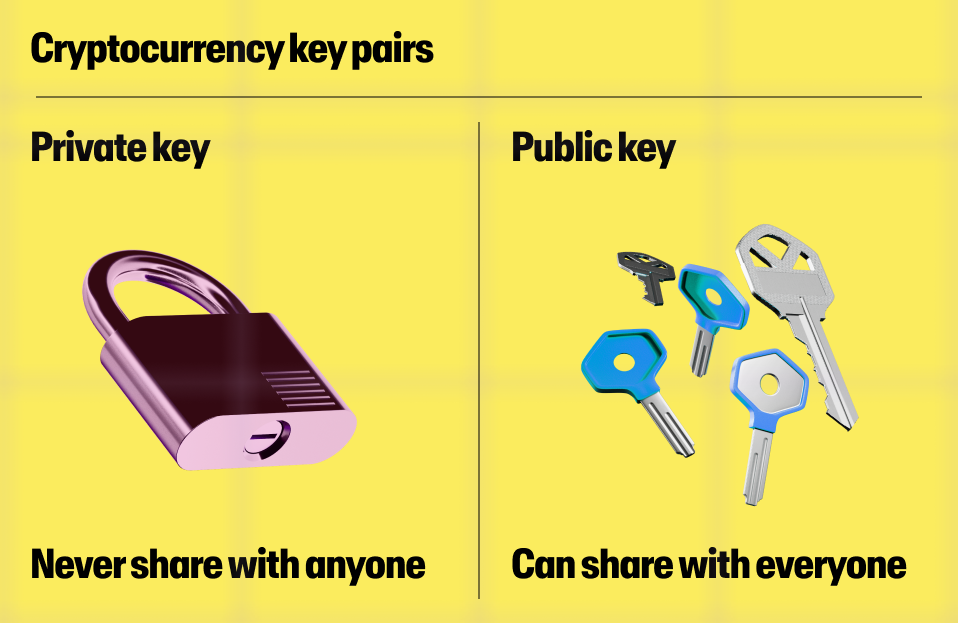
    Key Pairs

    What are private and public keys?

    The public key of a crypto wallet generates a public wallet address that a user can share to receive funds, similar to a bank account number. A private key is akin to internet banking login details, and no one except the owner should have access to it.

    It’s important to note that no crypto wallet directly stores digital assets. Instead, they only act as the means to accessing the assets associated with their private-public key pair.

    What is a hot wallet?

    A hot wallet is a software-based crypto wallet that stores private and public keys in internet-connected devices. They’re easy to set up and convenient to access, making them a popular choice among crypto users. 

    Since hot wallets are connected to the internet, however, they are vulnerable to online threats.

    Common types of hot wallets include web wallets, mobile wallets, and desktop wallets. Let’s take a closer look at them:

    Web wallets

    Web wallets (or online wallets) are hot wallets that run on cloud servers or browsers. Depending on where they’re hosted, these wallets can be custodial or non-custodial.

    If the wallet runs on your browser as an extension, it likely stores your private key on your browser’s data store and is non-custodial, meaning you have control over your crypto assets and private keys.

    But if the wallet is cloud-based and stores your private keys on servers, it’s custodial, which means the wallet service providers have access to your crypto assets and private keys. Most crypto exchange wallets, like the ones from centralized exchanges like Coinbase and Kraken, are cloud-based custodial wallets.

    Examples of web-based non-custodial wallets include MetaMask, Coinbase Wallet, Trust Wallet, and WalletDirect. 

    Note: All the wallets mentioned above are available as mobile applications.

    Mobile wallets

    Non-custodial mobile wallets are mobile applications that store your private keys on the device on which they’re installed. 

    Custodial mobile wallets like Coinbase however do not store your private keys on your device, as the custodian maintains control of all private keys). 

    Mobile wallets perform all the functions of a regular crypto wallet and allow you to send, store, and trade crypto assets from your smartphone or tablet. 

    Examples of non-custodial mobile wallets include Exodus, Trust Wallet, Phantom, and ZenGo.

    Desktop wallets 

    Non-custodial desktop wallets are software applications that run on a desktop or laptop and store your private keys securely on a computer hard drive.

    Unlike web or mobile wallets, which are almost always online, they connect to the internet only when necessary. (Custodial wallets are accessed via a mobile application or web browser.)

    Examples of desktop wallets include Electrum, Exodus, and Atomic Wallet.

    What is a cold wallet?

    A cold wallet is a crypto wallet that stores your private keys on a physical medium like a piece of paper or a hardware device. They are safer than hot wallets since they store keys offline and are therefore secured against online threats.

    Let’s take a look at the two common types of cold wallets: hardware wallets and paper wallets.

    Hardware wallets

    Hardware wallets are portable plug-in devices that store the seed phrase, private key, and public key of your crypto assets offline. They’re more secure against hacks because the private keys are isolated offline.

    Examples of hardware wallets include Trezor, Ledger, and NGRAVE.

    Paper wallets

    A paper wallet is a piece of paper that has a public key to receive cryptocurrencies and a private key to transfer cryptocurrencies stored in the address. 

    You can generate a paper wallet using a wallet generator like BitAddress or Mycelium Entropy.

    To enable ease of use, these wallets also often have the QR code for the public key. A user can then simply scan the QR code instead of typing the public key to make a payment to the wallet.

    Hot vs cold wallets

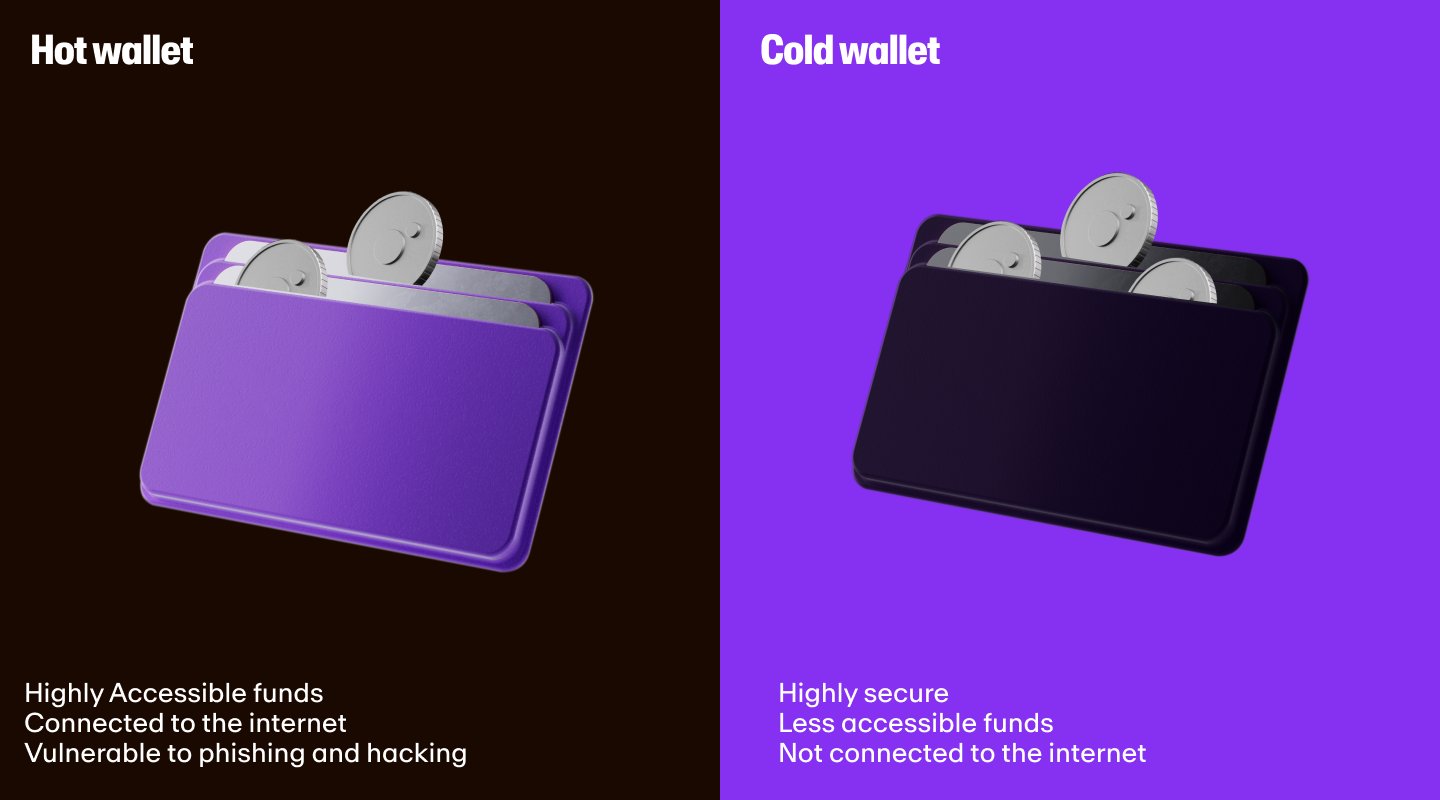
    Hot wallet vs cold wallet

    Both hot wallets and cold wallets have their pros and cons. Many crypto users therefore opt to use a combination of both for different use cases.

    Let’s compare both types of wallets so you can decide how to choose one for yourself.

    Price

    Hot wallets are usually free, with some even paying interest on stored crypto. Cold hardware wallets, on the other hand, may cost between $50 and $300 (or more) per device.

    Security

    Since hot wallets are connected to the internet, it may be easier for hackers to tamper with them or access them remotely. 

    Cold wallets are more secure because they are not ordinarily connected to the internet, but there’s still a possibility that scammers may trick you into signing a transaction to transfer funds through a phishing attack.

    Convenience

    Hot wallets are generally more convenient as they are built for flexibility and usage across online applications. 

    Cold wallets prioritize security over flexibility, and are thus more suited for securing your assets in the long-term by keeping your keys offline.

    Recovery options

    The only way to recover access to a non-custodial hot wallet or cold wallet is through its seed phrase. 

    Custodial hot wallets like those from crypto exchanges may have more options for recovering your seed phrase, such as using a Forgot Password functionality or requesting a one-time password (OTP) to your registered mobile number.

    Supported coins

    With most hot wallets, you can connect to any number of supported chains and store a wide range of fungible and non-fungible assets. 

    Cold wallets, on the other hand, may come with a storage limitation, allowing you to only install applications for a limited number of chains.

    Should you use a hot wallet or cold wallet?

    There’s no right or wrong answer as to whether someone should use a hot wallet or cold wallet as each type of wallet serves its specific purpose. The benefit of hot wallets is accessibility and convenience while the advantage for cold wallets is greater security. 

    One popular path is to use both hot and cold wallets together to serve different needs. You can secure a majority of your assets in a cold wallet while keeping a certain amount in a hot wallet for quick use and to interact with dApps.

    Feature

    Hot wallets

    Cold wallets

    Private keys

    Store private keys online

    Store private keys offline

    Security

    More vulnerable to hacks and malware attacks

    Lower chance of hacks and malware attacks

    Convenience

    Convenient to use and give easy access to dApps and other Web3 platforms

    Less convenient compared to online platforms

    Types

    Web-based wallets, centralized exchange wallets, mobile wallets, browser extensions (can be custodial or non-custodial)

    Paper wallets, hardware wallets, spare hard drives, or computers (non-custodial only)

    Suitability

    Suitable for storing funds used online for active trading and staking

    Suitable for storing bulk crypto investments over a long period of time that may not require frequent access

    Frequently asked questions about hot and cold wallets

    Are hot wallets safe?

    Since hot wallets are connected to the internet, they are more susceptible to hackers who may target users and their devices to steal funds. While you can take the necessary Web3 security precautions, there are always risks when using a Web3 application like a hot wallet.

    Are cold wallets safe?

    Cold wallets store your private keys offline, which helps to shield them against cyber threats. In addition to general security risks when using any crypto application, there is the added risk with cold wallets of losing them altogether. Fortunately, even if you lose the device itself, you may still be able to recover your funds if you have the seed phrase.

    Are cold wallets better than hot wallets?

    Both hot wallets and cold wallets have different unique selling points. What cold wallets lack in terms of convenience they make up for in terms of security. And what hot wallets lack in terms of security they make up for with better convenience. It all depends on the user’s needs.

    Begin your crypto journey with MoonPay

    Once you get set up with your preferred wallet, it’s time to buy crypto. 

    To get started, simply buy Bitcoin or your preferred crypto using your credit card or any other payment method.

    You might also like

    guide+2
    embedded wallets end of seed phrases

    Embedded Wallets and The End of Seed Phrases

    For most of crypto's history, the price of admission was a ritual: write down 12 words, in order, on something that can't catch fire or get wet, and guard them for the rest of your life. Get it right and you're your own bank. Get it wrong o

    cryptocurrency+2
    Accepting Crypto Payments

    How to Accept Crypto Payments: Checkout, Settlement & Merchant Setup

    A customer just bought a $100 hoodie from your online store and paid in crypto. Quick question: where is that $100 right now?

    cryptocurrency+2
    chain abstraction explained

    Chain Abstraction Is the Next Step After Bridges and Network Switching

    Somewhere in your wallet right now there is probably money you can't easily spend. Not lost, not stolen. Just on the wrong network. USDC on Arbitrum when the app you want takes USDC on Base. ETH on mainnet when the game you're playing lives

    bitcoin+2
    crypto in prediction markets

    How Prediction Markets Work (and Where Crypto Fits In)

    A prediction market is a place where people put money on what happens next. Will the Fed cut rates in September? Will Bitcoin close the year above $150,000? Each question becomes a contract you can buy and sell, and the price of that contra

    cryptocurrency+2
    What is an MPC wallet? Benefits, Tradeoffs & Use Cases

    What is an MPC wallet? Benefits, Tradeoffs & Use Cases

    An MPC wallet is a crypto wallet that never stores your private key in one piece. The key is split into encrypted shares held in different places, and signing a transaction combines those shares without ever rebuilding the whole key. That d

    security+2
    Wallet as a Service (WaaS)

    What Builders Need to Know About Wallet as a Service (WaaS)

    You want to add a crypto wallet to your product. You start researching and hit three terms that all overlap: white-label wallets, embedded wallets, and wallet as a service. Marketing pages from infrastructure providers blur the lines. Most