





What Are Tokenized Stocks? What You Actually Own When You Buy Apple on a Blockchain
Tokenized stocks track real shares on a blockchain, but the token is rarely the share. How the four structures differ on dividends, voting, bankruptcy, and redemption, and who can buy them in 2026.

By Team MoonPay
Published on Sep 23, 2026
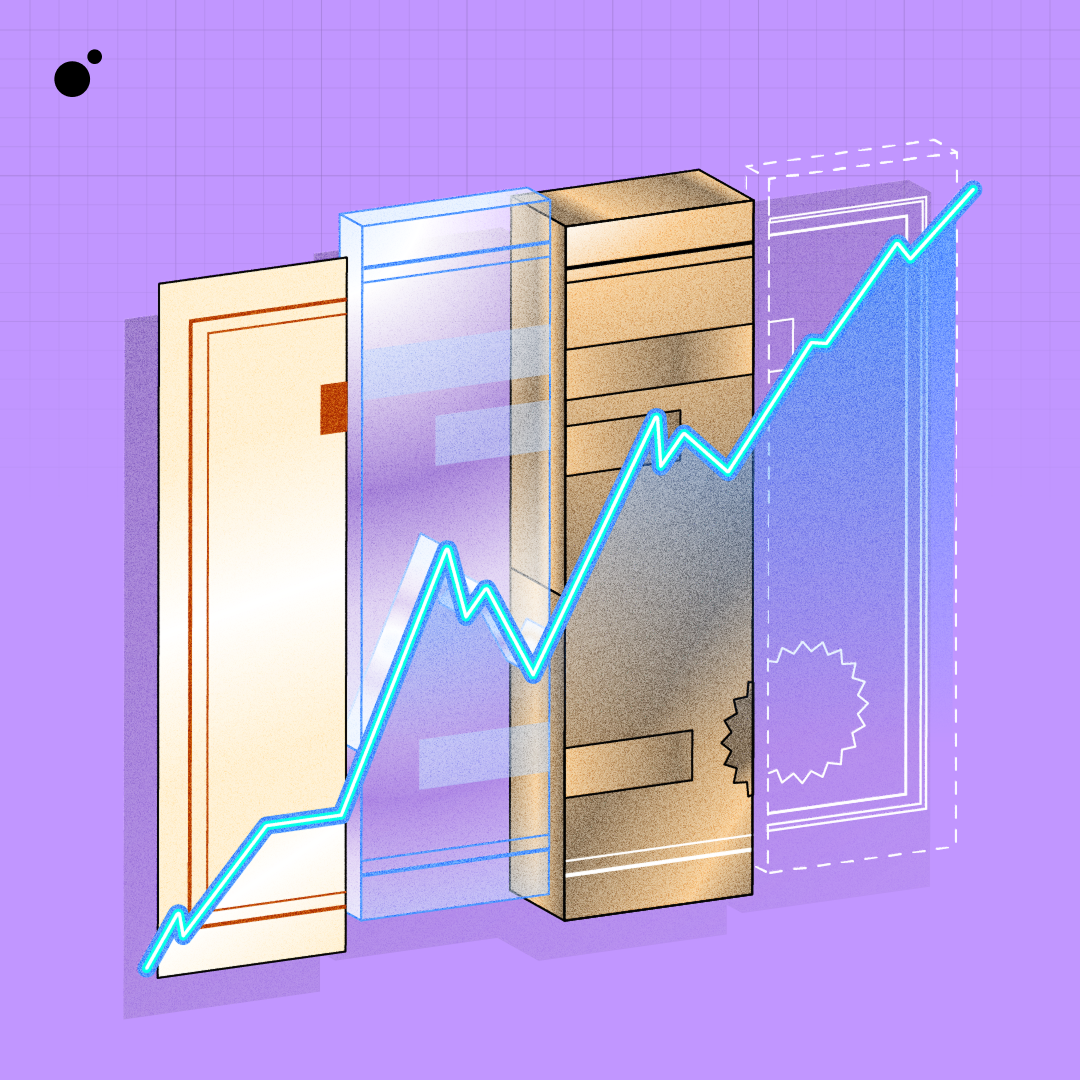
You can now buy a token called AAPL on a blockchain, hold it in your own wallet, and trade it at 3am on a Sunday. What you can't do is assume it's an Apple share. Depending on who issued it, that token might be a claim on a real share held in custody, a certificate that tracks the share, or a debt note from an offshore company that promises to pay you whatever the share is worth. Same ticker, same chart, three different things.
This article explains how tokenized stocks work, what the main product structures actually give you, who can buy them in 2026, how they compare with a brokerage account and an ETF, and where the risks sit.
In short: A tokenized stock is a blockchain token whose price is designed to track a real share. The token is always a security, but it is rarely the share itself. Some issuers hold the share for you one-for-one; others sell you a note that owes you the share's value. The differences show up in dividends, voting, bankruptcy, and whether you can ever redeem the token for the real thing. Read the issuer's terms before you read the price.
What tokenized stocks are
A tokenized stock is a token, usually a standard ERC-20 or Solana SPL token, that represents exposure to a publicly traded share. The issuer holds something in the real world, a share or a contract tied to one, and mints tokens against it. Because the token lives on a blockchain, it can be held in a self-custody wallet, sent to another person, traded around the clock, and used inside DeFi apps like any other token.
The pitch is simple: stock market exposure with crypto's hours, settlement speed, and portability. The catch is that "exposure" is doing a lot of work in that sentence. A token that tracks Apple's price is not the same as an Apple share on the books of Apple's transfer agent, and the gap between the two is where every important question lives.
How they work
Most tokenized stocks run on a mint-and-custody loop. The issuer, or a broker it works with, buys the real share on a traditional exchange and places it with a regulated custodian. It then mints one token per share (or per fraction of a share) and sells the token to you. When you sell the token back, the issuer burns it and can sell the underlying share. An oracle feeds the share's market price to the blockchain so the token trades close to it, and arbitrage traders keep the two aligned.
A second model skips the share entirely. The issuer sells you a debt security or a derivative whose value is contractually tied to the share price. It may hedge that obligation by holding shares, but you have no claim on them. Your counterparty is the issuer, and your protection is the issuer's balance sheet and the terms of the note.
Trading hours are the most visible difference from a brokerage. Some products trade 24 hours a day, five days a week, matching when the issuer can hedge; others run 24/7 with the token price floating on weekends until the market reopens. Settlement is on-chain and near-instant, compared with the one-day settlement cycle in US equities.
What you actually own
This is the section to read twice. The four structures below look identical in a price chart and behave very differently when something goes wrong.
A share held for you
In the cleanest version, the token is a digital record of a real share held in your name or for your benefit by a regulated intermediary. The issuers using this model are registered where they operate, typically as a transfer agent and broker-dealer in the US, and the shares are segregated from the issuer's own assets. You get the economic rights of a shareholder, dividends included, and in an issuer failure the shares are returned to holders rather than pooled with creditors. Voting rights vary by product and are often not passed through. In the US this model has so far been offered mainly to accredited investors, with registered retail versions announced but arriving slowly.
A backed certificate
The most widely traded tokenized stocks outside the US are tracker certificates issued under a European securities prospectus and backed one-for-one by shares held with a custodian. You hold a security that gives you the economic value of the share, including dividend adjustments, and that the issuer commits to keeping fully collateralized. You do not hold the share and you don't vote. Redemption for cash, and in some cases for the underlying share, runs through the issuer under the prospectus terms. These certificates are distributed through several exchanges and DeFi venues, mostly on Solana and other fast chains, and they account for most of the category's trading volume.
A debt note
Some products are tokenized debt securities: the issuer, often an offshore entity of a larger brokerage group, sells you a note whose value tracks the share. Their own documentation describes them as giving economic exposure to the underlying shares with no legal or beneficial rights in them. You own a promise from the issuer to pay you the share's value. If the issuer hedges well and stays solvent, the token behaves like the share. If it doesn't, you are an unsecured creditor. Products built this way serve users in more than 100 countries and bar US persons.
A synthetic
Older and DeFi-native products track a stock price with no shares behind them at all, using collateral in crypto and a price feed. Some earlier retail products in Europe were structured as derivatives and drew questions from national regulators about their legal standing. Synthetics carry the issuer or protocol's risk plus the collateral's risk, and they can lose their peg in a fast market.
The practical test for any product: ask who holds the share, whether it is segregated from the issuer's assets, whether you receive dividends, and what happens if the issuer stops operating. If the answers are hard to find, that tells you something too.
What the market looks like in 2026
The market went from a curiosity to a crowded field in about a year.
Backed certificates from a European issuer, launched in mid-2025 and traded across several chains and venues, have passed $25 billion in cumulative volume. A large US brokerage launched tokenized stocks for European users in June 2025 and moved them onto its own Ethereum Layer 2 in July 2026, with more than 190 names available in more than 120 countries. A US-registered transfer agent serves accredited investors under securities rules. A major US exchange has announced one-for-one backed US tokenized stocks with dividends paid on-chain. A large offshore exchange launched its own product in mid-2026. And the traditional exchanges are arriving: the parent company of the New York Stock Exchange formed a joint venture with a crypto exchange in June 2026 aimed at the same market.
Each of these operates under a different license, in a different set of countries, with a different answer to the ownership question above. Treat the brand as a starting point, not a guarantee that two products with the same ticker are the same thing.
Can you buy them in the US?
Mostly not yet, and the reasons are structural rather than temporary.
A tokenized stock is a security under US law regardless of the wrapper, which means it has to be offered through registered channels. The SEC's January 2026 guidance made that explicit and flagged debt-based wrapper structures, the kind that give exposure without ownership, for heightened scrutiny. The result is that the retail products from offshore and European issuers bar US persons, and the US-accessible route today is either an accredited-investor product or the registered products that US exchanges are bringing to market under US rules.
Outside the US, availability depends on the issuer's license. The largest products serve more than 100 countries under European brokerage and issuer licenses. Identity verification applies everywhere, and a token being on-chain does not exempt it from the rules of the country you live in.
Tokenized stocks vs regular stocks vs ETFs
The comparison people want is "tokenized Apple versus Apple in my brokerage account." Here it is by what matters.
On ownership, a brokerage share is yours (held in street name, but with full shareholder rights and SIPC-type protection in the US). An ETF gives you a share of a fund that owns the stocks. A tokenized stock gives you whatever the issuer's structure says, from a segregated share down to an unsecured note.
On hours and settlement, tokenized stocks win outright: around-the-clock trading and instant on-chain settlement, versus market hours and next-day settlement at a broker.
On dividends and voting, brokerage shares deliver both; ETFs pass dividends through and vote on your behalf; tokenized stocks usually pass through dividends in some form and almost never pass through votes.
On cost, brokerage trading is often commission-free in the US; ETFs carry a small expense ratio; tokenized stocks carry issuer spreads, on-chain fees, and sometimes redemption fees, which are less visible but not zero.
On what you can do with it, a tokenized stock can sit in your own wallet, move between platforms, and be used as collateral in DeFi. A brokerage share cannot. That portability is the actual reason the product exists.
On protection, brokerage accounts in the US sit inside a mature investor-protection regime. Tokenized stocks sit inside whatever regime their issuer chose, which may be strong, thin, or somewhere in between.
The risks
Issuer risk sits at the top. With a debt note or a synthetic, you depend entirely on the issuer. Even with a backed product, you depend on the custodian, the auditor, and the redemption process working as described.
Peg risk is next. A token is supposed to track the share, but on weekends, in a market shock, or when liquidity on a given chain thins out, it can trade well above or below the reference price. That gap is your cost or your loss, depending on which side you're on.
Regulatory risk cuts both ways. A product available to you today may be geofenced tomorrow, and a product barred today may be registered next year. Rules are still being written in most jurisdictions.
Then there's the ordinary crypto risk. Once the token is in your wallet, sending it to the wrong network or the wrong address loses it, and no transfer agent can reverse that. Smart contract bugs, chain outages, and bridge failures all apply.
One more, specific to this market: tokens named after private companies. In 2025 one brokerage handed European users free tokens labeled with the names of two well-known private companies, and one of those companies publicly stated that the tokens were not its equity and that it had no partnership with the issuer. A token can carry any name. What backs it is the only thing that counts.
Where stablecoins come in
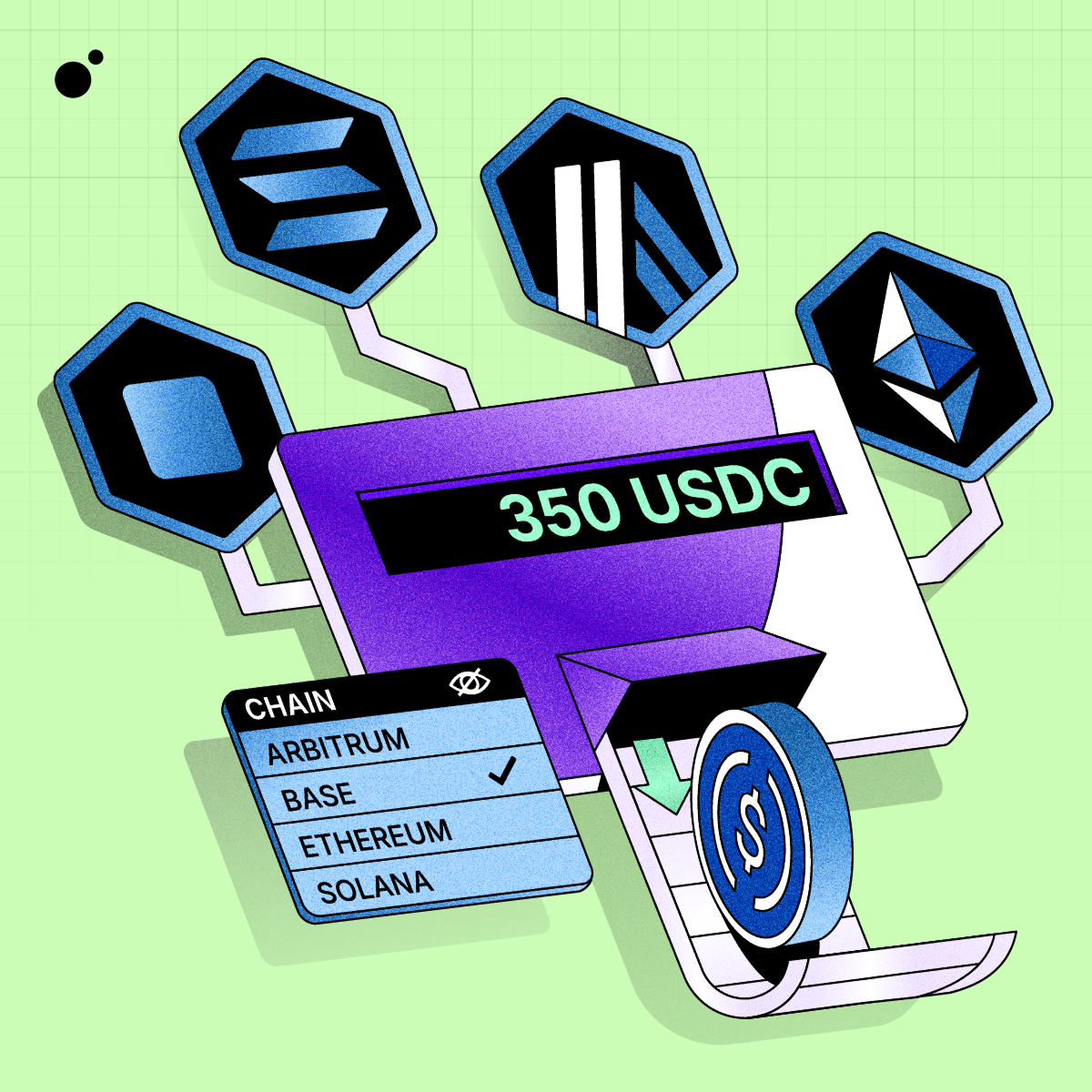
Tokenized stocks are priced and settled in stablecoins, mostly USDC and USDT, because the buyer and the issuer both need a dollar that lives on the same chain as the token. Dividends, when they're paid on-chain, arrive as stablecoins. Redemptions pay out in stablecoins. That makes the stablecoin the on-ramp to the whole category: to buy a tokenized stock you first need dollars on the right network, which is a more specific requirement than it sounds. USDC on Solana can't buy a token on an Ethereum Layer 2, and a bridge is one more step that can go wrong.
That dependency also explains the composability pitch. A tokenized stock and a stablecoin on the same chain can be paired in a liquidity pool, posted as collateral, or wrapped into a structured product, which is what composability in DeFi means in practice. Whether that's a feature or a risk depends on who's doing it.
Frequently asked questions
Are tokenized stocks legal in the US? They are legal to issue and sell through registered channels. Most current retail products are not registered in the US and therefore exclude US persons. Accredited-investor products and newly registered offerings are the exceptions, and the SEC has said tokenized securities are securities regardless of the technology.
Do tokenized stocks pay dividends? Usually in some form. Backed products pass dividends through as cash, stablecoins, or additional tokens; debt-note products adjust the token's value or pay an equivalent. Check the specific issuer's terms, because the mechanics and the tax treatment differ.
Do you get voting rights? Almost never. Even one-for-one backed products generally keep voting with the custodian or issuer.
What happens if the issuer goes bankrupt? It depends on the structure. Segregated, one-for-one backed products are designed so the shares are not the issuer's assets and can be returned to holders. Debt notes and synthetics make you a creditor. This single question is the best reason to read the prospectus.
Can I convert a tokenized stock into a real share? Sometimes. Some backed issuers allow redemption for the underlying share by eligible holders; most retail products redeem for cash or stablecoins only. Debt notes never convert, because there is no share to convert.
Start with the stablecoin, on the right chain
Every tokenized stock purchase starts with a stablecoin on the network the platform uses. Get that wrong and the first thing you learn about tokenized stocks is how bridges work.
MoonPay lets you buy USDC or USDT directly on the network you need, paid with a card, bank transfer, Apple Pay, or Google Pay, and sent to a wallet you control. From there, the platform, the issuer, and the terms are your decision. Make sure you know which of the four structures above you're buying before you look at the chart.
A token can be named after any company. What it owes you is written somewhere else. Read that first.