

Launching MoonPay Enterprise: Stablecoin APIs for developers → Learn More

MoonPay
  • Individuals
  • Business
  • Language
  • Get Started
Buy
Buy cryptoUse a card, Apple Pay or Google Pay to buy crypto fast. We also accept bank transfers and wires.
Buy BitcoinBTC
Buy EthereumETH
Buy PolygonPOL
Buy SolanaSOL
Buy DogecoinDOGE
Buy CardanoADA
Buy AvalancheAVAX
Sell
Sell cryptoTurn your crypto into cash. In a flash. Get paid straight to your bank account or Visa card.
Sell BitcoinBTC
Sell EthereumETH
Sell USDCUSDC
Sell SolanaSOL
Sell CardanoADA
Sell DogecoinDOGE
Sell AvalancheAVAX
Trade
Trade cryptoTrade between tokens, even if they’re on different chains (we make bridging seamless too).
Trade EthereumETH
Trade USDCUSDC
Trade AaveAAVE
Trade ChainlinkLINK
Trade Wrapped BitcoinWBTC
Trade DaiDAI
Trade CompoundCOMP
Company
NewsroomNewsroomMediaMediaCareersCareersChangelogChangelogMoonPay DiscoverMoonPay DiscoverNew
Crypto Prices
Bitcoin PriceEthereum PriceSolana PriceDogecoin PriceCardano PriceXRP PriceBNB PriceAll Crypto Prices
Learn
What is Blockchain?What is Blockchain?What are NFTs?What are NFTs?What is Bitcoin mining?What is Bitcoin mining?What is DeFi?What is DeFi?What is crypto staking?What is crypto staking?All Learn Articles
Support
DocumentationDocumentationHelp CenterHelp CenterContact UsContact UsStatusStatus
  • Language
  • All rights reserved. MoonPay USA LLC is a registered money service business (NMLS ID: 2071245). For Law Enforcement requests please direct your official document to our compliance team here.

    English
    • Personal
    • Buy Crypto
    • Sell Crypto
    • Trade Crypto
    • Learn about Crypto
    • Crypto Price
    • MoonAgentsNew!
    • Business
    • Ramps
    • Virtual AccountsNew!
    • MoonPay Discover
    • MoonPay Commerce
    • MoonPay InstitutionalNew!
    • Company
    • About Us
    • CareersWe're hiring
    • Newsroom
    • Media
    • Changelog
    • Support
    • API Docs
    • Help Center
    • Contact Us
    • Status
    • Security
    • Buy
    • Buy Bitcoin
    • Buy Ethereum
    • Buy Solana
    • Buy Cardano
    • Sell
    • Sell Bitcoin
    • Sell Ethereum
    • Sell XRP
    • Sell Solana
    • Trade
    • Trade Ethereum
    • Trade SOL
    • Trade Aave
    • Trade Chainlink
    • Crypto Prices
    • Bitcoin Price
    • Ethereum Price
    • Dogecoin Price
    • XRP Price
    • Cardano Price
    • Learn
    • What is Blockchain?
    • What are NFTs?
    • What is Bitcoin mining?
    • What is DeFi?
    • What is crypto staking?
    • Legal
    • Licenses
    • Privacy Policy
    • Cookie Policy
    • Terms of Use
    English

    All rights reserved. MoonPay USA LLC is a registered money service business (NMLS ID: 2071245). For Law Enforcement requests please direct your official document to our compliance team here.

    Back to all articles


    What Is Liquid Staking? How It Works and Benefits

    If you’ve ever dabbled with Proof-of-Stake (PoS) cryptocurrencies like Solana and Ethereum, chances are you've encountered crypto staking. In the traditional staking setup, you lock up your tokens with a validator to help secure the network

    Corey Barchat

    By Corey Barchat

    Published on Aug 26, 2025

    Last modified on Oct 23, 2025
    cryptocurrencyguidedefi
    What is Liquid Staking?
    1. 1.What is Liquid Staking?
    2. 2.How Does Liquid Staking Work?
    3. 3.Liquid Staking vs. Traditional Staking
    4. 4.Benefits of Liquid Staking
    5. 5.Risks of Liquid Staking
    6. 6.Popular Liquid Staking Protocols
    7. 7.How to Get Started with Liquid Staking

    If you’ve ever dabbled with Proof-of-Stake (PoS) cryptocurrencies like Solana and Ethereum, chances are you've encountered crypto staking. In the traditional staking setup, you lock up your tokens with a validator to help secure the network and earn rewards.

    While regular staking can generate passive income (while also securing the blockchain network), it also means your crypto are usually tied up and unavailable for other financial activities. What many users don’t realize is that there’s now an alternative approach to staking designed to offer much greater flexibility and more ways to participate in DeFi.

    Enter liquid staking.

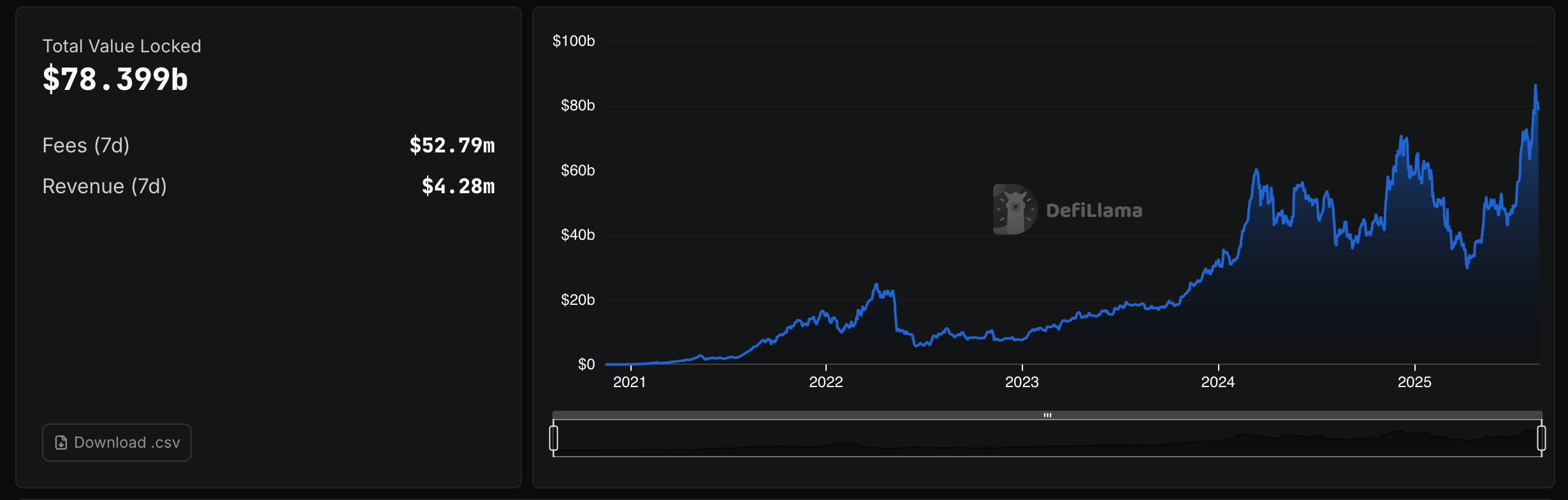
    With over $78 billion in total value locked (TVL), this advanced form of crypto staking is quickly changing the way people interact with Proof-of-Stake blockchains, providing new opportunities to earn rewards, secure the PoS network, and unlock extra value from digital assets.

    But what is liquid staking, and how does it work?

    In this guide, you’ll learn what liquid staking is, how it can open up new ways to use your crypto, what to watch out for, and practical steps to start staking today.

    What is Liquid Staking?

    Liquid staking is a type of staking that allows users to stake cryptocurrency tokens to secure a Proof-of-Stake blockchain network and earn rewards. Unlike traditional staking methods, users receive a liquid staking token (LST) that can be traded, transferred, and used in DeFi protocols.

    While the tokens are staked, they are “locked up” with a validator and are not liquid until unstaked, which can take some time depending on the protocol.

    LSTs represent the token holder's staked assets and rewards that those assets accrue. The underlying staked asset continues to earn staking rewards normally, even as the LST is used elsewhere in the DeFi ecosystem.

    A chart of liquid staking TVL from 2021-2025
    Liquid staking has taken off since 2021 — Image source

    For example, you can deposit these tokens on DeFi lending platforms like Aave or Solend to lend them out or borrow stablecoins. You can also add them to liquidity pools on Curve or Raydium to collect trading fees and yield farming rewards.*

    Many liquid staking tokens can also be traded on decentralized exchanges (DEXs), making it simple to exchange them for other assets or just manage your entire DeFi portfolio in one place.

    *These activities carry different risks than liquid staking. DeFi protocols may offer extra value, but they also increase your exposure to risks like price volatility, liquidation, and potential smart contract failures, so they are best suited for experienced users only. Nothing in this article should be construed as a recommendation or endorsement of any investment strategy.

    How Does Liquid Staking Work?

    Here is how liquid staking works:

    The underlying mechanism

    When you participate in liquid staking, you deposit your crypto assets (for example, ETH or SOL) into a liquid staking protocol (ex., Sanctum) instead of staking directly with a validator node.

    The protocol then stakes your tokens with a validator and issues you a liquid staking token that represents your staked balance and accrues staking rewards over time. The LSTs remain in your wallet and can be used throughout DeFi, even as your underlying assets remain staked.

    Examples of liquid staking tokens

    Some well-known liquid staking tokens include stETH (Lido Staked ETH), mSOL (Marinade Staked SOL JITOSOL (Jito Staked SOL), PSOL (Phantom Staked SOL), and mpSOL (MoonPay Staked SOL)

    Each token is unique and has its own features, perks, and drawbacks. Staking yields may also vary over time and from token to token. 

    While most tokens are accepted on decentralized exchanges, lending platforms, and yield farming protocols, exact usage is limited to the specific token issuer and its integrations with such decentralized applications (dApps).

    Role of smart contracts & validators

    Smart contracts are used in liquid staking protocols to automate the entire process, including staking, distributing rewards, and issuing LSTs. With smart contracts handling these operations, users generally do not need to manage manual claims or track rewards themselves.

    Validators are responsible for securing the Proof-of-Stake blockchain network and generating staking rewards. Token holders typically delegate their LSTs to pools managed by the protocol, which then distributes them across trusted validator nodes.

    Disclaimer: Do your own research and evaluate the third-party service providers (ex., smart contract issuers and validators) associated with any liquid staking token to help protect your staked assets.

    Re-staking potential

    Many ecosystems now allow for "re-staking," where your LSTs can be staked again in additional DeFi protocols for additional rewards. For example, you could stake Solana, receive mSOL in exchange, and then provide mSOL as collateral in a lending protocol, thereby earning multiple streams of yield from the same underlying asset.*

    *Using your liquid staking tokens in additional protocols (such as lending platforms) increases your exposure to smart contract vulnerabilities, price volatility, and potential liquidation risk. Always research liquid staking providers carefully and be sure you understand the risks before participating.

    Liquid Staking vs. Traditional Staking

    Liquid staking and traditional staking both help secure blockchains and pay out staking rewards, but there are some important differences to consider:

    Feature

    Liquid Staking

    Traditional Staking

    Liquidity

    Tokens remain tradable and usable in DeFi

    Tokens are locked and cannot be traded

    Flexibility

    Can move, trade, or use liquid staking tokens (LSTs)

    Assets are inaccessible until unstaking period ends

    Yield Opportunities

    Access to additional DeFi yields*

    Earn base staking rewards only

    Security and Risks

    Same risks as traditional staking, plus additional smart contract risks and price risk of the LST itself against underlying asset

    Slashing, validator reliability, and price risks

    DeFi Participation

    Can use tokens in DeFi lending, farming, or trading

    Cannot use staked tokens in DeFi

    The difference: Liquid staking provides far greater flexibility and utility for crypto assets, but also introduces added risks like smart contract risk, impermanent loss, as well as price volatility of the liquid staking tokens themselves.

    *Users should understand the tradeoffs of liquid staking protocols before staking. Always do your research before committing assets.

    Benefits of Liquid Staking

    Liquid staking enables users to achieve greater access and flexibility in DeFi. Here are some of the most compelling advantages it brings to token holders:

    Earning staking rewards without locking crypto assets

    With liquid staking, you continue to receive rewards just as you would with traditional staking services. However, in the liquid version, you are not forced to lock up your tokens, giving you greater ownership over how you deploy your assets.

    Participating in DeFi with staked assets

    LSTs allow users to access liquidity across a wide range of DeFi protocols.* You might lend your stETH on a lending platform to earn more returns, deposit mSOL into a liquidity pool for yield farming, or use these assets in other decentralized applications.

    For example, stETH can be supplied as collateral on Aave, while mSOL can be used in Solana DeFi protocols such as Raydium or Solend.

    *Liquid staking introduces additional smart contract, liquidity, and price risks. Only use reputable protocols and never invest more than you can afford to lose.

    Diversifying portfolios

    Liquid staking may make it easier to diversify your income streams, as you can use your staked assets in multiple DeFi activities. This flexibility lets users build more creative and potentially more profitable strategies, all while participating in network security.

    Risks of Liquid Staking

    No decentralized finance product comes without risks. Here are some to be aware of when considering liquid staking:

    Smart contract risks

    Because liquid staking relies on complex smart contracts, any bugs or vulnerabilities could lead to lost funds or unexpected behavior. Always assess the reputation of the protocol and whether it has undergone external smart contract audits.

    Price volatility of liquid staking tokens

    LSTs are designed to track the value of the underlying asset, but during periods of intense market volatility or low liquidity, they can trade at a depressed price relative to the original token.

    Slashing risks & validator reliability

    Even though the liquid staking protocol manages validator delegation for you, if a validator misbehaves, it can be penalized (via slashing) and your returns may decrease.

    Regulatory uncertainty

    The rules and regulations around liquid staking and DeFi are still evolving in many countries. Changes in the regulatory landscape could potentially impact access to these services or the value and liquidity of the tokens involved.

    Popular Liquid Staking Protocols

    With liquid staking becoming increasingly mainstream, several popular protocols have emerged on various blockchains.

    Lido

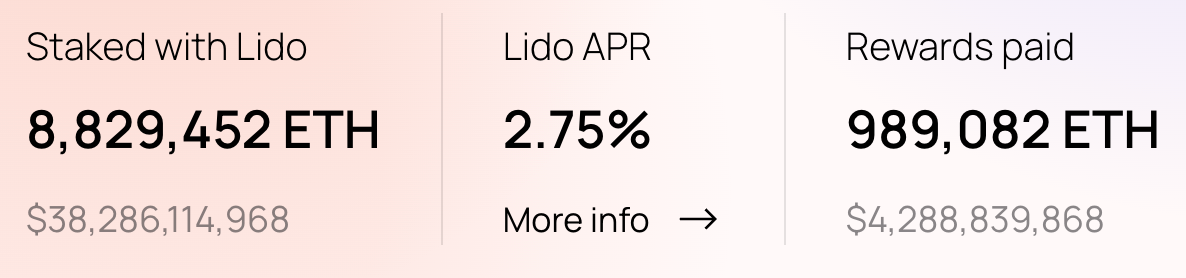
    Lido is the leading liquid staking protocol by TVL, issuing liquid stETH via thousands of global node operators. Users can stake ETH to receive stETH, which earns rewards and can be further used in with over 100 DeFi platforms for trading, lending, and collateral.

    Lido previously supported both the Solana (stSOL) and Polygon (stMATIC) networks, though now focuses exclusively on Ethereum. The platform is non-custodial and governed by the Lido DAO.

    A screenshot of Lido staking APR and rewards
    Image source

    Lido TVL: > $38 billion

    Rocket Pool

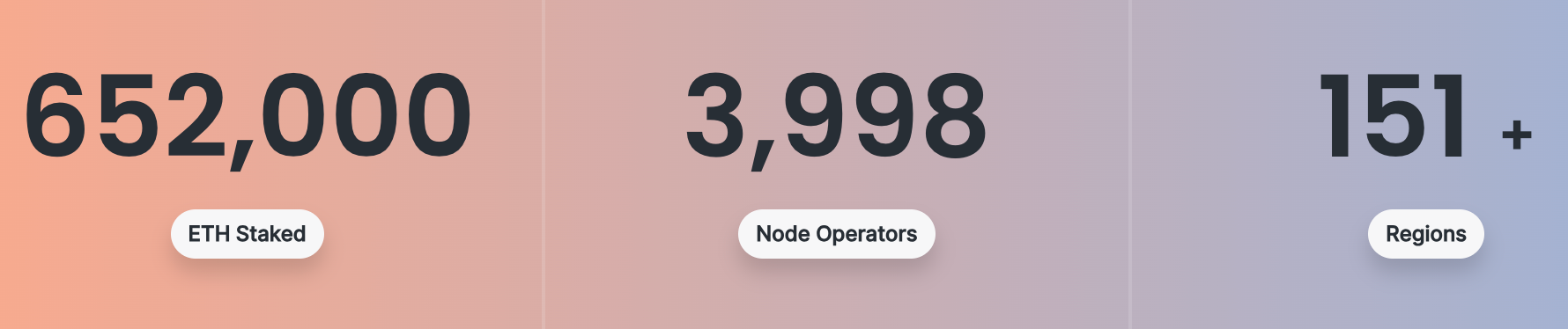
    Rocket Pool is a decentralized liquid staking protocol for Ethereum, allowing users to stake as little as 0.01 ETH and receive rETH. This token earns yield and can be traded, used in DeFi, or unstaked at any time. With thousands of node operators worldwide, Rocket Pool also offers the option to run your own validator with as little as 4 ETH.

    A screenshot of Rocket Pool staking metrics
    Image source

    Rocket Pool: > $2.8 billion

    Jito

    Jito is a Solana liquid staking protocol that gives users JitoSOL tokens in return for staking SOL. The Jito Staked SOL token automatically grows in value by accruing both staking and MEV (maximal extractable value) rewards.

    JitoSOL can be used across Solana DeFi, and when you unstake, you receive more SOL than you initially deposited (provided that JitoSOL continues to appreciate over time vs Solana).

    A flow chart of JitoSOL staking validators
    Image source

    Jito TVL: > $2.8 billion

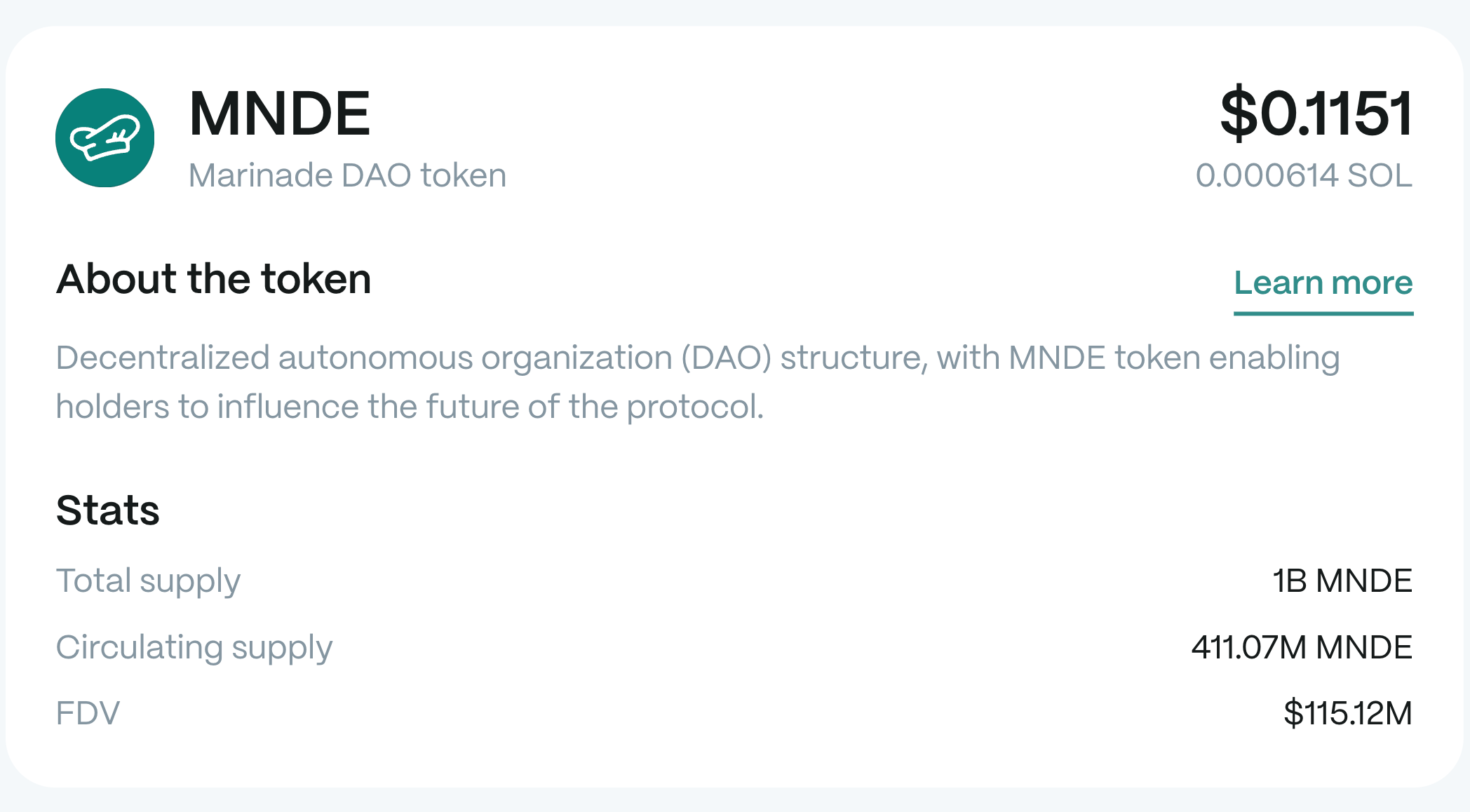
    Marinade Finance

    Marinade is a Solana-based liquid staking protocol that lets users stake SOL to receive mSOL in return. These tokens earn staking rewards and can be freely traded or integrated across the Solana DeFi ecosystem.

    Users can take advantage of mSOL on platforms like Kamino or marginFi to earn interest, or provide liquidity on exchanges such as Orca, Meteora, or Raydium to earn yield from transaction fees.

    An overview of Marinade Finance token metrics
    Image source

    Marinade TVL: > $862 million

    Ankr

    Ankr is a multi-chain liquid staking protocol supporting blockchain networks like Ethereum, Binance Smart Chain, Polygon, Avalanche, and more. Its Ankr Bridge lets users move liquid staking tokens cross-chain for greater liquidity and additional earning opportunities. Token holders can provide liquidity, earn trading fees, or use their LSTs in a variety of DeFi strategies to boost returns.

    A screenshot of Ankr liquid staking blockchains
    Image source

    Ankr TVL: > $62 million

    Disclaimer: Each protocol’s token (e.g., stETH, rETH, mSOL) may have different features, fees, and DeFi integrations, so users should compare each liquid staking provider's benefits and risks before choosing where to stake.

    How to Get Started with Liquid Staking

    Getting started with liquid staking is straightforward, especially if you've staked crypto normally before. Here’s a step-by-step overview, using Phantom wallet as the liquid staking provider of choice.

    1. Choose a staking platform

    Select a reputable platform or wallet that supports liquid staking, such as Phantom for Solana, Lido or Rocket Pool for Ethereum, or Ankr for multiple blockchains.

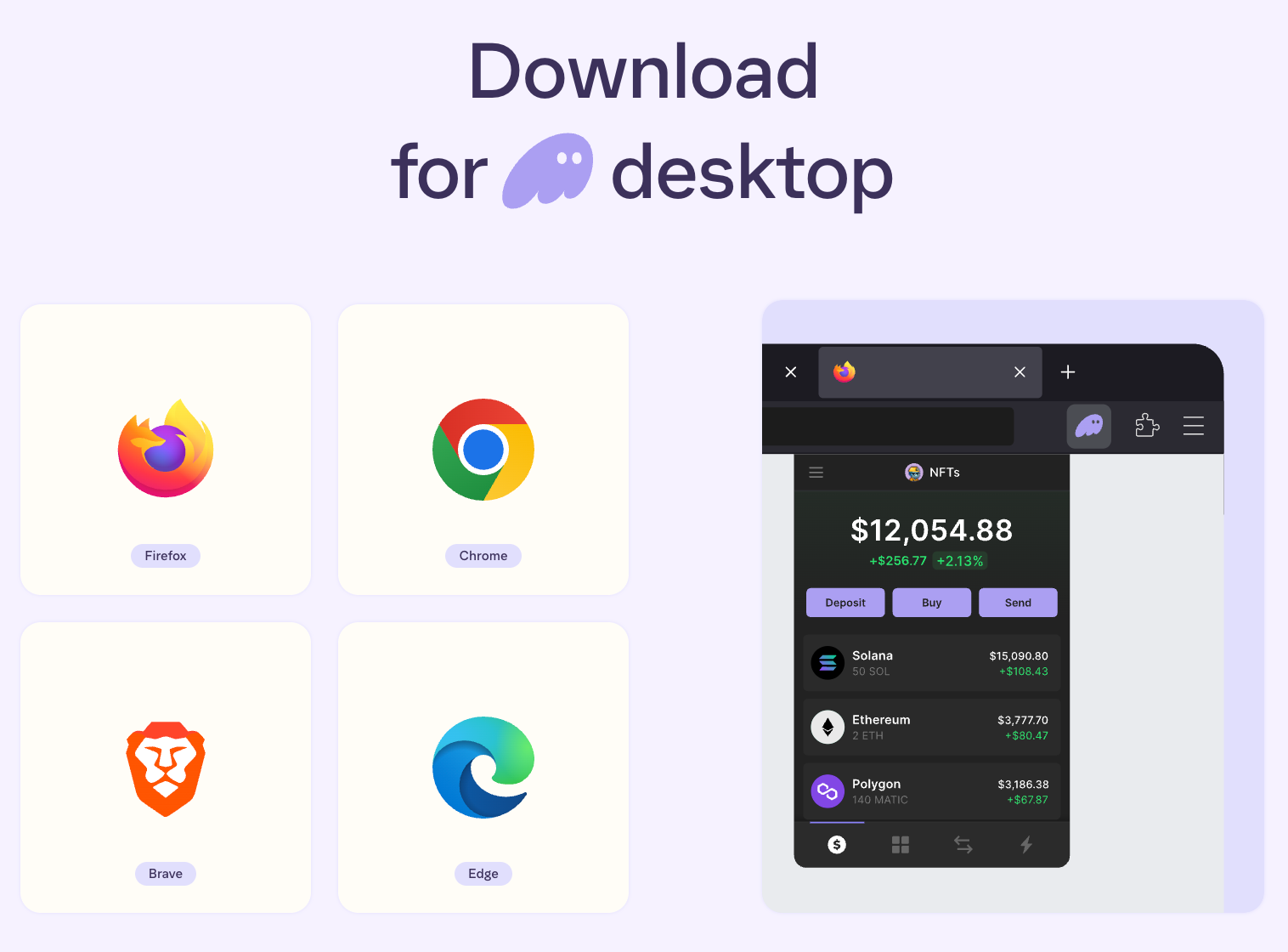
    A screenshot of Phantom download options
    Download Phantom as a browser plugin — Image source

    For the purposes of this walkthrough, simply download Phantom in the app store on your mobile device, or as a desktop plugin on browsers like Chrome, Brave, and FireFox.

    2. Add tokens to your wallet

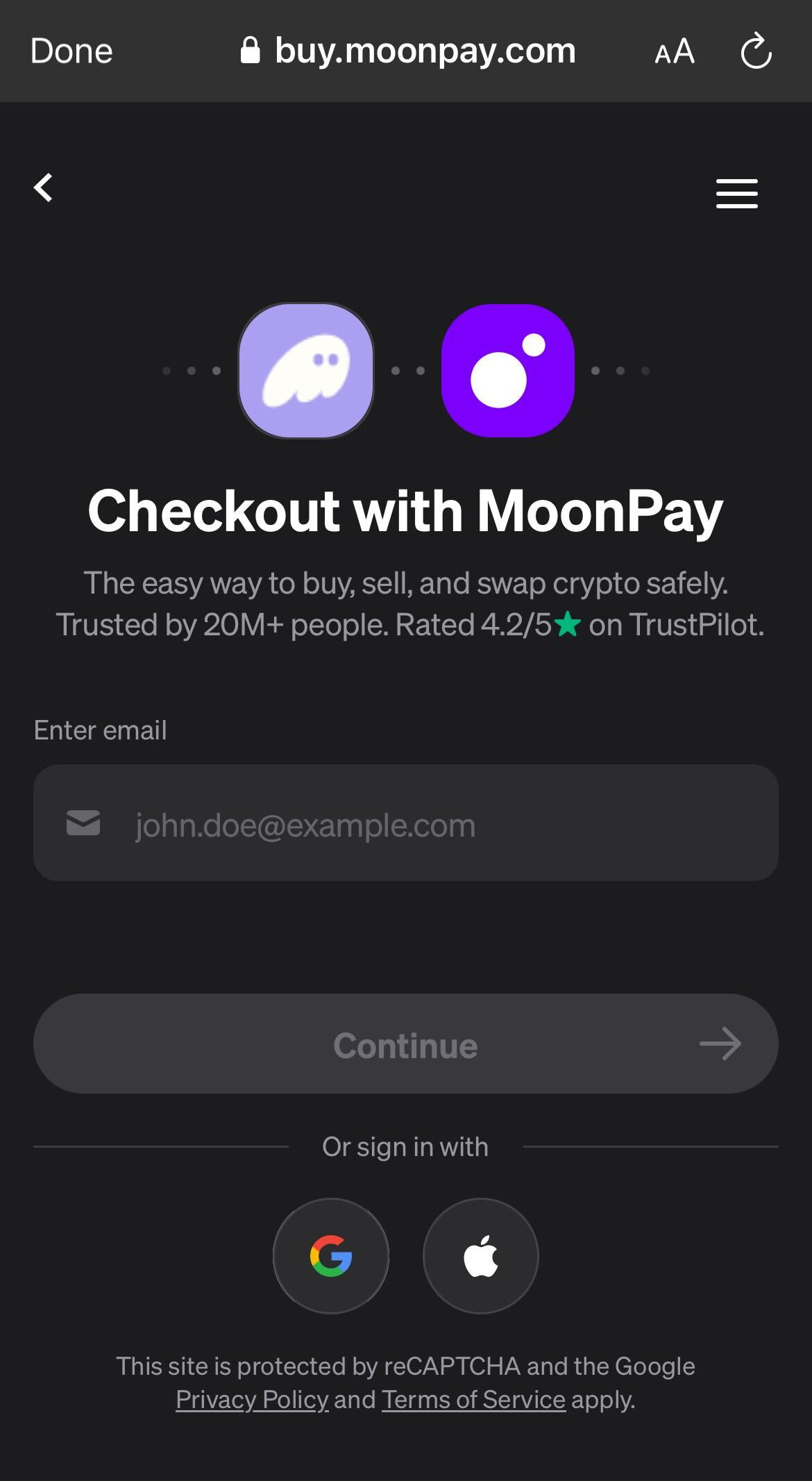
    Top up your wallet by buying crypto through an on-ramp provider like MoonPay.

    A screenshot to buy SOL via MoonPay in Phantom wallet
    Easily buy SOL in Phantom via MoonPay

    You can easily buy Solana (SOL) for staking directly in your Phantom wallet, using preferred payment methods like credit/debit cards, PayPal, Apple Pay, and more.

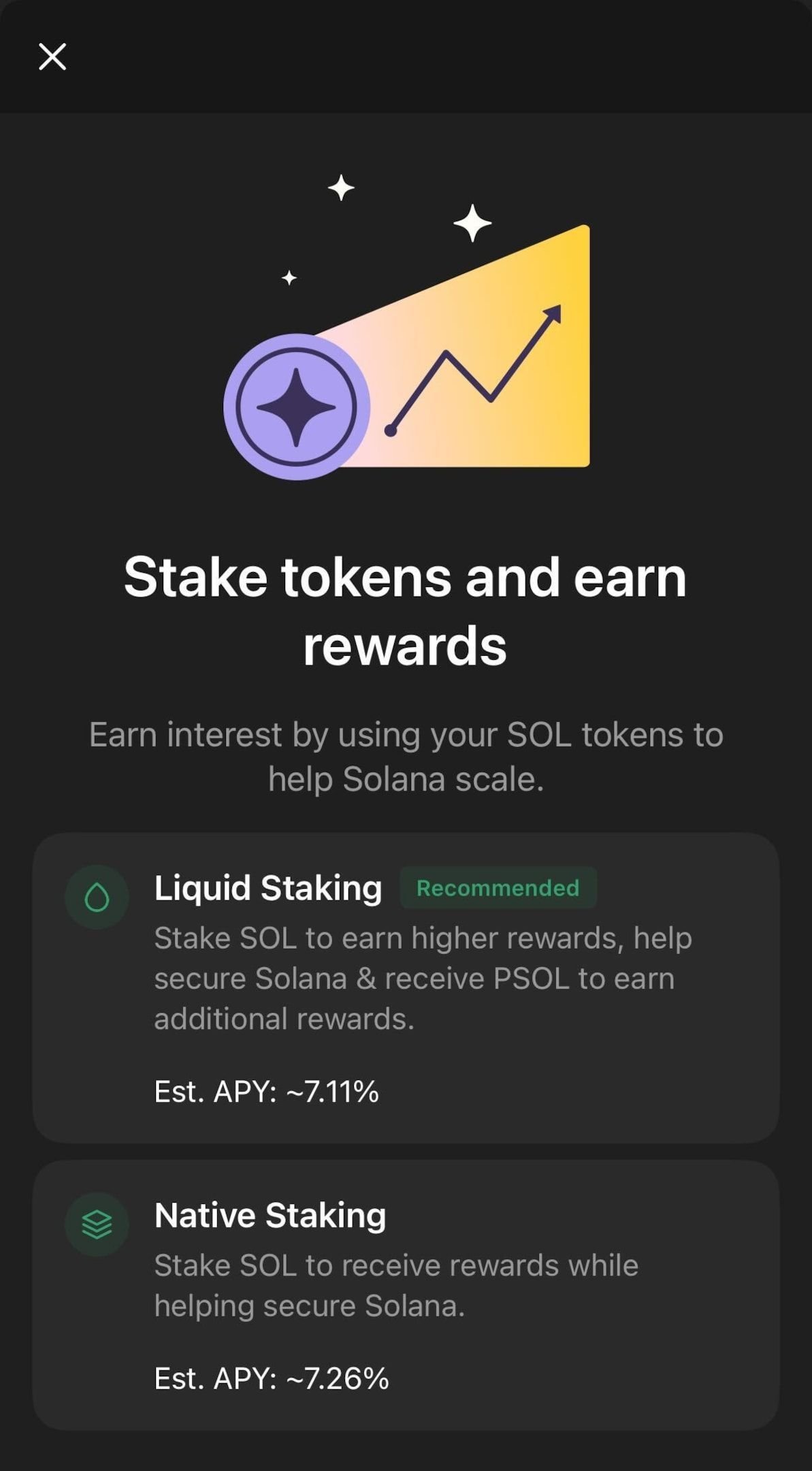
    3. Choose the liquid staking option

    Once you have Solana in your wallet, click the Stake SOL button and choose liquid staking over native staking.

    A screenshot of Phantom staking options
    Choose between liquid and native staking

    4. Stake tokens and receive liquid tokens

    If you choose the liquid option, you'll also be able to select between receiving Jito Staked SOL (JITOSOL) and Phantom Staked SOL (PSOL). For the purposes of this guide, we'll be going with PSOL.

    A screenshot in Phantom to stake SOL

    Enter the amount of Solana (SOL) you wish to stake for PSOL and click Next to review the potential APY and fees.

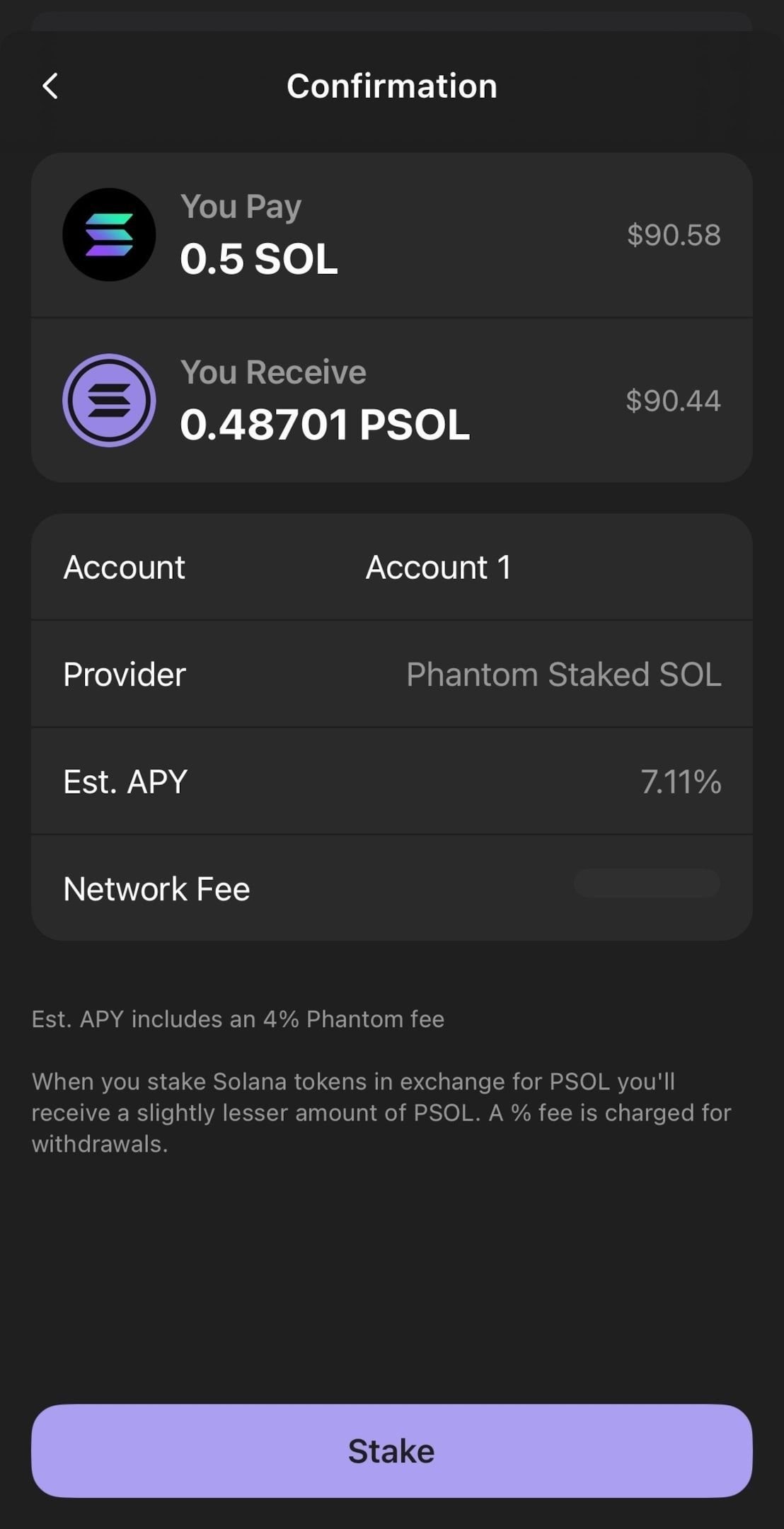
    A screenshot of Phantom staking confirmation screen
    Review APY and fees in Phantom

    5. Use your liquid tokens in DeFi

    That's it! After clicking Stake, you'll receive your Phantom Staked SOL tokens in your wallet, representing your staked position.

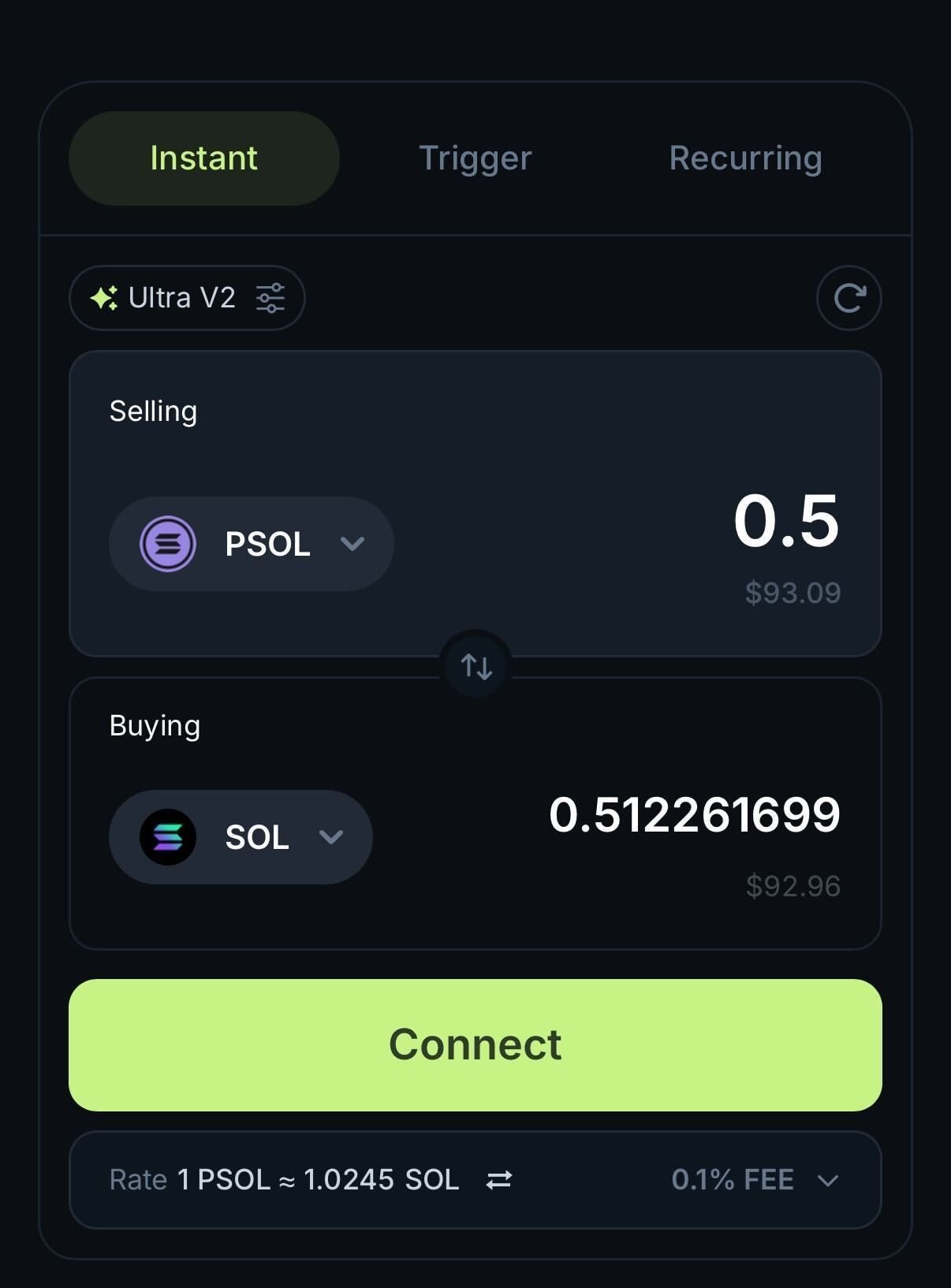
    A screenshot of swapping PSOL for SOL on Jupiter
    Use your PSOL on Jupiter directly in Phantom

    You're now free to use them as you wish to explore Solana DeFi protocols compatible with your new PSOL tokens. You can lend, farm, or trade them for other coins to earn yield and increase token flexibility, all while still collecting Solana staking rewards.

    6. Unstake tokens

    When you want to withdraw back to Solana, you can initiate an unstake transaction at any time.*

    A screenshot to unstake PSOL tokens in Phantom
    Unstake PSOL on Phantom

    You can unstake your entire position, or as little as 0.000000001 PSOL at a time (bearing in mind that there are transaction fees for each withdrawal).

    And, just like when you stake, be sure to confirm the fees before confirming and clicking the Unstake button.

    confirm unstake.jpg

    *Transaction completion time may range from a few seconds to several minutes, depending on Solana network factors such as congestion.

    Pro tip: You can check the status of your unstaking transaction on Solscan, the Solana block explorer.

    You might also like

    guide+2
    embedded wallets end of seed phrases

    Embedded Wallets and The End of Seed Phrases

    For most of crypto's history, the price of admission was a ritual: write down 12 words, in order, on something that can't catch fire or get wet, and guard them for the rest of your life. Get it right and you're your own bank. Get it wrong o

    cryptocurrency+2
    Accepting Crypto Payments

    How to Accept Crypto Payments: Checkout, Settlement & Merchant Setup

    A customer just bought a $100 hoodie from your online store and paid in crypto. Quick question: where is that $100 right now?

    cryptocurrency+2
    chain abstraction explained

    Chain Abstraction Is the Next Step After Bridges and Network Switching

    Somewhere in your wallet right now there is probably money you can't easily spend. Not lost, not stolen. Just on the wrong network. USDC on Arbitrum when the app you want takes USDC on Base. ETH on mainnet when the game you're playing lives

    bitcoin+2
    crypto in prediction markets

    How Prediction Markets Work (and Where Crypto Fits In)

    A prediction market is a place where people put money on what happens next. Will the Fed cut rates in September? Will Bitcoin close the year above $150,000? Each question becomes a contract you can buy and sell, and the price of that contra

    cryptocurrency+2
    What is an MPC wallet? Benefits, Tradeoffs & Use Cases

    What is an MPC wallet? Benefits, Tradeoffs & Use Cases

    An MPC wallet is a crypto wallet that never stores your private key in one piece. The key is split into encrypted shares held in different places, and signing a transaction combines those shares without ever rebuilding the whole key. That d

    security+2
    Wallet as a Service (WaaS)

    What Builders Need to Know About Wallet as a Service (WaaS)

    You want to add a crypto wallet to your product. You start researching and hit three terms that all overlap: white-label wallets, embedded wallets, and wallet as a service. Marketing pages from infrastructure providers blur the lines. Most