











What is blockchain interoperability? A guide to cross-chain solutions
Blockchain technology has transformed so many industries with its decentralized and secure nature. Take finance, for example. As of April, 2025, the Ethereum network alone accounts for more than $46 billion—down from $66 billion at the star

By Corey Barchat
Published on Apr 17, 2025
Last modified on Apr 17, 2025
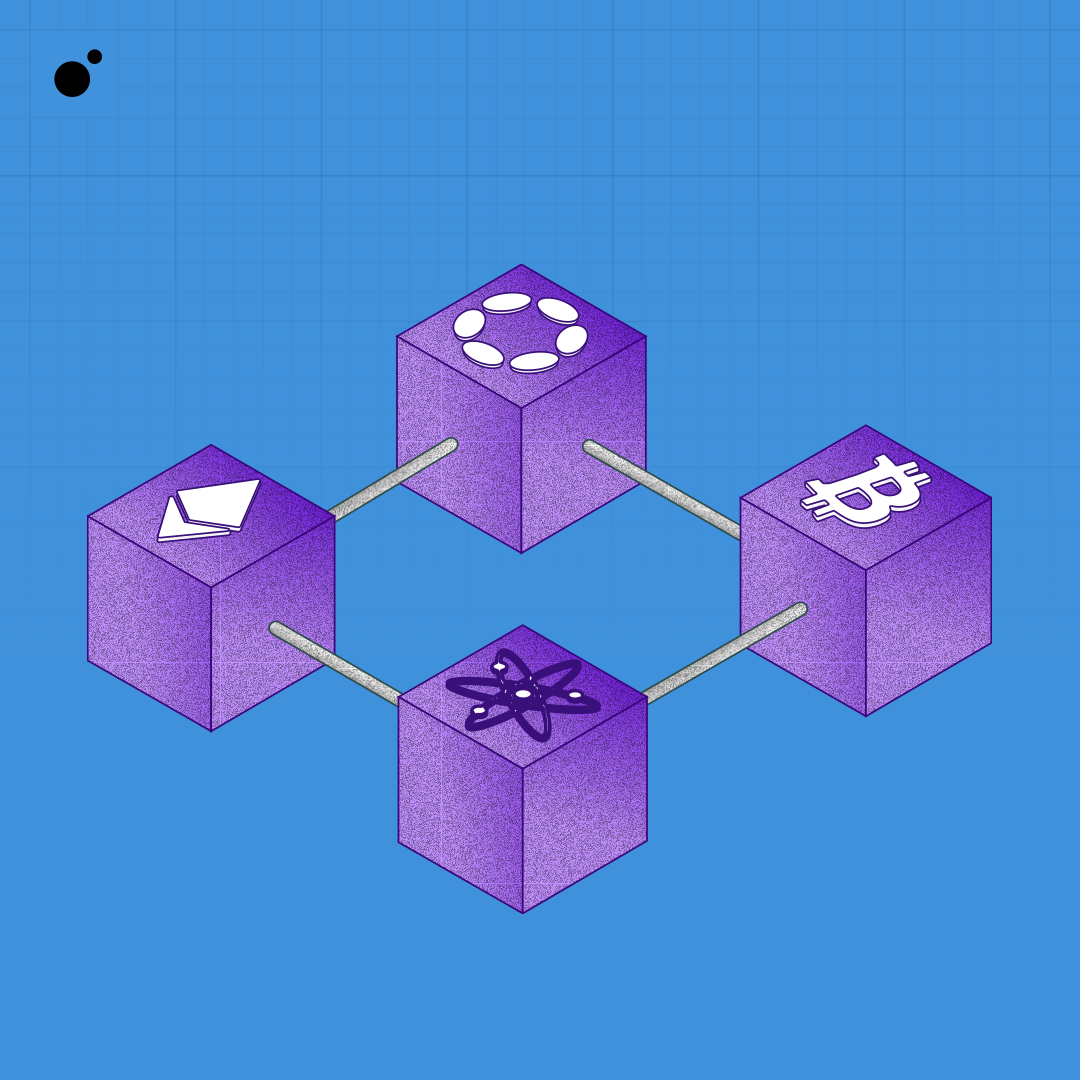
Blockchain technology has transformed so many industries with its decentralized and secure nature. Take finance, for example. As of April, 2025, the Ethereum network alone accounts for more than $46 billion—down from $66 billion at the start of the year—in total value locked (TVL)across its diverse ecosystem of decentralized applications (dApps).
At the same time, blockchain's full potential can only be realized through advancements that allow different networks to interact. Enter blockchain interoperability.
Allowing blockchains to successfully interact enhances their individual utility and functionality, enabling more versatile and robust applications. It also facilitates seamless cross-chain transactions and data exchanges, while boosting liquidity and efficiency.
And hopefully, cross-chain interoperability will have the long term potential to encourage broader adoption and integration of blockchain solutions across every industry, making the technology more accessible and practical for everyday use. But how exactly is this possible?
In this article, we will delve into the intricacies of blockchain interoperability, exploring its mechanisms, benefits, and real-world applications.
What is interoperability in blockchain?
Blockchain interoperability refers to the ability of disconnected blockchain networks to successfully communicate, interact, and exchange data and value. It addresses the issue of isolated blockchain ecosystems that operate independently without the inherent capability to share information or assets directly.
So why is it important? Well, interoperability is central to realizing the full potential of blockchain technology, as it enables more complex and useful applications to be built across various platforms.

Key terms in blockchain interoperability
- Cross-chain: Refers to the capacity of different blockchains to interact and communicate with one another, while transferring data and value across diverse blockchain networks. For example, transferring Bitcoin from its native blockchain to Ethereum requires a cross-chain mechanism, such as a cross-chain bridge.
- Multi-chain: Involves the use of multiple blockchain networks within a single ecosystem or application, leveraging the unique strengths of each blockchain. For instance, one blockchain might handle high-speed transactions, while another ensures data security and immutability.
- Interoperable blockchains: Networks designed to work together seamlessly, facilitating efficient data and value exchange across various platforms. For example, projects like Polkadot and Cosmos have built interoperability into their core architecture, enabling various decentralized networks to connect and interact within a larger blockchain ecosystem.
How does blockchain interoperability work?
Suppose you were fortunate enough to "HODL" 1 Bitcoin (BTC), and you wanted to use it in an Ethereum-based DeFi application. How would you go about it?
In a siloed ecosystem, you would likely decide to sell BTC for Ether (ETH) on a crypto exchange, though you'd incur transaction fees while losing precious value and time.
But with interoperability, you could use a wrapped token, such as Wrapped Bitcoin (WBTC), which is pegged 1:1 with BTC and operates on the Ethereum blockchain. So instead of selling and trading BTC on multiple platforms, you could just directly convert 1 BTC to 1 WBTC, and instantly use it in Ethereum's DeFi ecosystem without additional fees or delays.

Essentially, blockchain interoperability involves various technical mechanisms and interoperability protocols that enable different blockchain networks to communicate and interact seamlessly.
Here are some key components and technologies that make it possible.
1) Technical mechanisms and protocols
At the heart of blockchain interoperability are the technical mechanisms and protocols that standardize and enable communication between different blockchains. These protocols define the rules for how data and assets are transferred, validated, and recorded across distinct networks. Key items include:
Inter-Blockchain Communication (IBC) Protocols
IBC protocols allow independent blockchains to exchange data and value directly. An example is the IBC protocol used by Cosmos, which enables different blockchains within the Cosmos network to communicate securely.
Atomic swaps
These are cross-chain exchanges that enable the direct trading of cryptocurrencies between users on different blockchains without needing a trusted third party. Atomic swaps use cryptographic techniques to ensure that the cross-chain exchange either completes successfully or does not happen at all.
Hashed timelock contracts (HTLCs)
HTLCs are a type of smart contract used in atomic swaps and other cross-chain interactions. They use hash functions and time locks to ensure secure and timely completion of transactions.
2) Smart contracts and bridges
Smart contracts and blockchain bridges also play an important role in enabling blockchain interoperability:
Smart contracts
Smart contracts are self-executing contracts with the terms of the agreement directly written into code. They automate processes and facilitate transactions between different blockchains when a specific condition is met.
Blockchain bridges
Cross-chain bridges connect two or more blockchain networks, allowing them to interact and transfer assets. They can be implemented through various methods, such as pegged assets (where a token on one blockchain represents an asset on another) or cross-chain oracles that provide data and validation across blockchains.
3) Consensus and validation across chains
Achieving consensus and validation across different blockchain networks is essential for maintaining trust and security in interoperable systems. Critical components include:
Cross-chain consensus mechanisms
These mechanisms ensure that all participating blockchains agree on the validity of transactions and data exchanges. For example, Polkadot uses a relay chain to coordinate consensus among its parachains, ensuring a unified state across the network.
Validation nodes
These nodes operate on multiple blockchains, verifying and validating transactions across chains. They play a crucial role in maintaining the integrity and security of cross-chain interactions. Validators in networks like Cosmos use a shared security model to protect against fraud and ensure reliable data exchange.
4) Security and trust models
Effective security and trust models are essential for maintaining the integrity of interoperable blockchain networks. Although there are different types of models, they each attempt to ensure that data and transactions are secure, while preventing fraud and unauthorized access.
Shared security models
These models involve multiple blockchains sharing a common security infrastructure. For example, Polkadot’s relay chain provides security for all connected parachains, ensuring that a breach in one chain does not compromise the entire network.
Decentralized trust models
This model type relies on decentralized mechanisms to establish trust between different blockchains. For instance, the use of decentralized oracles and multi-signature wallets can enhance security by distributing trust among multiple parties.
Cryptographic techniques
Advanced cryptographic techniques, such as zero-knowledge proofs and secure multi-party computation, are used to ensure the confidentiality and integrity of cross-chain transactions. These techniques provide robust security, even in the absence of a centralized authority.
Types of blockchain interoperability solutions
Protocol-based solutions
Protocol-based solutions involve creating standardized and seamless communication protocols that enable different blockchain networks to interact and exchange data directly. These interoperability protocols are often built into the core architecture of the blockchains themselves, allowing for seamless interoperability.
Some notable examples include:
Polkadot (DOT)

Polkadot (DOT) is a groundbreaking protocol that facilitates the interoperability of blockchains by connecting them through a central relay chain.
Polkadot's architecture consists of:
- Relay chain: The central hub that connects various blockchains, known as parachains, ensuring secure data and asset transfers between them.
- Parachains: Independent blockchains that run in parallel to the relay chain, leveraging its security and consensus mechanisms while maintaining their own unique features and governance structures.
- Bridges: Special connections that allow Polkadot to interact with external blockchains like Bitcoin and Ethereum, further expanding its interoperability capabilities.
Polkadot's shared security model ensures that all connected chains benefit from the robust security of the relay chain, making it a powerful solution for cross-chain interoperability.
Cosmos (ATOM)

Cosmos (ATOM) aims to create an "Internet of Blockchains" that empowers isolated blockchain networks to interoperate in a decentralized manner.
Key components of Cosmos:
- Tendermint core: A consensus engine that provides a high-performance and secure consensus algorithm for blockchains.
- Cosmos SDK: A modular framework for building custom blockchains, allowing developers to create blockchains tailored to specific use cases.
- Inter-Blockchain Communication (IBC) Protocol: A standardized protocol that enables the transfer of data and assets between blockchains within the Cosmos network.
Cosmos’s IBC protocol allows for seamless communication between independent chains, helping to build a more interconnected blockchain ecosystem.
Middleware solutions
Middleware solutions act as intermediaries that facilitate communication and interoperability between different blockchain network platforms. These solutions typically do not require changes to the underlying blockchains, often making them easier to implement in existing systems.
Interledger

Interledger is a protocol designed for transferring value across different ledgers and payment systems, including blockchains.
Key features of Interledger:
- Ledger-agnostic protocol: Interledger does not rely on any specific ledger or blockchain technology, making it versatile and adaptable to various financial systems.
- Connectors: Intermediaries that facilitate transactions between different ledgers, ensuring smooth and secure value transfers.
- Payment pointers: Uniform resource identifiers (URIs) that enable easy routing of payments to specific accounts across different ledgers.
Interledger's approach allows for seamless cross-ledger transactions, enhancing interoperability between diverse financial networks and blockchains.
Wanchain

Wanchain focuses on creating a decentralized infrastructure for cross-chain asset transfers and decentralized applications for DeFi.
Key components of Wanchain:
- Cross-chain bridges: Facilitate the transfer of assets between Wanchain and other blockchains, such as Bitcoin (BTC), Ethereum (ETH), and Eos (EOS).
- Locked account mechanism: Uses smart contracts and multi-party computing to ensure secure asset transfers across chains.
- Universal multi-chain bridges: Enable interaction with multiple chains simultaneously, promoting a more connected and interoperable blockchain ecosystem.
Wanchain’s solutions enhance the liquidity and usability of digital assets by enabling their seamless transfer across different blockchain networks.
Token-based solutions
Token-based solutions involve using tokens to represent assets on different blockchains, enabling their transfer and exchange. These solutions often leverage smart contracts and advanced cryptographic techniques to ensure secure and efficient interoperability.
Wrapped tokens
Wrapped tokens are digital assets that represent another asset on a different blockchain. They allow users to leverage the unique features of one blockchain (such as Ethereum’s smart contract capabilities) while holding assets from another blockchain (like Bitcoin).

Key features of wrapped tokens:
- 1:1 backing: Wrapped tokens are backed 1:1 by the original asset, ensuring their value parity.
- Smart contracts: Manage the issuance and redemption of wrapped tokens, ensuring transparency and security.
- Interoperability: Enable the use of non-native assets in different blockchain ecosystems, expanding their functionality and liquidity.

Popular examples include Wrapped Bitcoin (WBTC), which represents Bitcoin on the Ethereum network, and Wrapped Ether (WETH), a version of Ethereum that can be used in decentralized applications (dApps).
Atomic swaps
Atomic swaps are a decentralized method for exchanging cryptocurrencies directly between users on different blockchains without the need for intermediaries. They enhance the liquidity and usability of cryptocurrencies by enabling direct and secure crypto exchanges between disparate blockchain networks.
Key features of atomic swaps:
- Hash Time-Locked Contracts (HTLCs): Ensure that both parties fulfill their part of the exchange or the transaction is canceled, providing security and trust.
- Cross-chain compatibility: Enable direct exchanges between different cryptocurrencies, such as Bitcoin and Litecoin, without relying on centralized exchanges (CEXs)
- Decentralized exchanges: DEXs leverage atomic swaps, order books, automated market makers (AMMs), and other mechanisms to facilitate peer-to-peer trading of digital assets across different blockchains.
Comparison of blockchain interoperability solutions
To summarize these different blockchain interoperability solutions more succinctly, we can use a table:
Feature | Polkadot (DOT) | Cosmos (ATOM) | Interledger | Wanchain | Wrapped Tokens | Atomic Swaps |
Capabilities | Cross-chain transfers, shared security | Cross-chain communication | Inter-ledger transactions | Cross-chain asset transfers | Token representation | Peer-to-peer token exchanges |
Adoption | High | High | Medium | Medium | High | Medium |
Use Cases | DeFi, IoT, gaming | DeFi, interoperability hubs | Payment systems | DeFi, cross-chain transactions | DeFi, asset tokenization | DeFi, decentralized exchanges |
Limitations | Complexity, governance | Scalability, adoption challenges | Limited blockchain support | Security risks, integration | Dependence on original asset | Technical complexity |
Benefits of blockchain interoperability
Blockchain interoperability brings numerous advantages, enhancing the functionality and adoption of blockchain technology across various sectors. Here are some distinct benefits:
1. Cost efficiency
Interoperability reduces the need for multiple isolated blockchain solutions, which can be costly to develop and maintain. By enabling different blockchains to communicate and share resources, organizations and projects can streamline operations, lower development costs, and avoid redundancy.
2. Liquidity
Enhanced liquidity is a significant benefit of cross-chain interoperability. By allowing assets to move freely across different blockchain networks, interoperability increases the availability and fluidity of digital assets.
For instance, assets like Wrapped Bitcoin (WBTC) can be used in Ethereum-based DeFi applications, potentially enhancing their utility and adoption.
3. User experience
Interoperability simplifies and improves the user experience by providing seamless access to multiple blockchain networks through a single interface. Users no longer need to navigate between different platforms to manage their assets or interact with various decentralized applications.
4. New business models
Interoperability opens the door to innovative business models that leverage the strengths of multiple blockchain networks. Businesses can develop new products and services that combine different blockchain capabilities, such as combining the security of Bitcoin with the smart contract functionality of Ethereum.
Challenges and limitations of blockchain interoperability
Despite its many benefits, blockchain interoperability faces several challenges and limitations that need to be addressed to achieve widespread adoption.
1. Technical complexity
Integrating different blockchains involves significant technical complexity, requiring advanced protocols and seamless integration solutions. Developing and maintaining cross-chain communication protocols requires advanced expertise and resources that may make it difficult to implement.
2. Security risks
As multiple blockchains become interconnected, the attack surface expands, potentially exposing the entire blockchain network to vulnerabilities present in any of the connected blockchains. Ensuring secure cross-chain communication and data transfer is critical to prevent fraud, data breaches, and other malicious activities.
3. Regulatory concerns
Different jurisdictions have varying regulatory frameworks and compliance requirements for blockchain technology. Interoperability solutions must carefully navigate these diverse legal landscapes, ensuring that cross-chain transactions comply with applicable laws and regulations.
4. Scalability bottlenecks
As more blockchains become interconnected, the volume of cross-chain transactions increases, potentially leading to congestion and slower processing times. Innovative scalability solutions and efficient consensus mechanisms become necessary to address these bottlenecks and maintain optimal performance.
Transforming use cases & real-world applications
Blockchain interoperability has the potential to transform various industries by enabling seamless data and asset exchanges across disparate blockchain networks. While this list is by no means exhaustive, here are some sectors that can be positively impacted by blockchain interoperability solutions.
DeFi and cross-chain asset transfers
DeFi platforms rely on the ability to move assets across different blockchains to provide services such as lending, borrowing, and trading. Interoperability solutions like atomic swaps and wrapped tokens facilitate these cross-chain transfers, enhancing liquidity and creating more diverse financial products.
Supply chain and logistics
Supply chain and logistics can benefit from blockchain interoperability by enabling real-time tracking and transparent data sharing across different networks. Interoperable blockchains allow various stakeholders, such as suppliers, manufacturers, and retailers, to collaborate more efficiently by sharing accurate and timely information.
Healthcare and data sharing
In the healthcare industry, blockchain interoperability could revolutionize data sharing and patient care. Secure and seamless exchange of medical records across different healthcare providers and institutions could ensure that patients receive accurate and timely treatment.
Interoperable digital identity solutions
Interoperable digital identity solutions like Worldcoin enable users to maintain a consistent and secure identity across multiple blockchain platforms, enhancing privacy and security. For example, a user can create a digital identity on one blockchain and use it to access services on another blockchain without needing to create separate identities.
Access blockchain interoperability today
To take full advantage of blockchain interoperability solutions and the power of decentralized networks, it's necessary to possess the required cryptocurrency.
MoonPay makes it easy to buy crypto that can be used across different blockchain platforms. For example, you can buy Ethereum (ETH), Polkadot (DOT), Cosmos (ATOM), as well as wrapped tokens like Wrapped Bitcoin (WBTC) and Wrapped Ether (WETH). Just pay with a card, bank transfer, or any other preferred payment method.
After purchasing cryptocurrency, MoonPay allows users to send tokens directly to a non-custodial wallet to use on their favorite cross-chain dApps (decentralized applications). Just enter the amount of crypto you wish to buy, and follow the steps to complete your order.


