MoonPay is honored to have been named in CNBC’s tenth annual Disruptor 50 list.
Companies were chosen after a selection process using CNBC’s proprietary Disruptor 50 methodology. Although financials were not the primary nomination criteria, in total the firms named to the list have raised a half-trillion dollars in venture capital.
Forty one companies, MoonPay included, are considered unicorns, with valuations of at least $1 billion.
To celebrate the winners, a virtual was held on October 20th.
Can Quantum Computers Break Bitcoin? What BIP-360 Changes
Not today, but the clock has started. What quantum computers can and can't do to Bitcoin, which coins are exposed, what BIP-360 and BIP-361 propose, and what to do with your addresses.
What Are Tokenized Stocks? What You Actually Own When You Buy Apple on a Blockchain
Tokenized stocks track real shares on a blockchain, but the token is rarely the share. How the four structures differ on dividends, voting, bankruptcy, and redemption, and who can buy them in 2026.
Why Stablecoins Are Becoming the Internet's Payment Rails
Stablecoins settle in minutes, run around the clock, and cross borders for cents. What payment rails are, why stablecoins qualify, and the honest limits.
Agentic Payments & How AI Agents Actually Pay for Things
Agentic payments let an AI agent buy things without holding your money or seeing your card number. How they work, what agents can buy, and how MoonPay's PayBox does it.
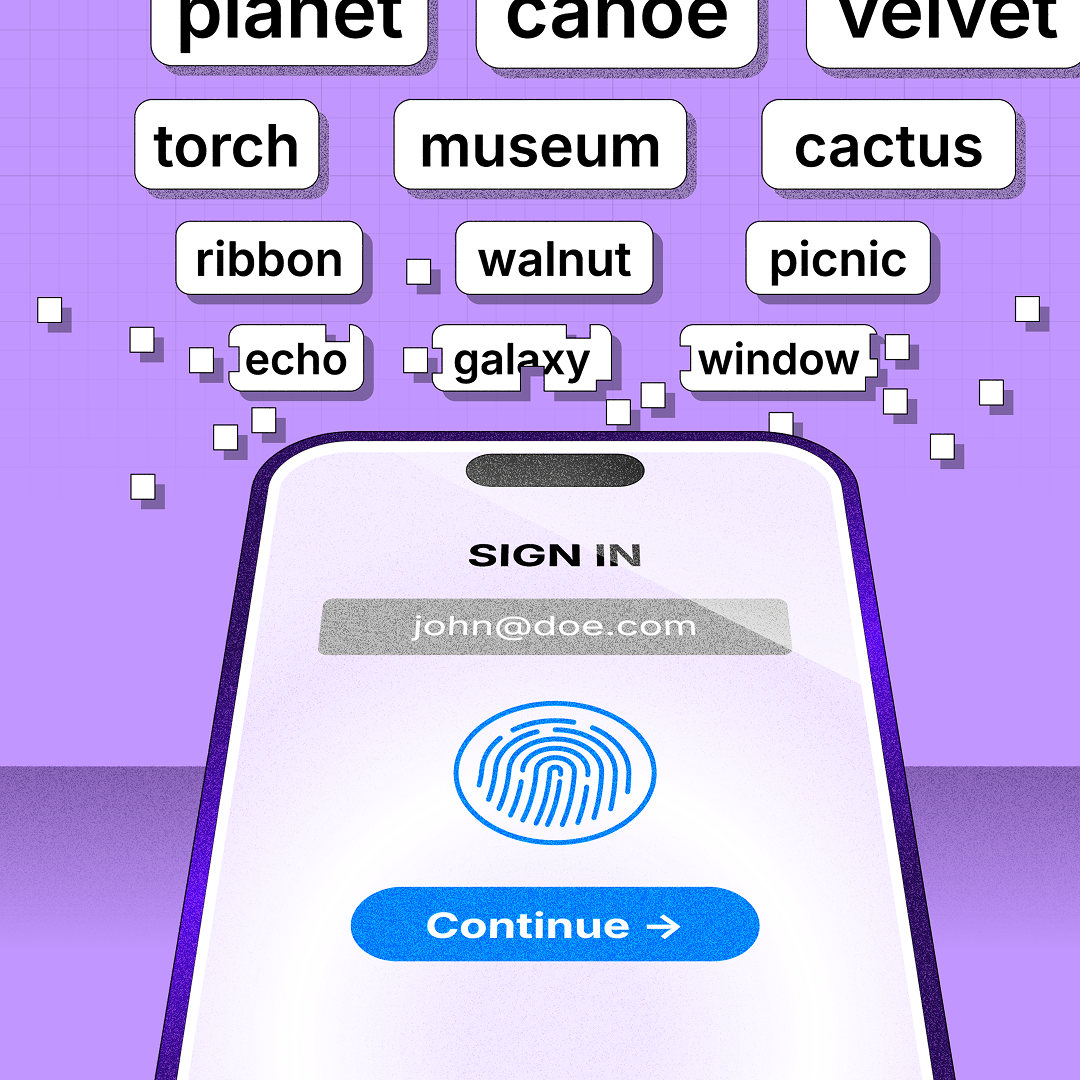
For most of crypto's history, the price of admission was a ritual: write down 12 words, in order, on something that can't catch fire or get wet, and guard them for the rest of your life. Get it right and you're your own bank. Get it wrong o
Breakout sessions discussed topics such as supply chains, diversity, female empowerment, and Environmental, Social, and Governance (ESG) success stories.
MoonPay’s own Ivan Soto-Wright was tapped as a featured speaker in a breakout session on Web3 and cybersecurity. Along with Lacework CEO Jay Parikh, Soto-Wright touched on the challenges in the Web3 world today, the threats facing Web3 participants, and how investors and creators can best protect their assets.
The following is adapted from Ivan’s responses to the security challenges facing Web3.
The future of the internet
When we talk about the internet, the first generation was basically read-only. You’d interact with these static web pages. Web2 was able to take it a step further with the ability to read and write, like you see with the social media applications that we love today.
With Web3, the central idea is around ownership. So Web3 means to be able to read, write and now own what’s yours, on a decentralized internet.
User-friendly blockchain technology
At MoonPay, our vision is to unlock ownership for everyone. We truly believe in this future where individuals should own and control their identity, their data, their property and their money. And so for us, we want to make that experience easier.
I think the biggest barrier to adoption of this new technology is not around blockchain’s ability to scale, but around its usability. We need to build more magical user experiences.
Ownership is key
Today, we don't really own our data. Our data is owned by these third parties in a lot of cases, which can introduce a whole range of risks. I see a future where the central idea of Web3 is that as long as you have access to the internet, you have complete ownership of your assets.
That private key unlocks your wallet, which is going to house your identity, your data, your property and your money. You're going to be able to opt in and be in control when you access this whole range of applications built on the blockchain.
Security in Web3
In today’s Web3, we have a bunch of third parties that are responsible for holding on to users’ valuable data and personal information. By trusting all these different third parties with your data, you’re naturally introducing a lot of risk and fracture points.
And even with entrusting a large part to third parties, the rest of the risk falls back on the user. And ultimately, we want to get to a place where users feel safe, while also enjoying a satisfying user experience component.
Private key management
We hear about cybersecurity breaches all the time, and it only takes one. Just one cybersecurity breach at one of these companies that you're entrusting with your data, and your data can leak.
And in Web3, there is even more responsibility built back on the user. This means that it’s vital to invest in education as part of the user experience. If you're going to invest your money into something like a new digital asset, you want to know what you're investing in.
Safeguarding against bad actors
As Web3 has gone through waves of adoption, over time it’s generally become safer. When we started, there was a lot of illicit activity, very similar to that of the early internet. And though some of these bad actors have gone away, it’s true that most of them are getting smarter too.
But this is the technology of the future. It's not going away, so we need to make it easier for consumers to interact with it in a safe way.