








What is blockchain interoperability? A guide to cross-chain solutions
Learn how cross-chain interoperability helps connect disparate blockchain networks and the ways it's enhancing the capability of blockchain technology.
Cosmos is a decentralized network of interconnected blockchains designed to enable scalable, interoperable, and secure communication between different blockchain platforms. It is built on a unique consensus algorithm called Tendermint, which combines Byzantine Fault Tolerance (BFT) and Proof of Stake (PoS) mechanisms.
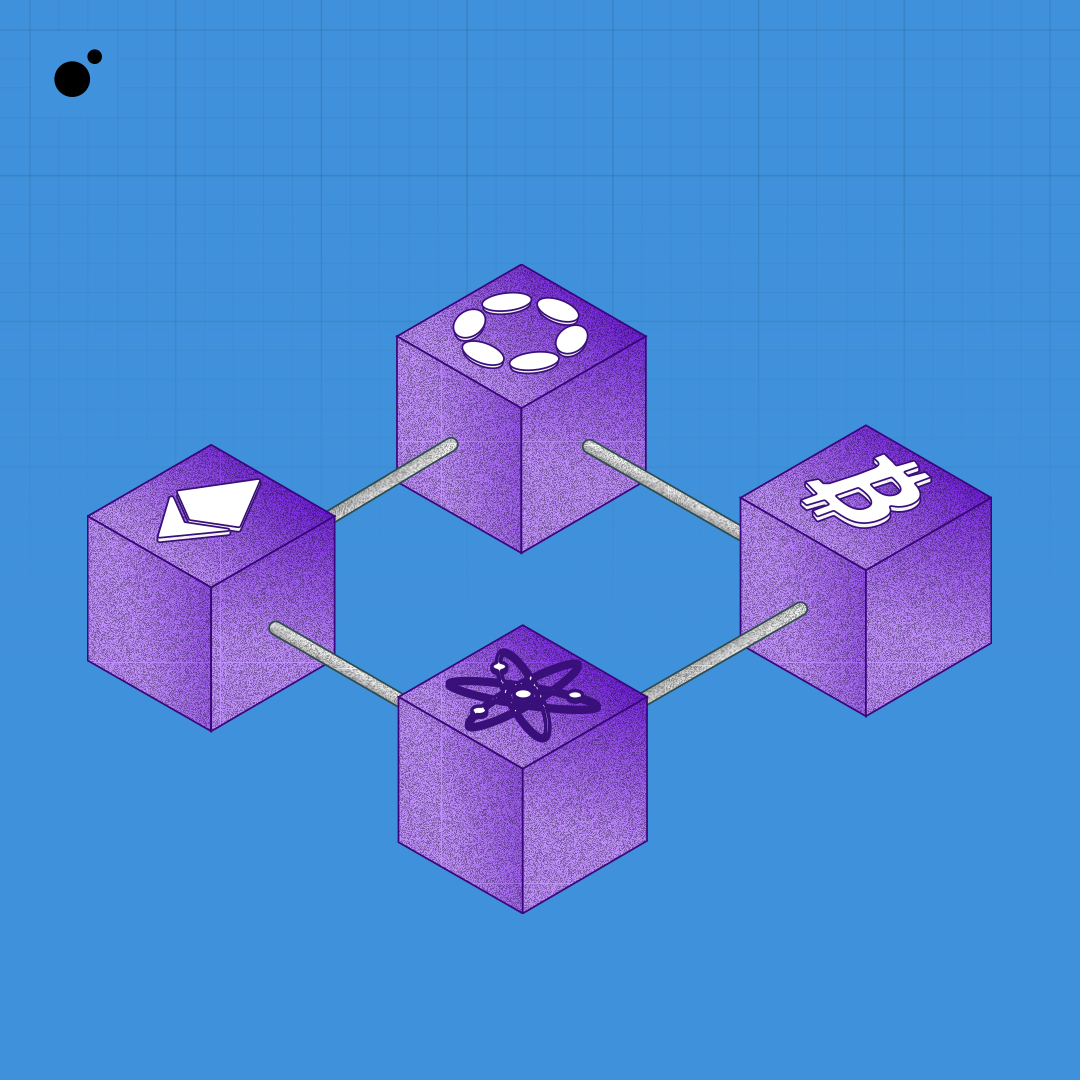
At its core, Cosmos seeks to address the issue of blockchain fragmentation, and become the internet of blockchains. By providing a framework for interoperability via Inter-Blockchain Communication Protocol (IBC), Cosmos allows different blockchain platforms to communicate and share information with each other, fostering a new era of blockchain connectivity. This interoperability opens up possibilities for cross-chain asset transfers, decentralized applications (dApps) that span multiple chains, and collaborative blockchain development.
The Cosmos ecosystem is powered by its native token called ATOM. ATOM serves as the staking and governance token for the Cosmos Hub, which acts as the central hub connecting various blockchains within the Cosmos blockchains. Token holders can stake ATOM to secure the network and participate in the consensus process while earning rewards.
Cosmos enables the creation of new independent blockchains too, known as "zones," which are essentially application-specific blockchains, that can have their own unique characteristics, governance models, and consensus algorithms. These zones can connect to the Cosmos Hub and other zones, forming a vibrant and interconnected ecosystem of blockchains.