

Launching MoonPay Enterprise: Stablecoin APIs for developers → Learn More

MoonPay
  • Individuals
  • Business
  • Language
  • Get Started
Buy
Buy cryptoUse a card, Apple Pay or Google Pay to buy crypto fast. We also accept bank transfers and wires.
Buy BitcoinBTC
Buy EthereumETH
Buy PolygonPOL
Buy SolanaSOL
Buy DogecoinDOGE
Buy CardanoADA
Buy AvalancheAVAX
Sell
Sell cryptoTurn your crypto into cash. In a flash. Get paid straight to your bank account or Visa card.
Sell BitcoinBTC
Sell EthereumETH
Sell USDCUSDC
Sell SolanaSOL
Sell CardanoADA
Sell DogecoinDOGE
Sell AvalancheAVAX
Trade
Trade cryptoTrade between tokens, even if they’re on different chains (we make bridging seamless too).
Trade EthereumETH
Trade USDCUSDC
Trade AaveAAVE
Trade ChainlinkLINK
Trade Wrapped BitcoinWBTC
Trade DaiDAI
Trade CompoundCOMP
Company
NewsroomNewsroomMediaMediaCareersCareersChangelogChangelogMoonPay DiscoverMoonPay DiscoverNew
Crypto Prices
Bitcoin PriceEthereum PriceSolana PriceDogecoin PriceCardano PriceXRP PriceBNB PriceAll Crypto Prices
Learn
What is Blockchain?What is Blockchain?What are NFTs?What are NFTs?What is Bitcoin mining?What is Bitcoin mining?What is DeFi?What is DeFi?What is crypto staking?What is crypto staking?All Learn Articles
Support
DocumentationDocumentationHelp CenterHelp CenterContact UsContact UsStatusStatus
  • Language
  • All rights reserved. MoonPay USA LLC is a registered money service business (NMLS ID: 2071245). For Law Enforcement requests please direct your official document to our compliance team here.

    English (Canada)
    • Personal
    • Buy Crypto
    • Sell Crypto
    • Trade Crypto
    • Learn about Crypto
    • Crypto Price
    • MoonAgentsNew!
    • Business
    • Ramps
    • Virtual AccountsNew!
    • MoonPay Discover
    • MoonPay Commerce
    • MoonPay InstitutionalNew!
    • Company
    • About Us
    • CareersWe're hiring
    • Newsroom
    • Media
    • Changelog
    • Support
    • API Docs
    • Help Center
    • Contact Us
    • Status
    • Security
    • Buy
    • Buy Bitcoin
    • Buy Ethereum
    • Buy Solana
    • Buy Cardano
    • Sell
    • Sell Bitcoin
    • Sell Ethereum
    • Sell XRP
    • Sell Solana
    • Trade
    • Trade Ethereum
    • Trade SOL
    • Trade Aave
    • Trade Chainlink
    • Crypto Prices
    • Bitcoin Price
    • Ethereum Price
    • Dogecoin Price
    • XRP Price
    • Cardano Price
    • Learn
    • What is Blockchain?
    • What are NFTs?
    • What is Bitcoin mining?
    • What is DeFi?
    • What is crypto staking?
    • Legal
    • Licenses
    • Privacy Policy
    • Cookie Policy
    • Terms of Use
    English (Canada)

    All rights reserved. MoonPay USA LLC is a registered money service business (NMLS ID: 2071245). For Law Enforcement requests please direct your official document to our compliance team here.

    Back to all articles


    What is Wrapped Bitcoin (wBTC)? Understanding wrapped tokens

    Bitcoin, the world's first cryptocurrency, launched the crypto revolution in 2009. Since then, developers have continued to build on its foundation to create the burgeoning web3 world we know today.

    Milly Fox-Jones

    By Milly Fox-Jones

    Published on Sep 14, 2024

    Last modified on May 22, 2025
    cryptocurrencybasicsaltcoin
    WBTC blog banner
    1. 1.What is Wrapped Bitcoin?
    2. 2.Who created Wrapped Bitcoin?
    3. 3.How does Wrapped Bitcoin work?
    4. 4.What's the difference between Bitcoin and Wrapped Bitcoin?
    5. 5.What are the benefits of Wrapped Bitcoin (wBTC)?
    6. 6.What are the risks associated with Wrapped Bitcoin (wBTC)?
    7. 7.Frequently asked questions (FAQs) about wBTC tokens
    8. 8.How to buy Wrapped Bitcoin (wBTC) and BTC
    9. 9.How to sell Bitcoin
    10. 10.Swap Wrapped Bitcoin for more crypto

    Bitcoin, the world's first cryptocurrency, launched the crypto revolution in 2009. Since then, developers have continued to build on its foundation to create the burgeoning web3 world we know today. 

    While Bitcoin is still one of the most successful cryptocurrencies, its lack of interoperability has posed a challenge. The solution? Wrapped Bitcoin (wBTC).

    This guide will show you what wrapped Bitcoin is, and how wrapped tokens allow BTC holders to benefit from other cryptocurrencies and networks.

    What is Wrapped Bitcoin?

    Wrapped Bitcoin is an ERC-20 cryptocurrency token that runs on the Ethereum blockchain and is intended to be backed 1:1 by Bitcoin. To attempt to keep the prices of wBTC and BTC stable, for every wBTC token issued, there should be an equivalent amount of Bitcoin held in reserve by a custodian. 

    A picture of the WBTC logo.
    Image source

    You can think of wrapped tokens like a modifier that allows you to use a cryptocurrency from one blockchain on another chain that does not traditionally support such crypto assets.

    The custodians that issue wBTC include centralized exchanges (CEX), decentralized exchanges (DEX), or a group of decentralized organizations (such as a DAO) that manage the token's supply and attempt to ensure that the Bitcoin backing the token remains matches the amount of wBTC issued.

    “Wrapping” Bitcoin – that is, exchanging your BTC for wBTC – allows you to enjoy the benefits of Bitcoin while benefiting from the features offered by the Ethereum network and its DeFi ecosystem.

    Wrapped Bitcoin can be traded on various cryptocurrency exchanges and used as collateral for loans and other financial transactions. Wrapping BTC has become a popular way for Bitcoin holders to access the world of DeFi and participate in Ethereum-based applications.

    Why was Wrapped Bitcoin created?

    The Bitcoin wrapped token was launched in January 2019 with the aim of creating a cryptocurrency that could bring the liquidity and functionality of Bitcoin to the Ethereum ecosystem.

    A pictorial representation of the wBTC minting process, with a Bitcoin token becoming an Ethereum token.
    Wrapping Bitcoin allows you to take advantage of the Ethereum DeFi ecosystem

    Before wBTC, there was no way to take advantage of smart contracts and decentralized applications (dApps) with Bitcoin, as it can't natively run on the Ethereum network. However, with the introduction of wrapped Bitcoin tokens, users can now access Ethereum's smart contracts and dApps by leveraging BTC in a form that is compatible with the Ethereum blockchain.

    Who created Wrapped Bitcoin?

    Wrapped Bitcoin was created by a collection of companies in the crypto industry, including BitGo and Kyber Network.

    • BitGo is a digital asset custodian and security company and provides the custodial services for the Bitcoin tokens that back wBTC
    • Kyber Network is a decentralized exchange platform and provides liquidity by allowing users to trade it for other ERC-20 tokens

    How does Wrapped Bitcoin work?

    Wrapped Bitcoin works by creating a bridge between the Bitcoin and Ethereum blockchains. When someone wants to convert their Bitcoin to wBTC, they first send their Bitcoin to a custodian, who should hold the Bitcoin in reserve.

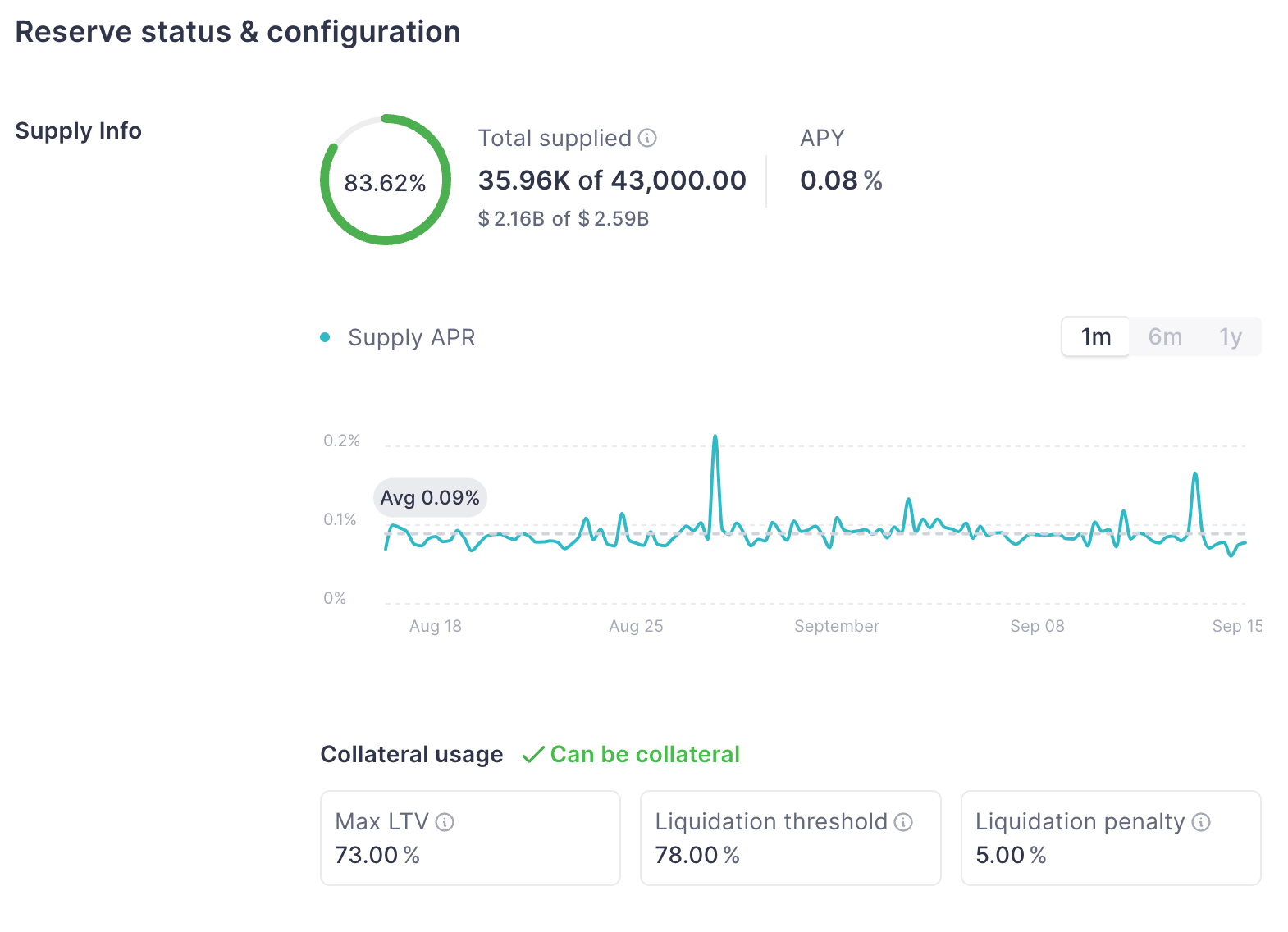
    A screenshot of Aave's reserve info for supplied Bitcoin wrapped tokens.
    wBTC can be used on Aave — Image source

    The custodian will then mint an equal amount of wBTC ERC-20 tokens and send them to the user's cryptocurrency wallet. This process is called wrapping.

    When someone wants to convert their Wrapped BTC back to Bitcoin, they initiate a “redemption request” with the custodian. The custodian then burns the wBTC tokens and sends the equivalent amount of Bitcoin to the user's crypto wallet.

    The process of minting and burning wBTC is overseen by custodians, who are responsible for holding the Bitcoin reserves that back the wBTC tokens.

    What's the difference between Bitcoin and Wrapped Bitcoin?

    While Bitcoin (BTC) is the original cryptocurrency used for peer-to-peer transactions, Wrapped Bitcoin (wBTC) is an ERC-20 token representing BTC on the Ethereum network. wBTC allows Bitcoin holders to access Ethereum’s decentralized finance (DeFi) applications while maintaining BTC’s value.

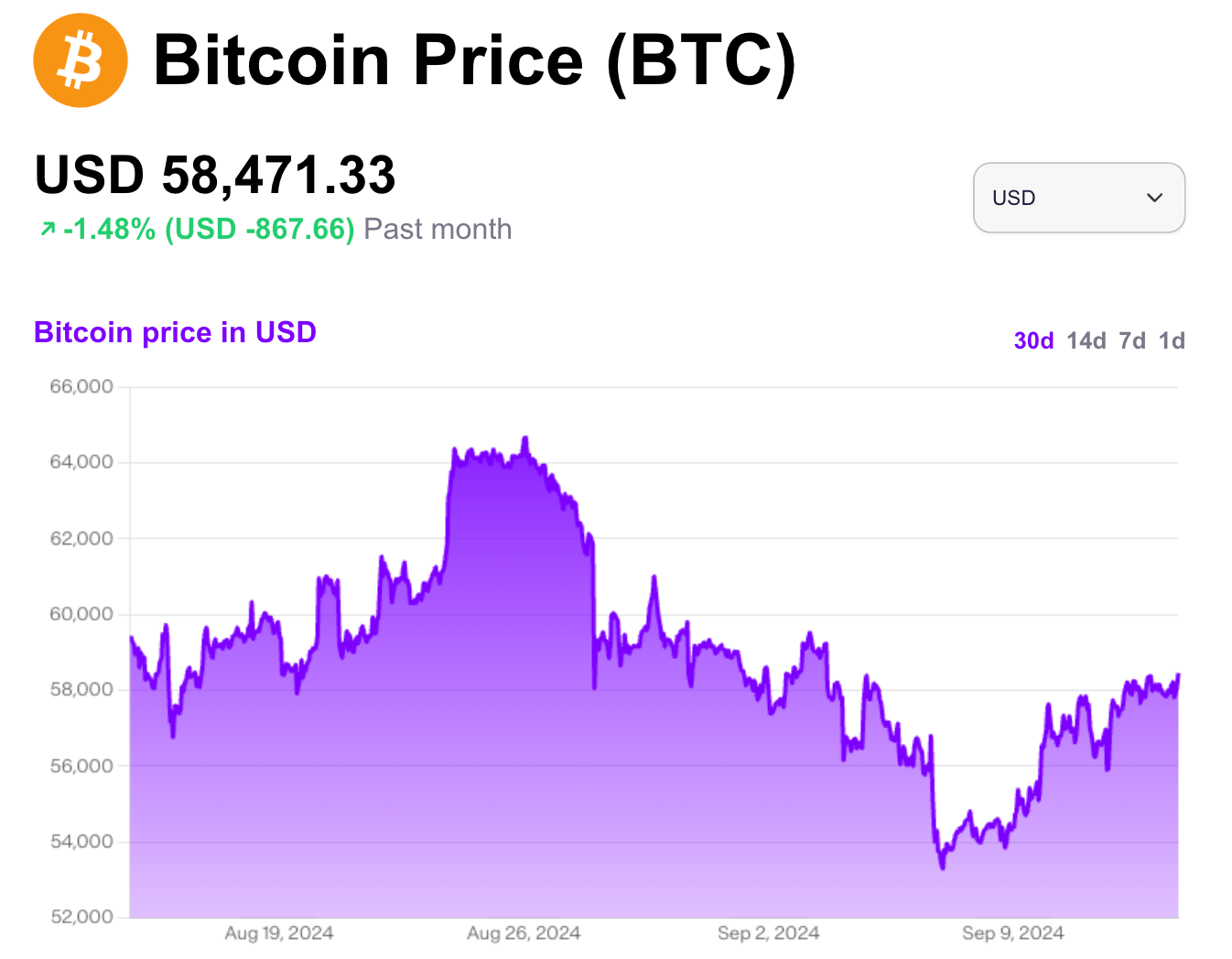
    A chart of Bitcoin's price.
    Wrapped Bitcoin tracks Bitcoin's price — Image source

    Another key difference between Bitcoin and Wrapped Bitcoin is the level of decentralization.

    Bitcoin is fully decentralized and operates on a trustless, peer-to-peer network. Wrapped BTC, on the other hand, relies on a group of custodians to hold the Bitcoin reserves that back the wBTC tokens. However, since custodians represent a central point of control, they also present potential vulnerabilities (more on that below).

    What are the benefits of Wrapped Bitcoin (wBTC)?

    Wrapped Bitcoin (wBTC) offers several advantages, particularly for users who want to leverage the power of BTC within the Ethereum DeFi ecosystem:

    1) Access to Decentralized Finance (DeFi)

    By wrapping Bitcoin into an ERC-20 token, users can utilize wBTC in various DeFi protocols on Ethereum. This opens up a wide range of decentralized financial services like lending and borrowing, yield farming, and staking, which are typically unavailable to native Bitcoin holders.

    2) Improved liquidity on Ethereum

    wBTC enhances liquidity within Ethereum's ecosystem by allowing Bitcoin's significant market value to be used in Ethereum-based applications. This increased liquidity helps strengthen DeFi protocols and allows for larger-scale financial activities.

    3) Cross-chain interoperability

    wBTC bridges Bitcoin and Ethereum, enabling users to seamlessly transfer value between the two largest blockchain networks. This interoperability allows Bitcoin holders to access Ethereum's vast range of applications without selling BTC.

    4) Increased transaction speed

    wBTC transactions on the Ethereum network can be faster and more cost-effective than native Bitcoin transactions, especially after the Ethereum Merge to Proof-of-Stake (PoS). Users benefit from Ethereum’s scalability solutions and transaction throughput, which are intended to handle congestion better than the Bitcoin network.

    What are the risks associated with Wrapped Bitcoin (wBTC)?

    Like any cryptocurrency, Wrapped Bitcoin is not immune to risk factors that can affect any digital asset:

    1) Price volatility

    The value of wBTC is pegged to Bitcoin's, meaning that fluctuations in Bitcoin’s price directly affect wBTC’s value. Any significant market movements in BTC will reflect on wBTC, making it vulnerable to the inherent volatility of cryptocurrency markets.

    2) Custodian risks

    wBTC is backed by actual Bitcoin, which is held in reserve by a custodian. If they misuse or lose control of these reserves, the peg between wBTC and BTC could be jeopardized, thus affecting the confidence of holders in the token’s value.

    3) Security and insolvency

    Custodians holding the BTC reserves are exposed to risks like hacks, security breaches, or even insolvency. In the event of failure, there could be a complete loss of the underlying asset (BTC), putting wBTC holders at significant financial risk.

    4) Regulatory hurdles

    The legal status of wBTC, like other cryptocurrencies, is subject to evolving regulations. Changes in government policies or enforcement actions could impact the ability to "HODL", trade, or even issue wBTC, creating legal uncertainties that could affect its liquidity and market value.

    Frequently asked questions (FAQs) about wBTC tokens

    Are there are other wrapped Bitcoin tokens besides wBTC?

    Yes, there are other variations of wrapped Bitcoin in addition to wBTC. Other wrapped Bitcoin assets include:

    • renBTC (Ren)
    • tBTC (Keep Network/Threshold)
    • sBTC (Synthetix)

    How many wrapped Bitcoins are there?

    At the time of writing, there are over 153,000 wBTC wrapped tokens in circulation, compared to Bitcoin's circulating supply of 19.7 million bitcoins.

    Note: Cryptocurrency circulation figures are subject to change.

    What is the goal of wrapping Bitcoin tokens?

    The goal of Wrapped Bitcoin is to bring the advantages of Bitcoin to the Ethereum ecosystem. The creators of Wrapped BTC recognized that while Bitcoin is the most well-known and widely-used cryptocurrency, it's limited in its functionality compared to other blockchain networks like Ethereum.

    A graph of wBTC's total value locked (TVL) over time.
    wBTC can be used in DeFi platforms, with over $8.8 billion in total value locked (TVL) — Image source

    Will wBTc's price always equal the price of BTC?

    It is impossible to predict the future price of wBTC (or any cryptocurrency). But if a wBTC custodian maintains a 1:1 backing or BTC to wBTC, then the price of wBTC issued by that custodian should equal BTC's price. 

    However, it is possible the price of wBTC fluctuates in the future, either because a custodian does not maintain a 1:1 backing or for another reason.

    For live Bitcoin price and market metrics, view our Bitcoin Price page.

    Which blockchains support wrapped tokens?

    There are a number of blockchains that support wrapped crypto assets, in addition to Bitcoin. Some of these include:

    • Wrapped Ether (wETH)
    • Wrapped BNB (WBNB)
    • Wrapped DOGE (wDoge)
    • Wrapped TRON (WTRX)
    • Wrapped XRP (WXRP)

    How to wrap Bitcoin?

    To wrap Bitcoin, you can send your BTC tokens to a centralized exchange that will hold your BTC and send you an equal amount of wBTC tokens in exchange. If you prefer decentralized finance (DeFi), you can use an option like Keep Network to mint wBTC tokens directly using a smart contract.

    How to buy Wrapped Bitcoin (wBTC) and BTC

    You can buy Wrapped Bitcoin (wBTC) and Bitcoin (BTC) via MoonPay or through any of our partner wallet applications with a credit card, bank transfer, Apple Pay, Google Pay, and many other payment methods. Just enter the amount of wBTC or BTC you wish to purchase and follow the steps to complete your order.

    Users can also top up in euros, pounds, or dollars and transact with MoonPay Balance to buy cryptocurrencies like BTC and wBTC. Once funded, use your balance for faster, cheaper transactions and higher approval rates. When you're ready to withdraw, enjoy zero-fee transfers straight to your bank account.

    How to sell Bitcoin

    MoonPay makes it easy to sell Bitcoin when you decide it's time to cash out your crypto.

    Simply enter the amount of BTC you'd like to sell and enter the details where you want to receive your funds.

    We're always adding more cryptocurrencies like Wrapped Bitcoin (wBTC) to sell, so check back soon.

    Swap Wrapped Bitcoin for more crypto

    Want to exchange WBTC for other cryptocurrencies like Ethereum and Bitcoin? MoonPay allows you to swap crypto cross-chain with competitive rates, directly from your non-custodial wallet.

    You might also like

    guide+2
    embedded wallets end of seed phrases

    Embedded Wallets and The End of Seed Phrases

    For most of crypto's history, the price of admission was a ritual: write down 12 words, in order, on something that can't catch fire or get wet, and guard them for the rest of your life. Get it right and you're your own bank. Get it wrong o

    cryptocurrency+2
    Accepting Crypto Payments

    How to Accept Crypto Payments: Checkout, Settlement & Merchant Setup

    A customer just bought a $100 hoodie from your online store and paid in crypto. Quick question: where is that $100 right now?

    cryptocurrency+2
    chain abstraction explained

    Chain Abstraction Is the Next Step After Bridges and Network Switching

    Somewhere in your wallet right now there is probably money you can't easily spend. Not lost, not stolen. Just on the wrong network. USDC on Arbitrum when the app you want takes USDC on Base. ETH on mainnet when the game you're playing lives

    bitcoin+2
    crypto in prediction markets

    How Prediction Markets Work (and Where Crypto Fits In)

    A prediction market is a place where people put money on what happens next. Will the Fed cut rates in September? Will Bitcoin close the year above $150,000? Each question becomes a contract you can buy and sell, and the price of that contra

    cryptocurrency+2
    What is an MPC wallet? Benefits, Tradeoffs & Use Cases

    What is an MPC wallet? Benefits, Tradeoffs & Use Cases

    An MPC wallet is a crypto wallet that never stores your private key in one piece. The key is split into encrypted shares held in different places, and signing a transaction combines those shares without ever rebuilding the whole key. That d

    cryptocurrency+2
    what is a smart wallet?

    What is a smart wallet? Self-custody made simple

    Anyone who has used a regular crypto wallet knows the shape of the problem. You write down twelve words on a piece of paper. You hide the paper somewhere clever, then forget where. You pay gas in a token you don't have, on a network you did