







Why U.S. Bank Regulators Are Rethinking "Reputational Risk"
What Is Reputational Risk—And Why It Matters

By Emily Moloney
Published on Jul 25, 2025
Last modified on Feb 26, 2026

What Is Reputational Risk—And Why It Matters
For years, U.S. bank regulators used a broad concept called "reputational risk" to guide which customers banks should serve—and which they might avoid. If a business was seen as controversial or politically sensitive, banks could drop them even if the company had done nothing wrong legally. Crypto companies, cannabis firms, and adult content platforms often found themselves caught in this gray area.
We've seen firsthand how this affected access to banking services, especially in the early days of crypto adoption. But the landscape is changing—and fast.
Regulators Are Recalibrating
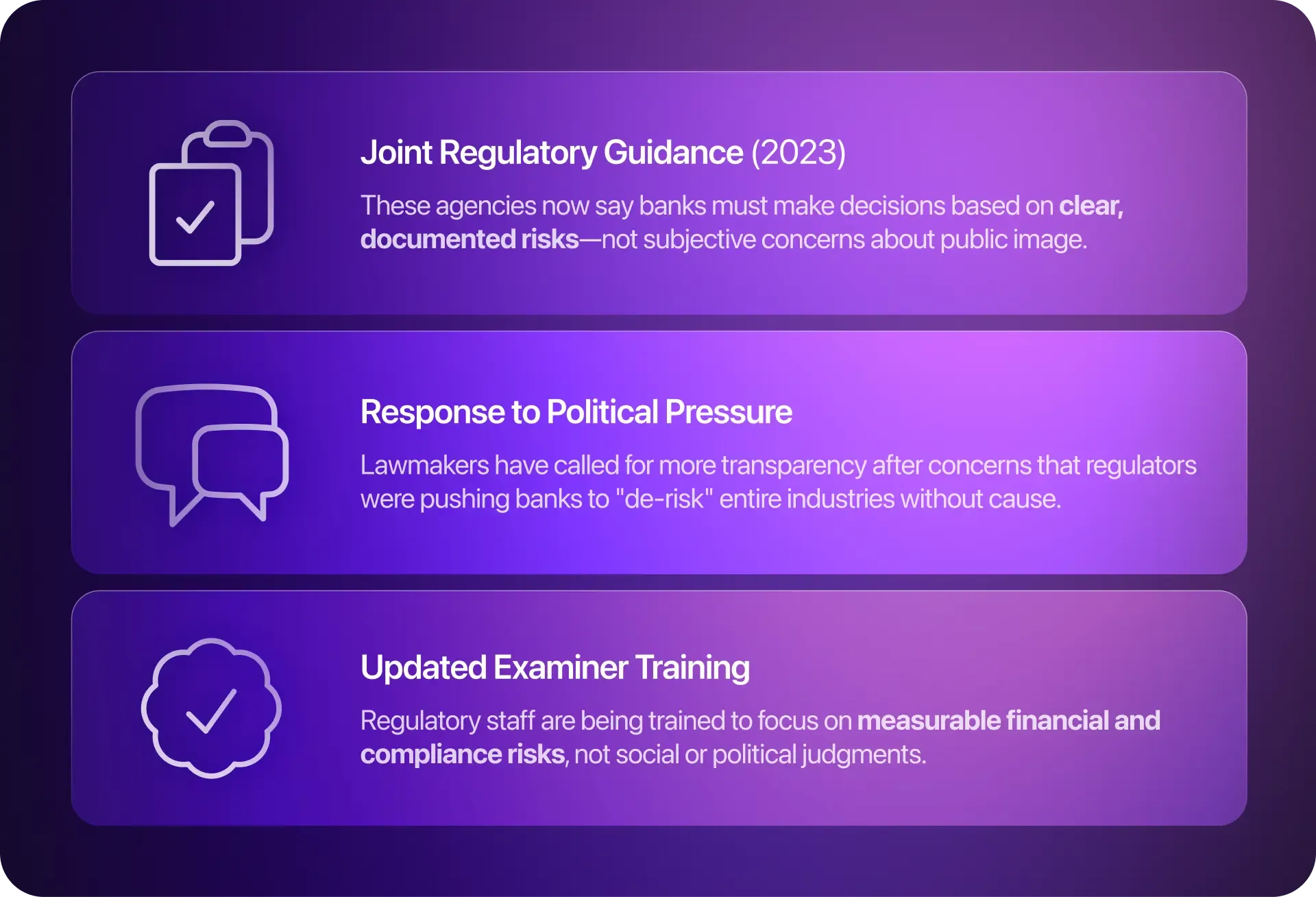
In a notable shift, key U.S. financial regulators—the Federal Reserve, the Office of the Comptroller of the Currency (OCC), and the Federal Deposit Insurance Corporation (FDIC)—are scaling back how they apply reputational risk in bank supervision.