








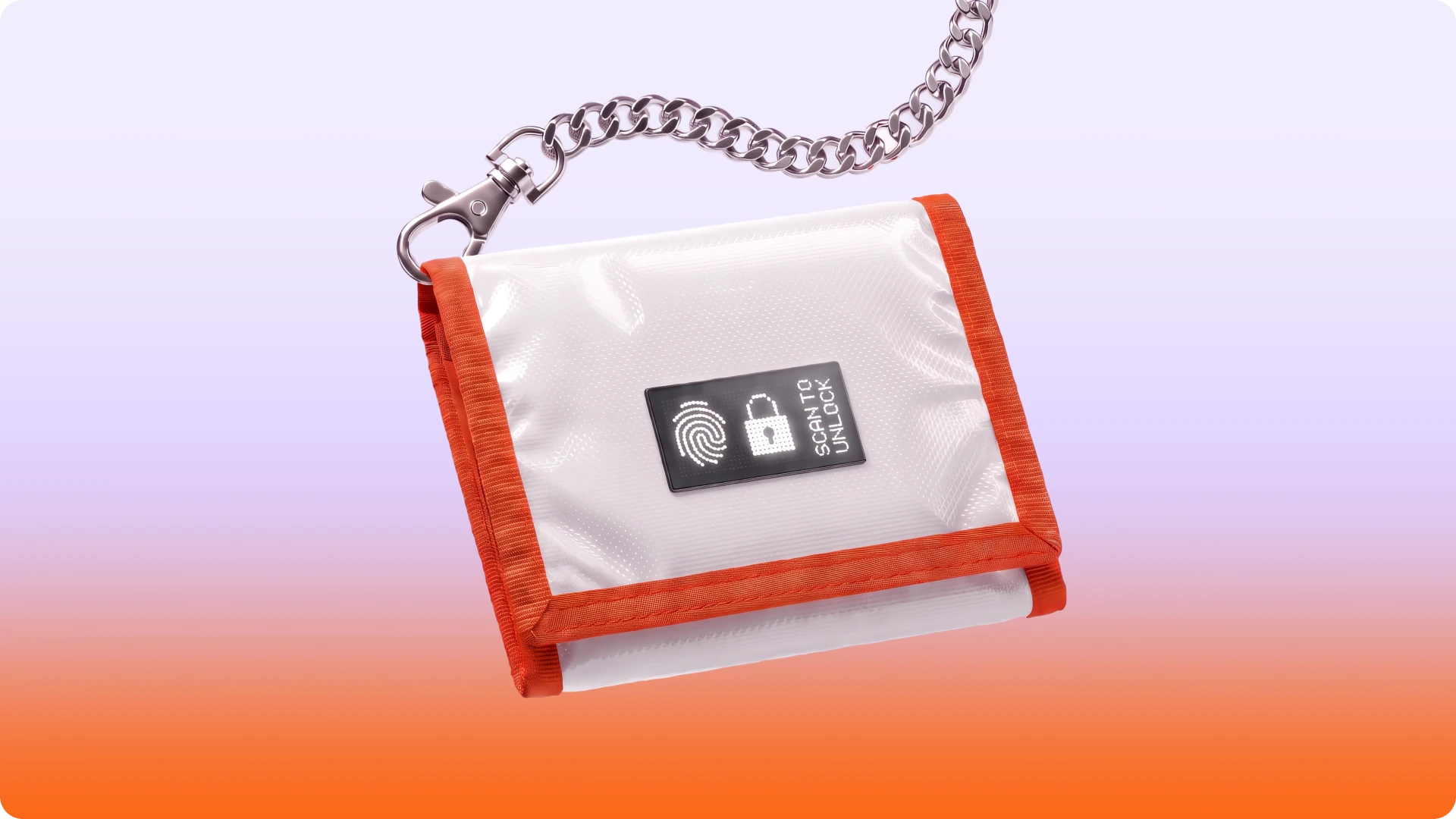
Passkey wallets let you access crypto using a passkey, often without having to write down a seed phrase.
Crypto wallets often rely on private keys, or secret numbers used to sign transactions. Many self-custody wallets back that key up with a seed phrase, a list of 12 or 24 words that has to be written down and stored safely. If the words are lost, access to the wallet can be lost with them.
Passkey wallets replace that step with a passkey, the same credential many websites now use for passwordless logins.
How passkey wallets work

A passkey wallet unlocks with a fingerprint, face scan, or device PIN. Here’s how it works:
- During setup, the person approves the creation of a passkey through their device or passkey manager.
- The passkey is securely stored by a passkey provider, such as Apple, Google, or a password manager, and may sync across devices.
- To approve a transaction, the person confirms with a biometric or PIN check, and the passkey authorizes the action.
Some wallets use the passkey as the signing credential itself. Others use it to protect a private key that is split into pieces with MPC.
The bigger picture
Wallets now offer more than one way to get started. Some use a seed phrase, some use a hardware device, and passkey wallets use the fingerprint, face scan, or device PIN people already use every day.
As more wallets support familiar sign-in methods, people have more options for how they access their crypto.