
.png)
Money market funds are one of the most widely used cash management tools in traditional finance, holding trillions of dollars for businesses, institutions, and individual investors. Now, institutions are putting money market funds on blockchains, and the pace of those launches is accelerating.
What is a money market fund?
A money market fund is a type of investment fund that holds short-term, low-risk assets: U.S. Treasury bills, overnight repurchase agreements, and similar instruments. The goal is not to grow wealth but to preserve it, while generating modest daily yield. Money market funds are designed to maintain a stable value of $1 per share, making them a popular place to park cash between transactions or investments.
They are different from savings accounts in that they are investment products, not bank deposits, but in practice many institutions treat them as a near-cash equivalent.
How tokenized money market funds work
A tokenized money market fund takes a traditional money market fund and issues its shares as digital tokens on a blockchain. Instead of a record in a transfer agent's system, an investor receives a token at a blockchain address. That token can:
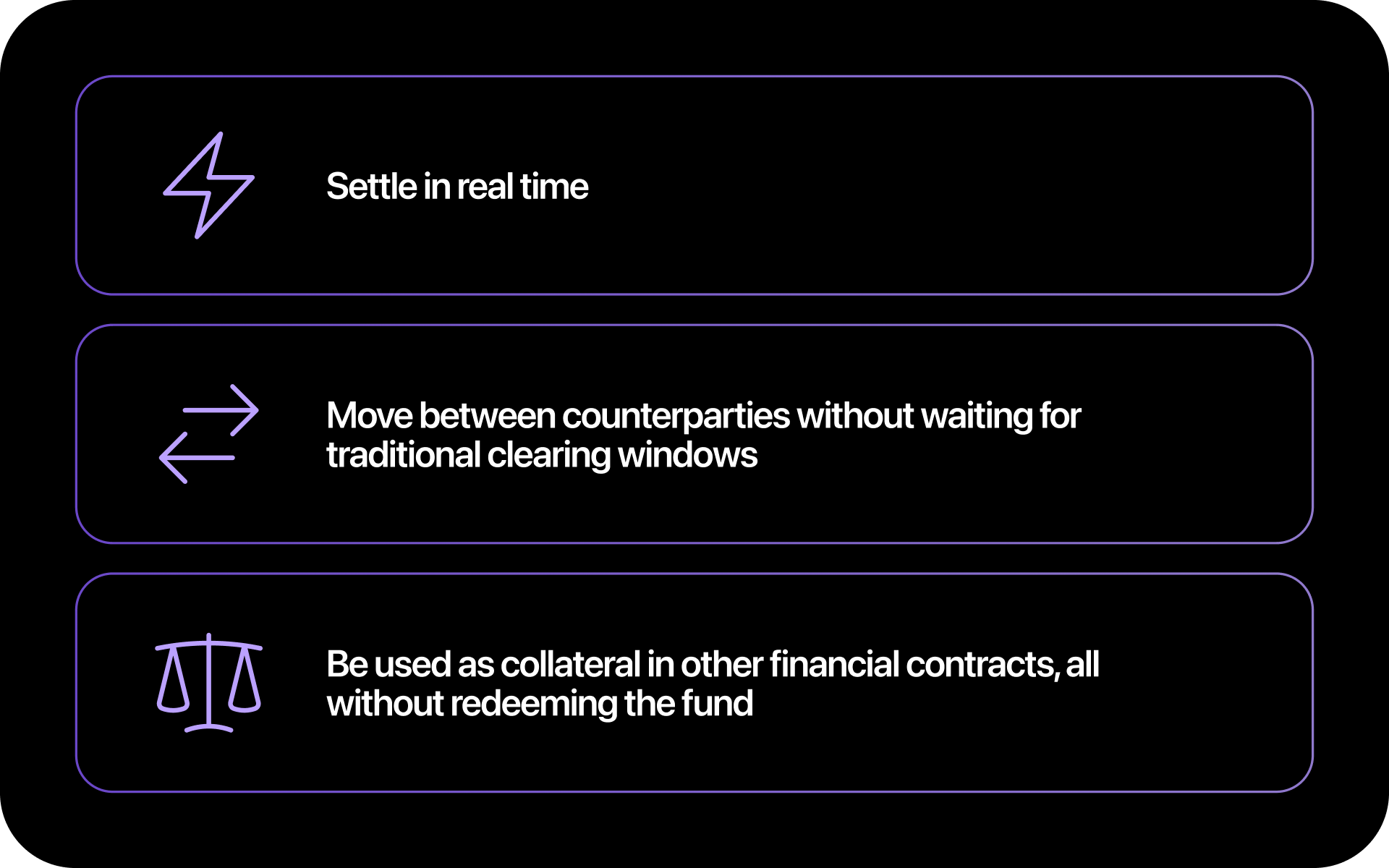
The underlying assets do not change: the fund still holds Treasuries and repos, and it is still regulated the same way. What changes is the form factor.
The bigger picture
Tokenized money market funds sit at an unusual intersection: they are conventional, regulated investment products, but they are also on-chain instruments that can interact directly with stablecoin infrastructure, DeFi protocols, and blockchain-based settlement systems.
That dual nature is why institutions are moving quickly: tokenized money market funds can serve as productive reserves for stablecoin issuers, earning yield while meeting regulatory requirements.