

Lending is one of the oldest financial activities in the world. Onchain lending is a newer version of that same idea, built on blockchains instead of bank ledgers.
What is onchain lending?
In traditional lending, banks and brokerages sit in the middle. They assess borrowers, hold collateral, facilitate transactions, and take a cut at each step.
Onchain lending replaces those intermediaries with smart contracts, software that runs automatically on a blockchain. A borrower locks up collateral, a lender supplies funds, and the contract manages interest rates, repayments, and liquidations without any central party making decisions.
How onchain lending works
Most onchain lending today is overcollateralized, meaning a borrower deposits more value than they receive.
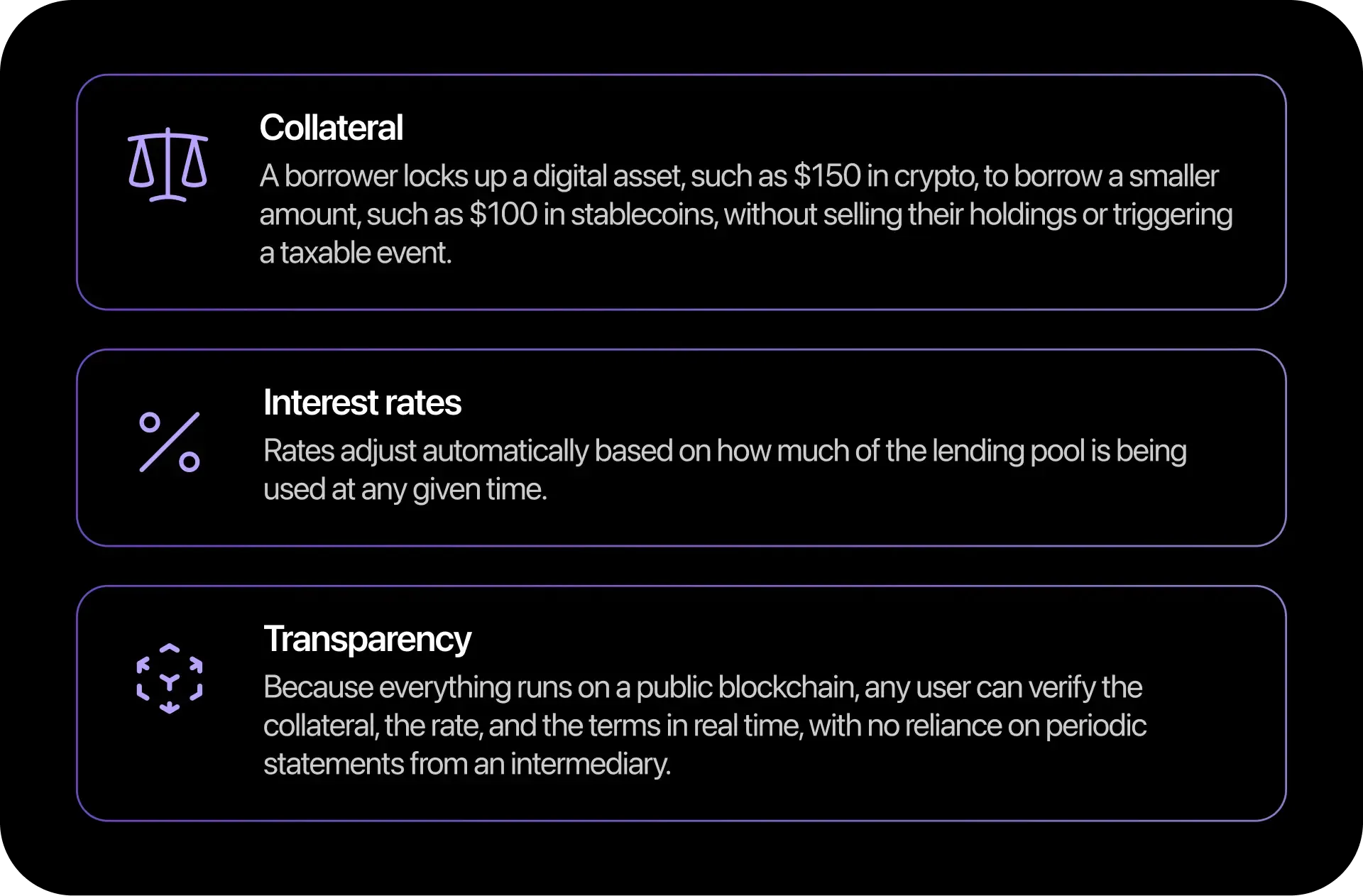
The result is a credit system that operates without a central decision-maker, open to anyone with collateral to post.
The bigger picture
Onchain lending sits at an unusual intersection: it operates like traditional credit markets, with borrowers, lenders, and collateral, but it runs entirely on a public blockchain that anyone can inspect and no single party controls.