Ethereum has had a remarkable six-year journey. Created in 2015 by then 21-year-old Vitalik Buterin, the self-styled “next-generation smart contract platform” has quickly evolved from an idea in a whitepaper to the most widely used blockcha
has had a remarkable six-year journey. Created in 2015 by then 21-year-old Vitalik Buterin, the self-styled “next-generation platform” has quickly evolved from an idea in a to the most widely used .
Can Quantum Computers Break Bitcoin? What BIP-360 Changes
Not today, but the clock has started. What quantum computers can and can't do to Bitcoin, which coins are exposed, what BIP-360 and BIP-361 propose, and what to do with your addresses.
What Are Tokenized Stocks? What You Actually Own When You Buy Apple on a Blockchain
Tokenized stocks track real shares on a blockchain, but the token is rarely the share. How the four structures differ on dividends, voting, bankruptcy, and redemption, and who can buy them in 2026.
Why Stablecoins Are Becoming the Internet's Payment Rails
Stablecoins settle in minutes, run around the clock, and cross borders for cents. What payment rails are, why stablecoins qualify, and the honest limits.
Agentic Payments & How AI Agents Actually Pay for Things
Agentic payments let an AI agent buy things without holding your money or seeing your card number. How they work, what agents can buy, and how MoonPay's PayBox does it.
For most of crypto's history, the price of admission was a ritual: write down 12 words, in order, on something that can't catch fire or get wet, and guard them for the rest of your life. Get it right and you're your own bank. Get it wrong o
“Ethereum has taken what was a four-function calculator of a programming language in Bitcoin and turned it into a full-fledged computer,” said Abigail Johnson, CEO of Fidelity Investments.
But over the years, users have gradually identified flaws, such as too much top-down direction from Vitalik, or high gas fees, which pay miners and secure the network.
One way developers have responded is by creating protocols that are built on top of the original blockchain. While these Layer-2 solutions maintain the basic structure of the original protocol, they also make improvements. Think of them as Lego pieces — they sit atop and are compatible with the original protocol, but are ultimately distinct.
Polygon is one example of an Ethereum-compatible protocol that’s rapidly gaining popularity among users and developers.
What is Polygon (MATIC)?
MATIC is the native token that powers the Polygon network. Just like ETH, it’s used for a number of different purposes including paying for gas fees, bolstering security through staking, and taking part in network governance by voting on improvement proposals.
While it used to just power the Matic Network (which still exists after the rebrand), MATIC is currently used to power the entire Polygon network. At the time of writing it’s the 15th largest cryptocurrency, with a market capitalization of $6.9 billion.
MATIC’s massive gains over years (its price rose 750% between April and May 2021 alone) could be seen as a reflection of the Polygon Network’s grand ambitions. It wants to be the “internet of blockchain”, the go-to hub for Ethereum-compatible blockchain networks.
Polygon’s core team of four co-founders are working around the clock to make this happen. One of them, Sandeep Nailwal, told CoinDesk in 2021 that he works 18-19 hour days. “The assets never sleep,” he said. “There’s no holidays, no Christmas.”
Polygon co-founder Sandeep Nailwal, who told CoinDesk he doesn’t take holidays, was sent this image along with the message “mind boggling” — Image source
But MATIC’s price could also be seen as an indication of where it stands in what some are calling the scaling wars: the race to develop the most scalable improvements to Bitcoin and Ethereum. Both networks are becoming busier (for Ethereum in no small part due to the rise of NFTs), making transactions more expensive.
As Decrypt’s Matt Hussey explains: “These issues have led to a flurry of projects embarking on the blockchain equivalent of a space race: to create a network that can process 10,000s of transactions as quickly as possible.”
How this race unfolds will be one of the most exciting developments in crypto over the next few years, with many eyes trained on Polygon. The “internet of blockchains” is certainly well out of the starting blocks with its expanding suite of offerings and dedicated core team of developers driving it forward.
Launched in 2017 as the Matic Network, the Polygon Network is an Ethereum-compatible protocol that was created to sidestep some of Ethereum’s most glaring issues, including low throughput and high gas fees. It’s seen by some as an improvement over the original Ethereum protocol because it provides cheaper, faster, and more secure payment transactions while still leveraging Ethereum’s ecosystem.
Vitalik Buterin, founder of Ethereum — Image source
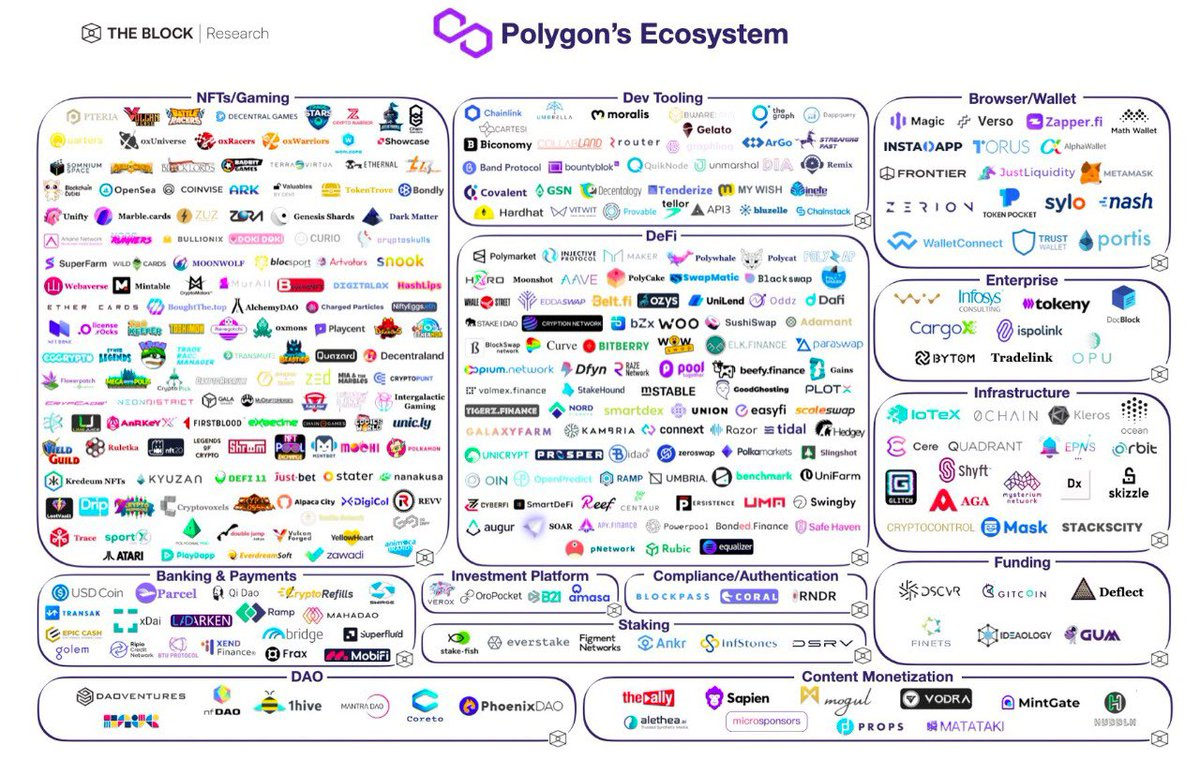
Technically Polygon isn’t a single scaling solution but rather a suite of solutions. This suite currently includes Polygon Plasma, Polygon PoS commit chain, and Polygon SDK, but many more are scheduled to be released.
Just like Ethereum, the network is also host to decentralized finance (DeFi), Decentralized Autonomous Organizations (DAOs), non-fungible tokens (NFTs), and countless decentralized applications (dApps).
Where to buy MATIC
You can buy MATIC (Polygon) via MoonPay or through any of our partner wallet applications with a credit card, bank transfer, Apple Pay, Google Pay, and many other payment methods. Just enter the amount of MATIC you wish to purchase and follow the steps to complete your order.
Users can also top up in euros, pounds, or dollars and use MoonPay Balance when buying Polygon (MATIC) and other cryptocurrencies. Use your balance to enjoy lower transaction fees, quicker processing times, and better approval rates.