

You’ve probably heard that crypto can earn you passive income. But how does that actually work? One powerful way is through staking.
Think of staking your crypto like putting money in a high-yield savings account. Instead of letting your crypto just sit there, you can put it to work helping secure a blockchain and get rewarded in return.
But here’s the catch: traditional staking locks your crypto away. Once you stake it, you often can’t touch it for days, sometimes weeks.
Now, a new approach is changing the game: liquid staking.
First, What Is Staking?
To understand liquid staking, it helps to first understand how staking works.
Many modern blockchains, like Ethereum and Solana, use a system called Proof of Stake (PoS) to stay secure and decentralized. In this system, validators are chosen to verify transactions and add blocks to the chain. But to become a validator (or support one), you need to stake your crypto by locking it up as a sign of trust in the network.
In exchange, you earn rewards, which are usually paid in the same token you staked.
The challenge? Staked tokens are often locked up, meaning you can’t trade them, move them, or use them in other ways until the lock-up period ends. That can limit flexibility, especially if the market shifts or you want to move quickly.
What Is Liquid Staking?
Liquid staking solves that problem.
Instead of locking your tokens away in a validator for weeks, liquid staking lets you:

Here’s how it works: when you stake through a liquid staking system, you receive a special token in return. This token represents your staked crypto and continues to grow in value as rewards are earned. You can use this token just like any other – you can trade it, lend it, borrow against it, or use it in decentralized finance (DeFi).
It’s the best of both worlds: earn while you hold, and still stay liquid.
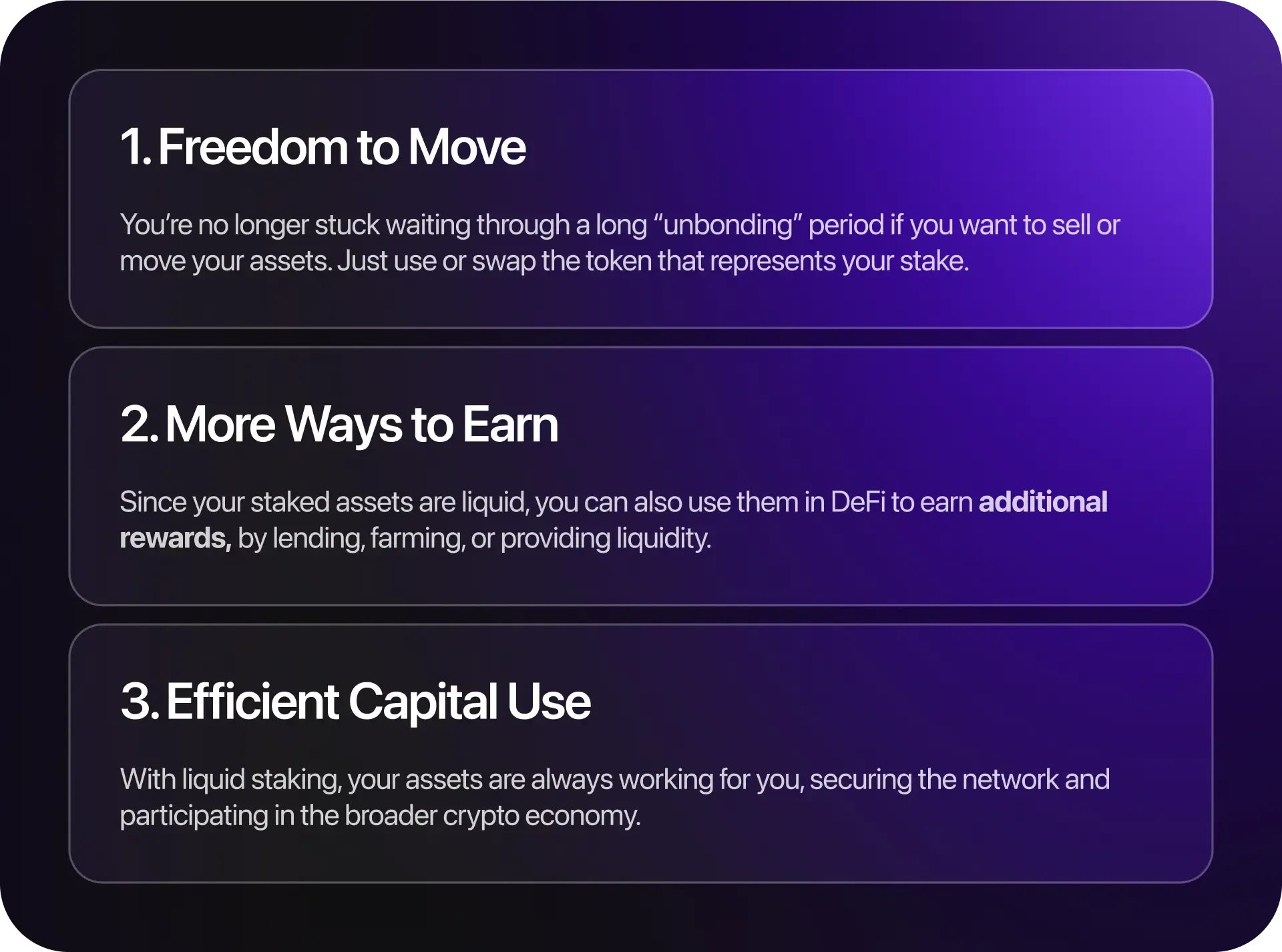
Why People Use Liquid Staking
Liquid staking has gained momentum for a few key reasons:
Are There Any Risks?
Like everything in crypto, liquid staking isn’t risk-free. Some things to keep in mind:
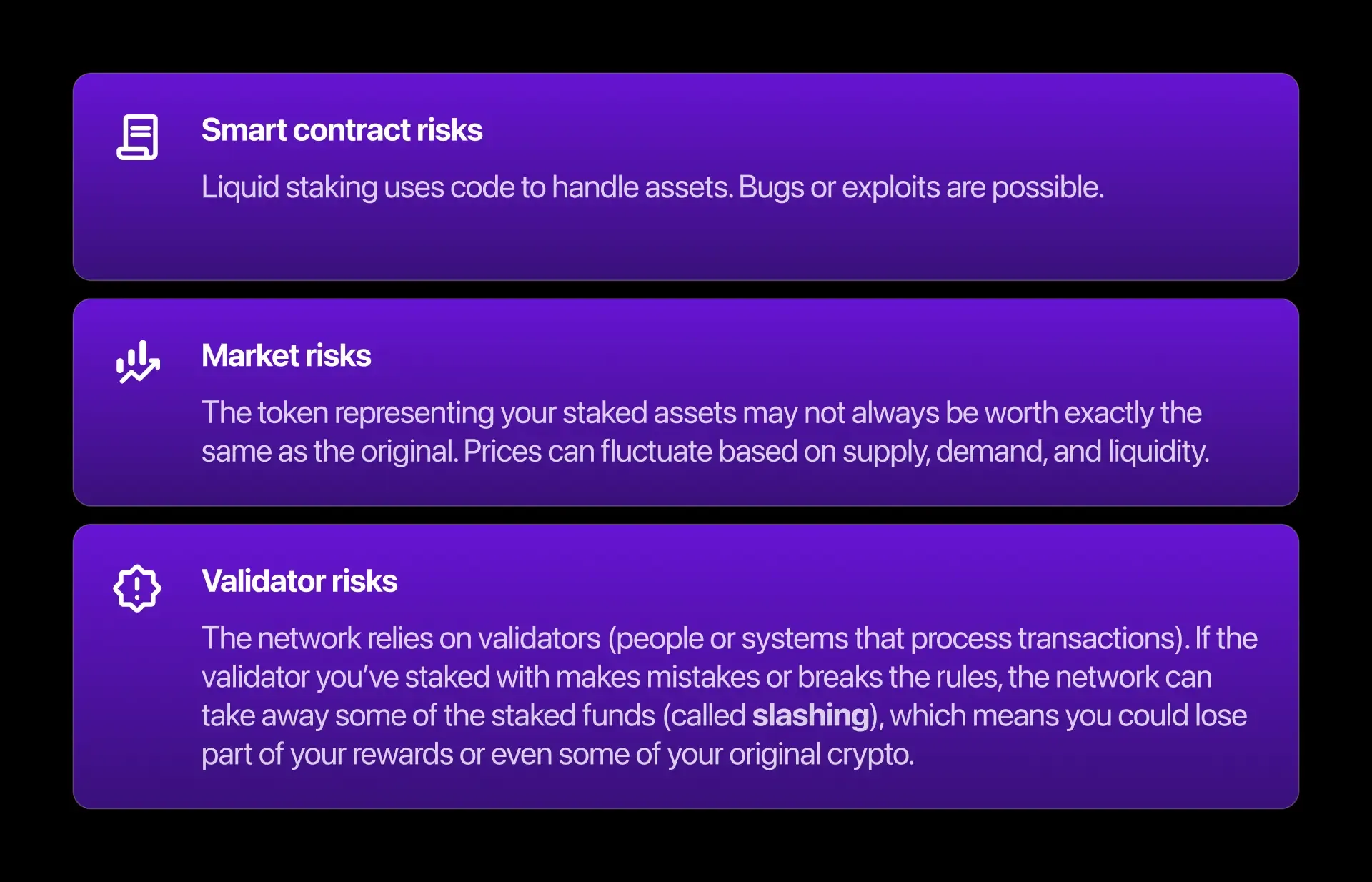
Understanding these risks, and choosing secure, transparent systems, can help you stake more confidently.
The Future of Staking?
Liquid staking is quickly becoming a core building block of the crypto economy. It makes staking more accessible, more flexible, and more useful, especially for people who want their crypto to stay active, not idle.
As more blockchains adopt proof-of-stake and more DeFi platforms support liquid staking tokens, it’s likely to become a default option for long-term crypto holders.
So if you’re holding crypto, don’t just let it sit there. With liquid staking, your assets can work for you without locking you in.