

Launching MoonPay Enterprise: Stablecoin APIs for developers → Learn More

MoonPay
  • Individuals
  • Business
  • Language
  • Get Started
Buy
Buy cryptoUse a card, Apple Pay or Google Pay to buy crypto fast. We also accept bank transfers and wires.
Buy BitcoinBTC
Buy EthereumETH
Buy PolygonPOL
Buy SolanaSOL
Buy DogecoinDOGE
Buy CardanoADA
Buy AvalancheAVAX
Sell
Sell cryptoTurn your crypto into cash. In a flash. Get paid straight to your bank account or Visa card.
Sell BitcoinBTC
Sell EthereumETH
Sell USDCUSDC
Sell SolanaSOL
Sell CardanoADA
Sell DogecoinDOGE
Sell AvalancheAVAX
Trade
Trade cryptoTrade between tokens, even if they’re on different chains (we make bridging seamless too).
Trade EthereumETH
Trade USDCUSDC
Trade AaveAAVE
Trade ChainlinkLINK
Trade Wrapped BitcoinWBTC
Trade DaiDAI
Trade CompoundCOMP
Company
NewsroomNewsroomMediaMediaCareersCareersChangelogChangelogMoonPay DiscoverMoonPay DiscoverNew
Crypto Prices
Bitcoin PriceEthereum PriceSolana PriceDogecoin PriceCardano PriceXRP PriceBNB PriceAll Crypto Prices
Learn
What is Blockchain?What is Blockchain?What are NFTs?What are NFTs?What is Bitcoin mining?What is Bitcoin mining?What is DeFi?What is DeFi?What is crypto staking?What is crypto staking?All Learn Articles
Support
DocumentationDocumentationHelp CenterHelp CenterContact UsContact UsStatusStatus
  • Language
  • All rights reserved. MoonPay USA LLC is a registered money service business (NMLS ID: 2071245). For Law Enforcement requests please direct your official document to our compliance team here.

    English (Canada)
    • Personal
    • Buy Crypto
    • Sell Crypto
    • Trade Crypto
    • Learn about Crypto
    • Crypto Price
    • MoonAgentsNew!
    • Business
    • Ramps
    • Virtual AccountsNew!
    • MoonPay Discover
    • MoonPay Commerce
    • MoonPay InstitutionalNew!
    • Company
    • About Us
    • CareersWe're hiring
    • Newsroom
    • Media
    • Changelog
    • Support
    • API Docs
    • Help Center
    • Contact Us
    • Status
    • Security
    • Buy
    • Buy Bitcoin
    • Buy Ethereum
    • Buy Solana
    • Buy Cardano
    • Sell
    • Sell Bitcoin
    • Sell Ethereum
    • Sell XRP
    • Sell Solana
    • Trade
    • Trade Ethereum
    • Trade SOL
    • Trade Aave
    • Trade Chainlink
    • Crypto Prices
    • Bitcoin Price
    • Ethereum Price
    • Dogecoin Price
    • XRP Price
    • Cardano Price
    • Learn
    • What is Blockchain?
    • What are NFTs?
    • What is Bitcoin mining?
    • What is DeFi?
    • What is crypto staking?
    • Legal
    • Licenses
    • Privacy Policy
    • Cookie Policy
    • Terms of Use
    English (Canada)

    All rights reserved. MoonPay USA LLC is a registered money service business (NMLS ID: 2071245). For Law Enforcement requests please direct your official document to our compliance team here.

    Back to all articles

    What is Gwei in Crypto? A Guide to Ethereum Gas Prices

    “Gwei” is one of those terms that pops up constantly when using the Ethereum network. Whether you're sending ETH, swapping tokens, or interacting with decentralized applications (dApps), you'll often come across Gwei in wallet confirmation

    Corey Barchat

    By Corey Barchat

    Published on May 8, 2025

    Last modified on May 8, 2025
    cryptocurrencyguideethereum
    What is Gwei?
    1. 1.What is Gwei?
    2. 2.How Gas Fees Work on Ethereum
    3. 3.Real-World Examples: Gwei in Action
    4. 4.How to Check Current Gwei Prices
    5. 5.Tips to Reduce Gas Fees Paid in Gwei
    6. 6.Gwei and EIP-1559: Base Fee + Tip Explained
    7. 7.Pay Lower Gas Fees on ETH Today

    “Gwei” is one of those terms that pops up constantly when using the Ethereum network. Whether you're sending ETH, swapping tokens, or interacting with decentralized applications (dApps), you'll often come across Gwei in wallet confirmation screens and gas fee estimators.

    While it might seem like just another intimidating bit of crypto jargon, Gwei is actually quite a simple concept. It's also key to understanding how Ethereum works, especially when it comes to gas fees.

    In this guide, we’ll break down what Gwei is, how it's used to calculate gas fees, and how you can better navigate Ethereum’s occasionally costly transaction fees.

    What is Gwei?

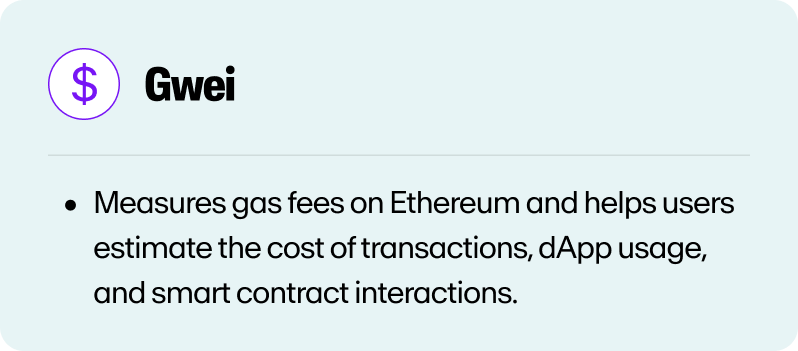
    Gwei is the fundamental unit used to measure gas fees on the Ethereum blockchain. Short for gigawei, it represents the cost required to process transactions, and helps users estimate the fees they'll pay when sending ETH, interacting with Ethereum dApps, and executing smart contracts.

    You can think of Gwei like cents to a dollar, but in much smaller fractions. Since Ethereum gas fees are often fractions of ETH tokens, Gwei provides a more practical unit for displaying them—similar to how Satoshis subdivide Bitcoin.

    • 1 ETH = 1,000,000,000 Gwei (1 billion Gwei)
    • 1 Gwei = 0.000000001 ETH (one billionth of an ETH)
    A definition of What is Gwei

    For example, instead of saying a transaction fee is “0.000000025 ETH,” it’s much easier to say it costs 25 Gwei.

    How Gas Fees Work on Ethereum

    Gas fees are necessary to use the Ethereum network, but how they work can be confusing at first. Here are the basics to help you understand what you’re really paying for.

    What is “gas” on Ethereum?

    On Ethereum, gas refers to the computational power needed to perform operations, like sending ETH, executing smart contracts, or interacting with dApps. Every action on the blockchain requires gas. The more complex the action, the higher gas prices will be.

    How gas prices are measured in Gwei

    As we've established, gas prices on the Ethereum network are measured in Gwei per unit of gas. When you initiate a transaction, the total cost is calculated by multiplying the gas limit (the maximum amount of gas allowed for the transaction) by the gas price (the cost of each gas unit in Gwei).

    The formula for calculating the total fee is:

    Total Gas Fee = Gas Limit × Gas Price (in Gwei)
    An image of the formula to calculate gas fees
    • The gas limit can vary depending on the type of transaction, with more complex actions requiring a higher gas limit.
    • The gas price is determined by network demand and can fluctuate, especially during periods of high congestion.

    Curious to see how much gas prices can vary by transaction? We'll cover that with real examples below.

    Factors that influence gas fees

    Several things affect how much gas (and Gwei) you’ll pay:

    Network congestion

    When more users are active on the network, such as during periods of high demand or popular events like NFT mints, gas prices can increase. The more transactions that are happening, the more competition there is for limited block space, leading to higher fees.

    Transaction complexity

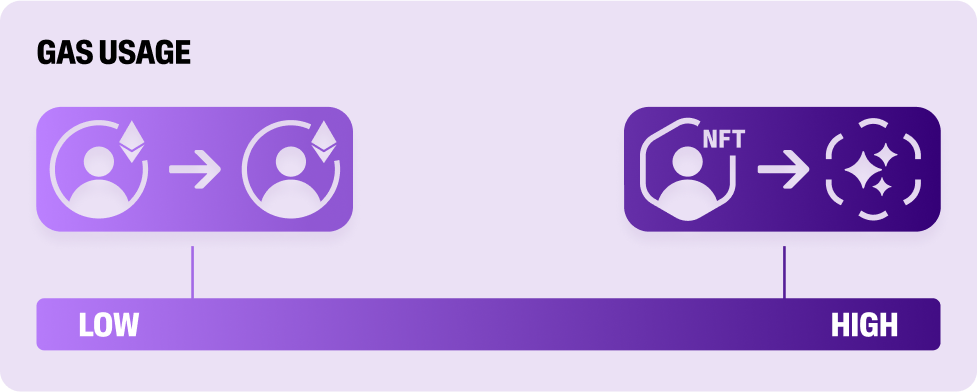
    Simple actions like sending ETH are relatively inexpensive, as they require minimal computational effort and resources. However, more complex actions like minting an NFT, swapping tokens, or interacting with decentralized finance (DeFi) protocols involve more computations and data storage, increasing gas fees.

    An infographic showing how high gas fees can be in the Ethereum ecosystem

    Priority fee (tip)

    Ethereum allows users to include an optional “tip” or priority fee to speed up their transaction. The higher the tip, the faster your transaction is likely to be processed by miners, especially during high-traffic times.

    Real-World Examples: Gwei in Action

    From sending ETH to minting NFTs, there are multiple ways for Gwei to come into play in everyday Ethereum activities.

    Example of a standard ETH transaction and Gwei cost

    When you send ETH to someone, it’s considered a standard transaction. A typical ETH transfer on the Ethereum blockchain uses a gas limit of 21,000 units, which is the amount of computational effort required to execute the transaction.

    Let’s say the current gas price is 30 Gwei. To calculate the cost of the transaction:

    • Gas limit: 21,000 units
    • Gas price: 30 Gwei (0.000000030 ETH per unit)

    The total gas fee would be: 21,000 × 30 = 630,000 Gwei, or 0.00063 ETH.

    At an ETH price of $2000, the transaction fee would be: 0.00063 ETH × $2000 = $1.26

    So, a simple ETH transfer could cost you around $1.26 in gas fees, depending on network congestion and the current Gwei price. It should be noted that this is a basic example, and actual costs can vary greatly based on factors like network demand, transaction speed, and whether you're willing to pay more for it to go through faster.

    Gwei ranges for different actions

    Action

    Typical Gwei Range

    ETH Transfer

    10–30 Gwei

    Token Swap (Uniswap)

    30–150+ Gwei

    NFT Mint

    100–300+ Gwei

    Complex Contract Calls

    200+ Gwei

    How to read Gwei values on wallet confirmations

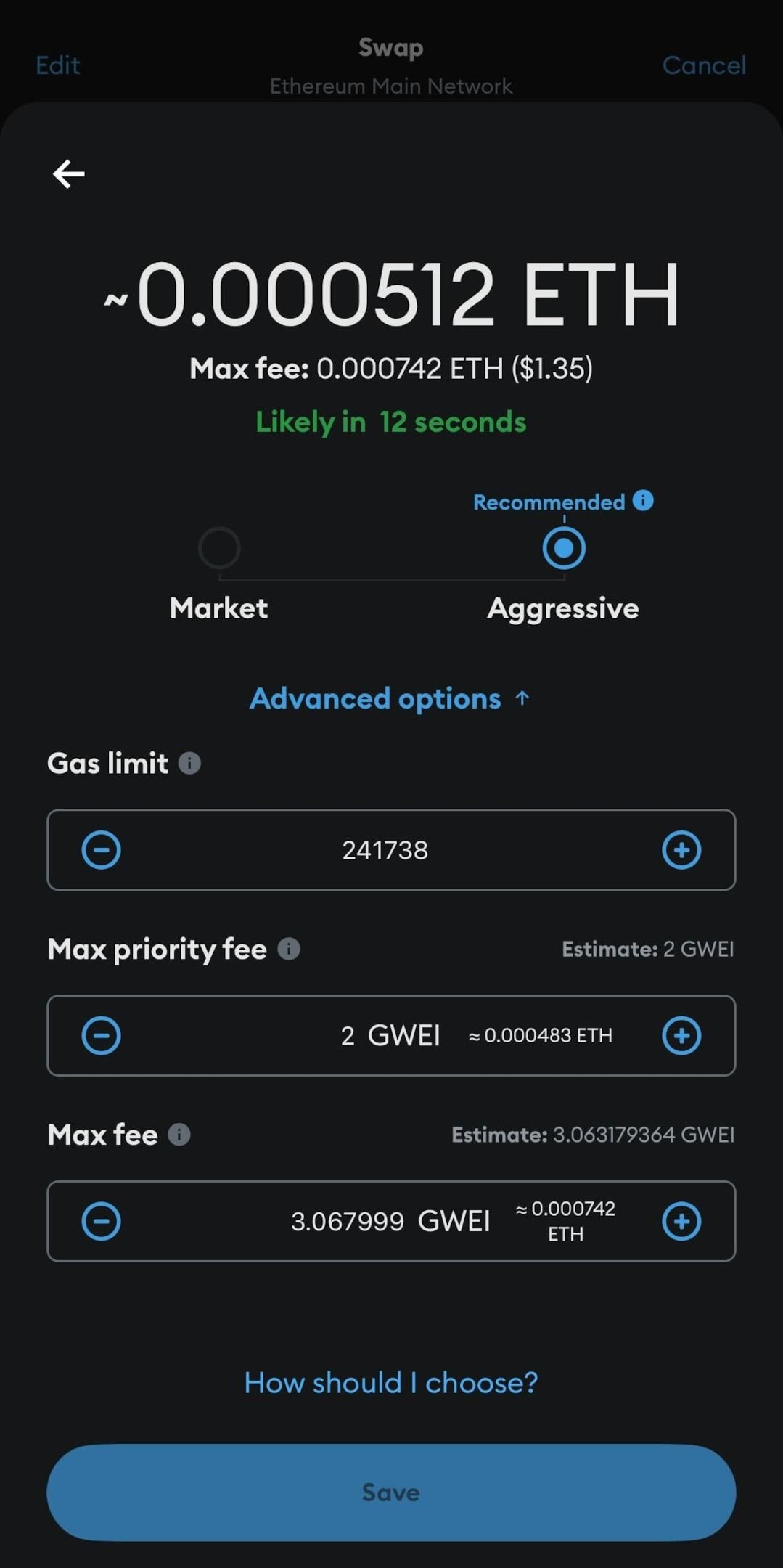
    In wallets like MetaMask, you’ll see the estimated gas fee displayed in:

    • ETH
    • Gwei
    • USD (or local fiat currency) equivalent

    You can also set the gas limit, priority fee, and max fee, to avoid overpaying for gas in the event that prices surge during peak hours.

    A screenshot of a MetaMask wallet showing gas fee settings when sending Ether (ETH)
    MetaMask customized gas fee settings — Image source

    On the transaction preview screen, some crypto wallets may omit displaying the gas fees in Gwei, opting instead for the value in the user's local fiat currency. However, you can usually play around in settings to customize the Gwei amount if you want faster or slower confirmation speeds.

    How to Check Current Gwei Prices

    Knowing the current Gwei price can help you time your transactions for the best value. Let’s explore how to check real-time gas prices and understand what they mean for your Ethereum activities.

    Top tools and websites for real-time gas tracker data

    If you want to know if gas is low right now, you can check out popular tools like:

    • Etherscan Gas Tracker
    • Blocknative Gas Estimator
    • Milk Road Ethereum Gas Chart
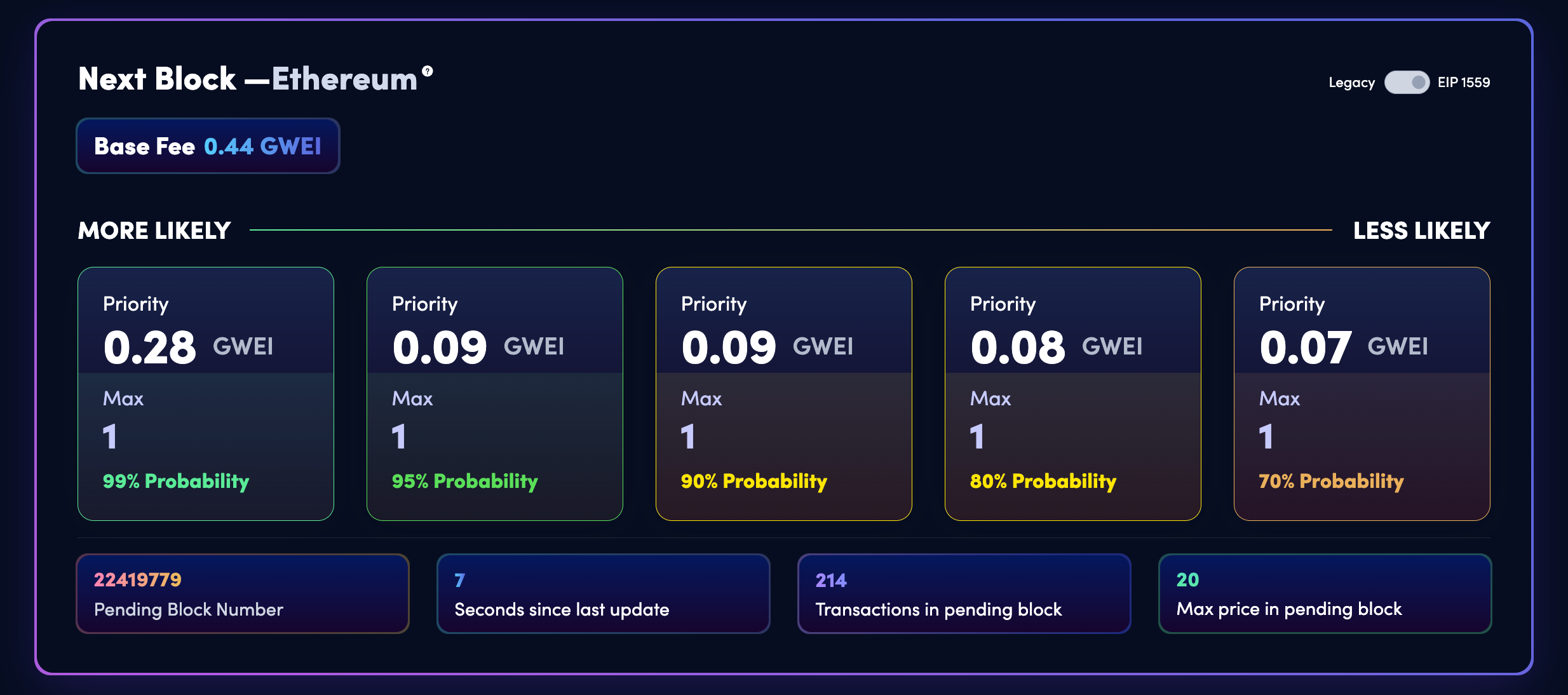
    A screenshot of Blocknative showing the range of gas prices to send Ether (ETH)
    Blocknative's Gas Estimator displays a dashboard overview of current ETH gas fees — Image source

    These tools show real-time Gwei prices, network congestion levels, and even give recommendations for whether you should wait or go ahead with a transaction at a given time. Previously, there were additional sites like ETH Gas Station, that have since shut down their services.

    Understanding “low,” “average,” and “high” Gwei prices

    These categories indicate how fast your transaction will be processed. Simply:

    • Low: Cheapest, but slowest.
    • Average: Balanced option for most users.
    • High: Fastest, but costs more.
    A screenshot on Etherscan showing priority Gwei and gas unit ranges
    Gwei levels displayed on Etherscan — Image source

    Gas estimation features in popular crypto wallets

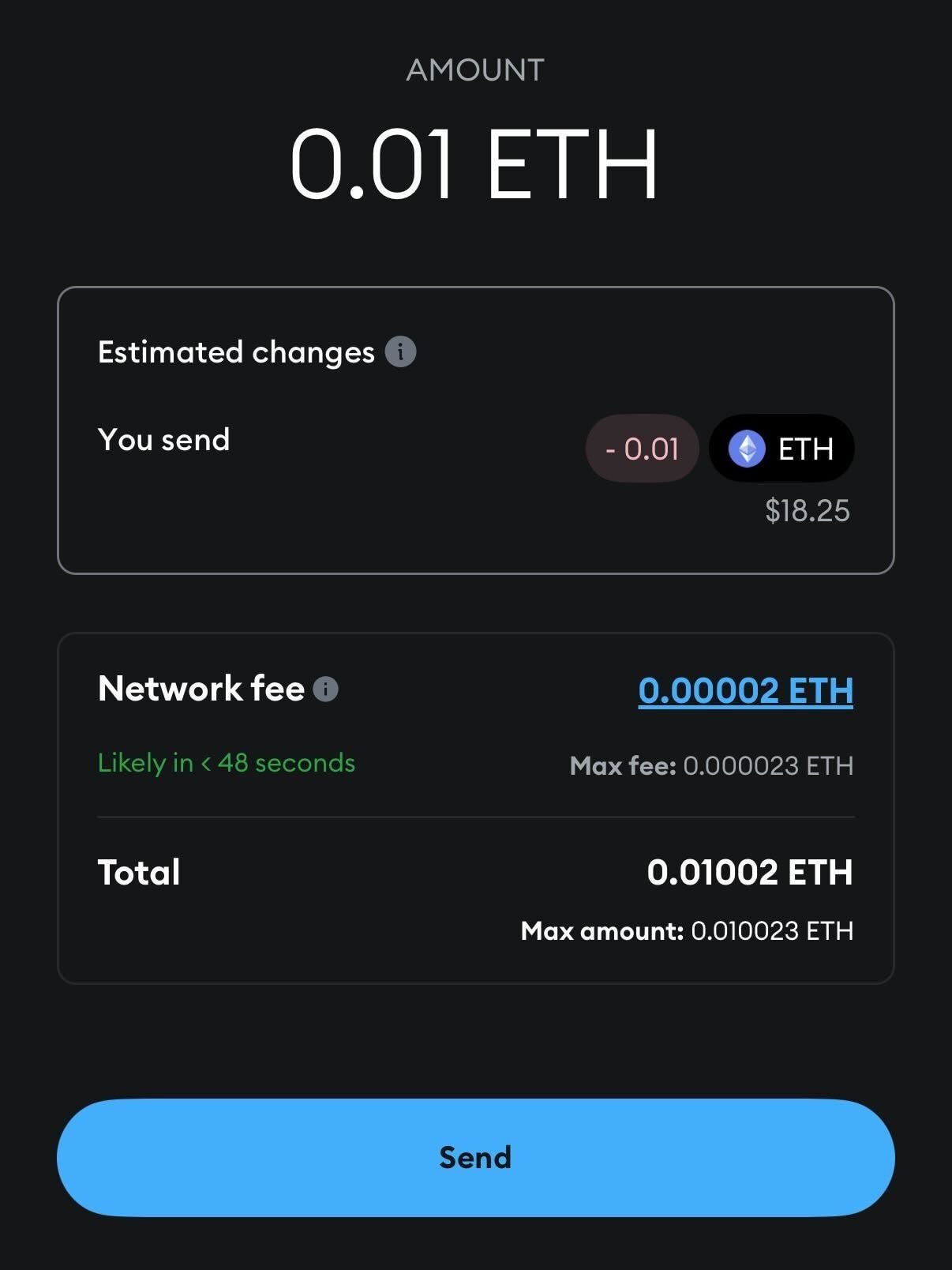
    Ethereum wallets like MetaMask, Rainbow, and Trust Wallet include built-in gas estimators. These tools allow users to choose preset speeds (slow, average, fast), set a custom Gwei amount, and see live estimates before confirming the transaction.

    A screenshot in a MetaMask wallet showing estimated gas prices
    MetaMask displays gas fees before sending ETH

    Tips to Reduce Gas Fees Paid in Gwei

    Gas fees can add up quickly on Ethereum, but there are a few smart ways to reduce the amount of Gwei you spend on transactions:

    1) Timing your transactions for lower network demand

    Ethereum gas prices fluctuate throughout the day. To get the timing right, you can:

    • Avoid high-traffic times (like weekday afternoons UTC during market hours)
    • Instead, schedule important actions during off-peak hours (late nights or weekends)
    • Use tools like Etherscan to view Ethereum network activity

    2) Using Layer-2 solutions

    Layer-2 solutions allow you to interact with Ethereum at a fraction of the gas cost. Instead of sending a transaction on the mainnet, you can use rollups like Arbitrum or Optimism. These solutions offer faster speeds and cheaper fees by batching transactions off-chain and submitting them to the main blockchain as a single transaction.

    3) Choosing slower transaction speeds to save on fees

    If you're not in a rush, opt for a “Low” gas fee option in your wallet. You’ll save on gas and still get your transactions confirmed, albeit just a tad slower. Most wallets like MetaMask let you manually select slower speeds or set a custom Gwei amount for even greater control.

    Gwei and EIP-1559: Base Fee + Tip Explained

    To better understand how Gwei works today, it helps to know how Ethereum gas fees were structured before and after EIP-1559.

    The Ethereum EIP-1559 upgrade

    In August 2021, the Ethereum blockchain introduced EIP-1559 (Ethereum Improvement Proposal), a significant upgrade designed to make gas fees more predictable and efficient. Prior to this update, gas fees were based on an auction system, leading to fluctuating and sometimes unpredictable costs.

    Upon its approval, EIP-1559 implemented a base fee + tip system:

    • Base fee: Gwei fee set algorithmically based on network demand and is automatically burned to reduce supply.
    • Priority fee (tip): Optional Gwei tip users can add to speed things up and incentivize miners to prioritize their transaction.

    For example: If base fee = 40 Gwei and Tip = 10 Gwei, the total amount = 50 Gwei

    Since the EIP-1559 upgrade, ETH gas fees have stabilized somewhat, while also benefiting from a deflationary mechanism that burns a portion of the ETH used for gas. Over time, this reduces Ethereum’s circulating supply and supports its shift toward becoming a more deflationary asset.

    Pay Lower Gas Fees on ETH Today

    Tired of getting hit with high Gwei and gas fees?

    Platforms like MoonPay can help you optimize your ETH transactions with cost-effective fiat-to-crypto payment options, Layer-2 token support, and real-time fee transparency at checkout. Plus, you can buy Ethereum using recurring purchases to take advantage of optimal pricing over time.

    You might also like

    guide+2
    embedded wallets end of seed phrases

    Embedded Wallets and The End of Seed Phrases

    For most of crypto's history, the price of admission was a ritual: write down 12 words, in order, on something that can't catch fire or get wet, and guard them for the rest of your life. Get it right and you're your own bank. Get it wrong o

    cryptocurrency+2
    Accepting Crypto Payments

    How to Accept Crypto Payments: Checkout, Settlement & Merchant Setup

    A customer just bought a $100 hoodie from your online store and paid in crypto. Quick question: where is that $100 right now?

    cryptocurrency+2
    chain abstraction explained

    Chain Abstraction Is the Next Step After Bridges and Network Switching

    Somewhere in your wallet right now there is probably money you can't easily spend. Not lost, not stolen. Just on the wrong network. USDC on Arbitrum when the app you want takes USDC on Base. ETH on mainnet when the game you're playing lives

    bitcoin+2
    crypto in prediction markets

    How Prediction Markets Work (and Where Crypto Fits In)

    A prediction market is a place where people put money on what happens next. Will the Fed cut rates in September? Will Bitcoin close the year above $150,000? Each question becomes a contract you can buy and sell, and the price of that contra

    cryptocurrency+2
    What is an MPC wallet? Benefits, Tradeoffs & Use Cases

    What is an MPC wallet? Benefits, Tradeoffs & Use Cases

    An MPC wallet is a crypto wallet that never stores your private key in one piece. The key is split into encrypted shares held in different places, and signing a transaction combines those shares without ever rebuilding the whole key. That d

    security+2
    Wallet as a Service (WaaS)

    What Builders Need to Know About Wallet as a Service (WaaS)

    You want to add a crypto wallet to your product. You start researching and hit three terms that all overlap: white-label wallets, embedded wallets, and wallet as a service. Marketing pages from infrastructure providers blur the lines. Most