











What is cloud mining in crypto? | How cloud mining works
For many, the concept of crypto mining may conjure images of individuals with specialized hardware tirelessly solving complex mathematical puzzles while burning electricity. However, the reality is that the cryptocurrency mining ecosystem h

By Corey Barchat
Published on Feb 28, 2024
Last modified on Sep 8, 2025
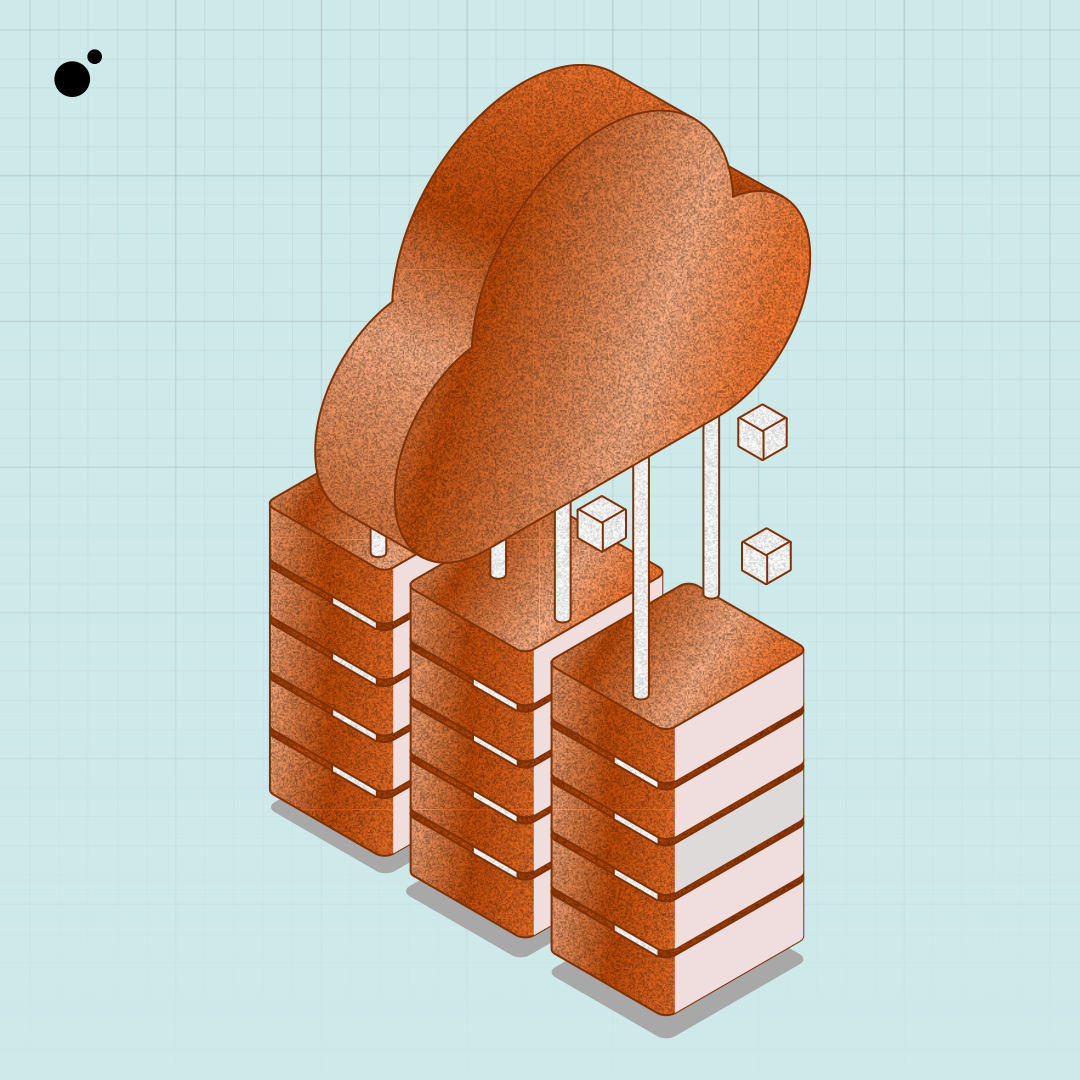
For many, the concept of crypto mining may conjure images of individuals with specialized hardware tirelessly solving complex mathematical puzzles while burning electricity. However, the reality is that the cryptocurrency mining ecosystem has diversified significantly over the years.
Among the various methods available, cloud mining has emerged as a popular alternative, offering a different approach to mining cryptocurrencies like Bitcoin without the need for extensive hardware investments or technical expertise.
But what exactly is cloud mining, and how does it differ from traditional mining methods such as solo mining and pool mining?
In this article, we'll dive into what cloud mining is, how it works, its advantages and risks, as well as alternative mining methods.
What is Cloud Mining?
Cloud mining is a method of cryptocurrency mining that utilizes remote data centers with shared processing power. Instead of owning and maintaining your own mining hardware, users can rent computing power from these data centers to mine cryptocurrencies.
Essentially, cloud mining allows individuals to participate in crypto mining without dealing with the complexities of hardware setup and maintenance (not to mention the costs).
In traditional mining for Proof of Work cryptocurrencies, users that wish to participate are responsible for purchasing the hardware necessary to mine a cryptocurrency like Bitcoin.

Cloud mining helps to make the mining process more decentralized and available to everyone, regardless of how much expertise they possess or available funds they can spend on equipment.
How does Cloud Mining work?
Whether you're interested in cloud mining yourself or just curious how it works, here are some general steps that users should follow in order to participate in this form of crypto mining:
1. Choose a Cloud Mining provider
The first step is to select a reputable cloud mining provider. There are numerous companies that provide cloud mining services, so it's essential to research and compare their offerings, reputation, and fees.
2. Select a mining plan
Once you've chosen a cloud mining service provider, you'll need to select a mining plan that suits your budget and mining goals. These plans will cater to different user types and typically vary in terms of hash rate, contract duration, and pricing.
3. Purchase hash power
After selecting a plan, you'll purchase hash power from the cloud mining provider. Hash power is the unit of measurement for the processing power used in cryptocurrency mining.
4. Start mining
Once you purchase the hash power, the cloud mining service will allocate the purchased hash power to your account, and mining will begin automatically. You generally don't need to worry about hardware setup, maintenance, or electricity costs, as everything is managed by the provider.
5. Receive mining rewards
As your rented hash power contributes to solving complex mathematical problems and validating transactions, you'll receive mining rewards in the form of cryptocurrency that you can store in a crypto wallet.
Useful metrics to know in Cloud Mining
Understanding key metrics is crucial for evaluating the profitability and efficiency of cloud mining. Here are some that you should know:
Hash rate
Hash rate refers to the speed at which a mining machine operates. A higher hash rate generally indicates greater processing power and potential for mining rewards.
Energy consumption
This metric measures the amount of energy consumed by the mining operation. Higher energy consumption can increase operating costs and impact profitability, as well as the environment.
Cost per hash
Cost per hash is the price you pay for each unit of hashing power. It's essential to consider this metric when comparing the pricing of different cloud mining plans offered by each service provider.
Mining difficulty
Mining difficulty adjusts automatically to ensure that blocks are mined at a consistent rate. Higher mining difficulty requires more computational power, affecting energy costs and the potential to earn a profit.
Block reward
Block reward refers to the amount of cryptocurrency awarded to miners for successfully validating a block of transactions. In the case of BTC, the block reward for mining Bitcoin decreases during halving events that occur approximately every four years.
Price of cryptocurrency
In general, cryptocurrencies valued at higher prices will yield greater mining rewards, while lower priced tokens can result in reduced returns from mining.
Pool fees
When participating in a mining pool, you'll typically pay a fee for using the pool's resources. Pool fees can vary significantly among different providers, so it's important to check before committing to a service provider.
Advantages of Cloud Mining
Cloud mining offers the potential for several advantages that may be beneficial to users:
Accessibility
Cloud mining allows individuals to participate in Bitcoin mining (and other crypto mining) without technical expertise or the need to purchase expensive hardware.
Cost-efficiency
Since cloud mining providers handle hardware maintenance and energy costs, users can enjoy mining without incurring the same expenses they otherwise would if they purchased the equipment themselves.
Convenience
Cloud mining services eliminate the need for hardware setup, maintenance, and troubleshooting, making them a convenient option for beginners.
Diversification
Cloud mining allows users to mine multiple cryptocurrencies simultaneously, enabling them to diversify their crypto portfolio. For example, you could participate in Bitcoin cloud mining and at the same time mine Bitcoin Cash.
Scalability
Users can easily scale up or down their mining operations by adjusting their hashing power purchases.
Risks of Cloud Mining
While Cloud mining offers the opportunity to earn rewards, there are also several drawbacks that potential cloud miners should consider before making a decision:
Scams
The cloud mining industry is susceptible to scams and fraudulent schemes. It's essential to research and choose reputable providers to help avoid falling victim to scams.
Limited control
Since users don't have physical control over the mining hardware, they rely entirely on the cloud mining service for infrastructure, security, and performance.
Profitability fluctuations
Mining profitability is subject to various factors such as cryptocurrency prices, mining difficulty, and operational costs, leading to potential fluctuations in returns.
Contractual obligations
Users are bound by the terms and conditions of the cloud mining contract, which may include limitations on payouts, contract duration, and termination fees.
Alternatives to Cloud Mining: other ways to mine crypto
Cloud mining is but one of several ways to mine cryptocurrencies. Here are some more options:
Solo mining
Solo mining involves mining cryptocurrencies independently, without joining a mining pool.

While it offers full control over mining operations, it requires substantial hardware investments and may not be suitable for beginners or those with a lower budget.
Mining pools
Mining pools allow miners to combine their resources and increase their chances of mining blocks and earning rewards collectively.

Mining pools distribute rewards based on each miner's contribution, so users should only consider them if they plan to contribute.
ASIC mining
Application-Specific Integrated Circuit (ASIC) miners are specialized hardware designed for mining specific cryptocurrencies such as Bitcoin (BTC), Bitcoin Cash (BCH), Dogecoin (DOGE), Ethereum Classic (ETC), and Litecoin (LTC).

ASIC mining offers high efficiency and hash rates, but requires significant upfront investment in the equipment.
GPU/CPU mining
General-purpose hardware such as Graphics Processing Units (GPUs) and Central Processing Units (CPUs) can be used for mining certain cryptocurrencies.

While less efficient than ASICs, they offer greater flexibility and are suitable for mining a wide range of coins like Bitcoin, Dogecoin and Ethereum Classic (GPU only).
What cryptocurrencies are available for Cloud Mining?
Cloud mining is available for most Proof of Work cryptocurrencies. Here are a few mineable tokens:
Concluding thoughts on crypto Cloud Mining
Cloud mining presents an accessible and convenient option for individuals looking to participate in cryptocurrency mining without the complexities of hardware setup and maintenance.
However, it's essential to carefully evaluate the risks and rewards associated with cloud mining and choose reputable providers to mitigate potential pitfalls. Additionally, exploring alternative mining methods can provide users with greater flexibility and control over their mining operations.
Ultimately, whether you choose cloud mining or other mining methods, staying informed and conducting thorough research is critical for anyone thinking of participating in cryptocurrency mining.
How to acquire cryptocurrency
Although cloud mining helps make cryptocurrency more accessible, it still may be outside the price range of some users. Fortunately, there are other ways to acquire Bitcoin and other mineable cryptocurrencies.
MoonPay makes it easy to buy cryptocurrency like BTC using your credit card or any other preferred payment method. And if you're a cloud miner looking to cash in on your mining rewards, our off-ramp allows you to trade cryptocurrency for fiat money when you decide it's time to sell your crypto.


