Launching MoonPay Enterprise: Stablecoin APIs for developers → Learn More

MoonPay
  • Individuals
  • Business
  • Language
  • Get Started
Buy
Buy cryptoUse a card, Apple Pay or Google Pay to buy crypto fast. We also accept bank transfers and wires.
Buy BitcoinBTC
Buy EthereumETH
Buy PolygonPOL
Buy SolanaSOL
Buy DogecoinDOGE
Buy CardanoADA
Buy AvalancheAVAX
Sell
Sell cryptoTurn your crypto into cash. In a flash. Get paid straight to your bank account or Visa card.
Sell BitcoinBTC
Sell EthereumETH
Sell USDCUSDC
Sell SolanaSOL
Sell CardanoADA
Sell DogecoinDOGE
Sell AvalancheAVAX
Trade
Trade cryptoTrade between tokens, even if they’re on different chains (we make bridging seamless too).
Trade EthereumETH
Trade USDCUSDC
Trade AaveAAVE
Trade ChainlinkLINK
Trade Wrapped BitcoinWBTC
Trade DaiDAI
Trade CompoundCOMP
Company
NewsroomNewsroomMediaMediaCareersCareersChangelogChangelogMoonPay DiscoverMoonPay DiscoverNew
Crypto Prices
Bitcoin PriceEthereum PriceSolana PriceDogecoin PriceCardano PriceXRP PriceBNB PriceAll Crypto Prices
Learn
What is Blockchain?What is Blockchain?What are NFTs?What are NFTs?What is Bitcoin mining?What is Bitcoin mining?What is DeFi?What is DeFi?What is crypto staking?What is crypto staking?All Learn Articles
Support
DocumentationDocumentationHelp CenterHelp CenterContact UsContact UsStatusStatus
  • Language
  • MOONPAY AUS PTY LTD is an Australian company with its registered office at Level 12, 680 George Street, Sydney NSW 2000, Australia. MOONPAY AUS PTY LTD is registered with the Australian Transaction Reports and Analysis Centre (AUSTRAC) as a Virtual Asset Service Provider (VASP).

    English (Australia)
    • Personal
    • Buy Crypto
    • Sell Crypto
    • Trade Crypto
    • Learn about Crypto
    • Crypto Price
    • MoonAgentsNew!
    • Business
    • Ramps
    • Virtual AccountsNew!
    • MoonPay Discover
    • MoonPay Commerce
    • MoonPay InstitutionalNew!
    • Company
    • About Us
    • CareersWe're hiring
    • Newsroom
    • Media
    • Changelog
    • Support
    • API Docs
    • Help Center
    • Contact Us
    • Status
    • Security
    • Buy
    • Buy Bitcoin
    • Buy Ethereum
    • Buy Solana
    • Buy Cardano
    • Sell
    • Sell Bitcoin
    • Sell Ethereum
    • Sell XRP
    • Sell Solana
    • Trade
    • Trade Ethereum
    • Trade SOL
    • Trade Aave
    • Trade Chainlink
    • Crypto Prices
    • Bitcoin Price
    • Ethereum Price
    • Dogecoin Price
    • XRP Price
    • Cardano Price
    • Learn
    • What is Blockchain?
    • What are NFTs?
    • What is Bitcoin mining?
    • What is DeFi?
    • What is crypto staking?
    • Legal
    • Licenses
    • Privacy Policy
    • Cookie Policy
    • Terms of Use
    English (Australia)

    MOONPAY AUS PTY LTD is an Australian company with its registered office at Level 12, 680 George Street, Sydney NSW 2000, Australia. MOONPAY AUS PTY LTD is registered with the Australian Transaction Reports and Analysis Centre (AUSTRAC) as a Virtual Asset Service Provider (VASP).

    Back to all articles

    How to choose a crypto wallet

    Just as with traditional financial assets, there are multiple ways to store your crypto. How you choose to store your funds depends on your investor profile (the type of crypto investor you are) and what your risk appetite is.

    Corey Barchat

    By Corey Barchat

    Published on Oct 28, 2022

    Last modified on Nov 13, 2024

    guidecryptocurrencysecuritybasics
    Featured image for How to choose a crypto wallet
    1. 1.What is a custodial crypto wallet?
    2. 2.What is a non-custodial crypto wallet?
    3. 3.Deciding which crypto wallet is right for you

    Just as with traditional financial assets, there are multiple ways to store your crypto. How you choose to store your funds depends on your investor profile (the type of crypto investor you are) and what your risk appetite is.

    In this article, we will explore the two main wallet types you can use to store your cryptocurrencies: custodial and non-custodial, and offer some guidance on how to choose the right one for you.

    What is a custodial crypto wallet?

    With custodial wallets, your funds are in the possession of a third party. You can think of this like a bank: when you deposit and store your money, the bank is securing it for you so that you don’t have to take on the risk of storing it yourself. In this case, you will not have access to the private keys, as you are delegating custody of your funds to the custodian.

    Many popular crypto exchanges offer custodial accounts, such as Binance and Coinbase. It is recommended to review the wallet provider’s terms and conditions to understand what protections, if any, may  apply to your funds should something happen to the exchange.

    Custodial wallet benefits

    • Outsource the burden of storing your crypto to a third party
    • No need to worry about losing your private keys
    • Beginner-friendly user interface

    Custodial wallet risks

    • Hacks targeting third party storage can result in loss of some or all of your funds
    • Third parties may prevent you from accessing your  funds if they go under
    News headline on collapsed crypto exchange.
    Crypto exchange collapse covered by Bitcoin.com — Image source

    What is a non-custodial crypto wallet?

    If you prefer to have total control over your funds, then non-custodial wallets may be the choice for you.

    Going back to our bank analogy, with a non-custodial wallet you are acting as your own bank. No one else has access to your funds, which you keep under your own personal lock and key.

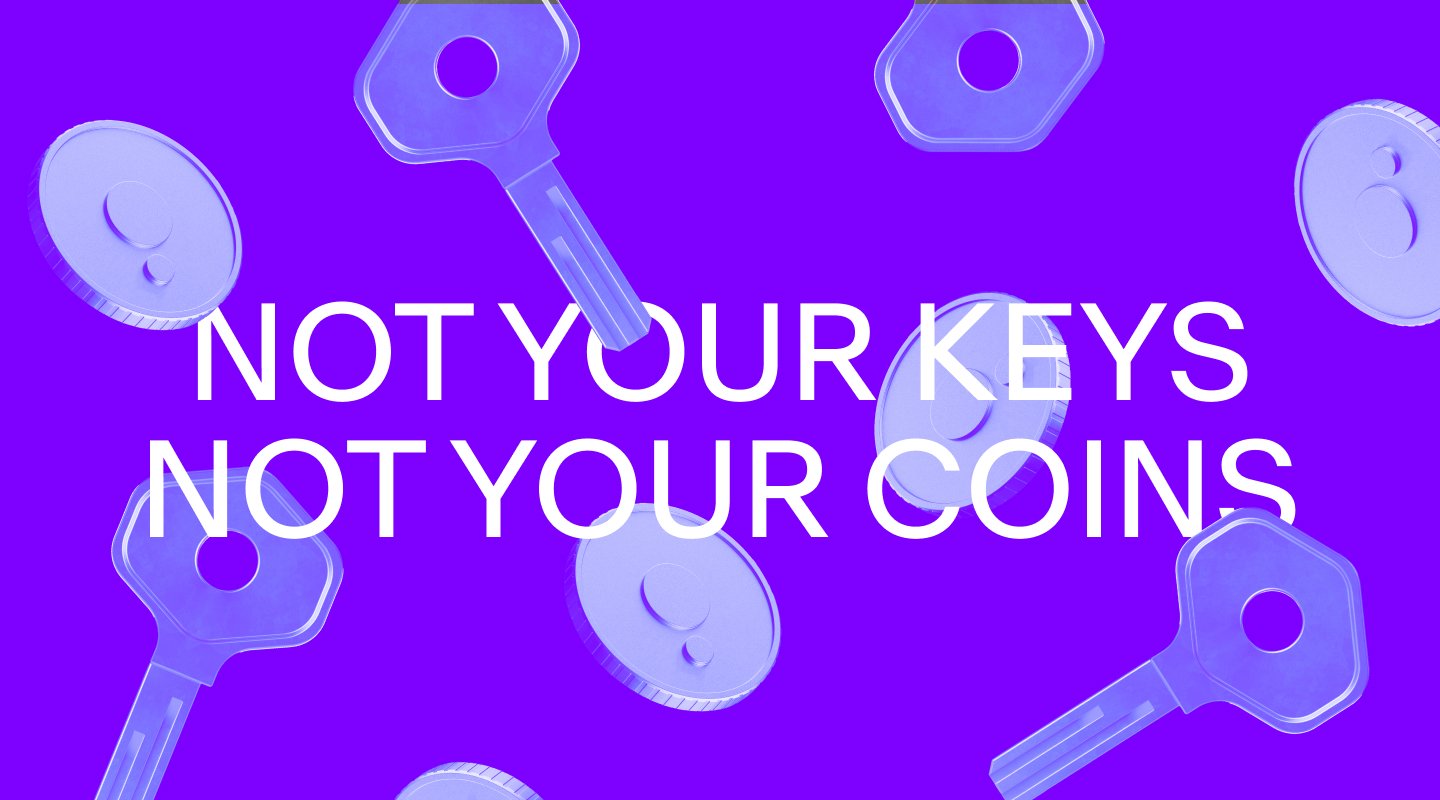
    There's a popular web 3 maxim: "not your keys, not your coins". If a third party controls the private keys to your wallet, then your funds are never truly in your control.

    An image stating "Not your keys, not your coins"

    You can think of your non-custodial wallet as your own private digital safe. You own the private keys, and no one else can withdraw or send funds from your wallet without access to these keys. If you decide to send funds to another wallet, you have the authority to do so instantly, and whenever you decide to.

    Non-custodial wallet benefits

    • Total control over your crypto, with no risk of third parties losing your funds
    • Ease-of-access to your funds
    • Offline (hardware) storage capability

    Non-custodial wallet risks

    • If you forget your keys or wallet information, you may be locked out of your own account and lose access to your crypto
    • User interface is generally less beginner-friendly
    • Greater security responsibility is placed on you
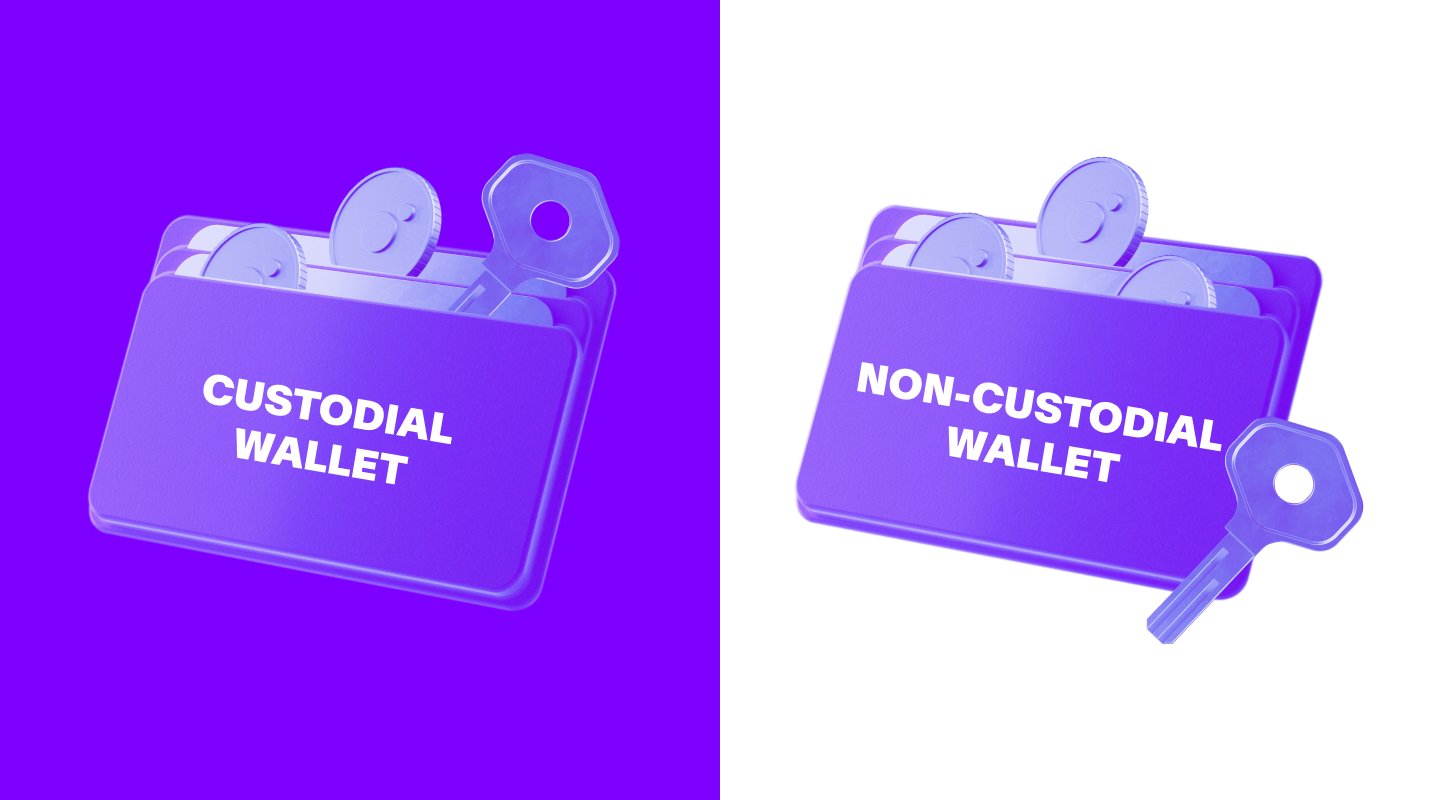
    An image of a non-custodial wallet and a custodial wallet.
    Custodial wallets allow third parties to manage your private keys. Non-custodial wallets give you full control over private keys and digital assets

    Deciding which crypto wallet is right for you

    To understand whether a custodial or non-custodial wallet is the right fit, you need to evaluate what kind of crypto investor you are.

    If you prefer to have complete access over your own funds, or if you send and receive crypto quite frequently, then you may be inclined to choose a non-custodial wallet, such as Ledger, Trust Wallet, Exodus.

    If you’re new to crypto and prefer that a third party manages your funds, you may lean more towards a custodial wallet.

    Looking to create a new wallet address? You can get started here.

    You can also kick off your crypto journey by topping up your wallet in euros, pounds, or dollars and use your MoonPay Balance for buying Bitcoin (BTC), Ethereum (ETH), and other tokens. Use your balance to enjoy lower transaction fees, quicker processing times, and better approval rates. Plus, withdraw to your bank account with zero fees when you're ready to cash out.

    You might also like

    guide+2
    embedded wallets end of seed phrases

    Embedded Wallets and The End of Seed Phrases

    For most of crypto's history, the price of admission was a ritual: write down 12 words, in order, on something that can't catch fire or get wet, and guard them for the rest of your life. Get it right and you're your own bank. Get it wrong o

    cryptocurrency+2
    Accepting Crypto Payments

    How to Accept Crypto Payments: Checkout, Settlement & Merchant Setup

    A customer just bought a $100 hoodie from your online store and paid in crypto. Quick question: where is that $100 right now?

    cryptocurrency+2
    chain abstraction explained

    Chain Abstraction Is the Next Step After Bridges and Network Switching

    Somewhere in your wallet right now there is probably money you can't easily spend. Not lost, not stolen. Just on the wrong network. USDC on Arbitrum when the app you want takes USDC on Base. ETH on mainnet when the game you're playing lives

    bitcoin+2
    crypto in prediction markets

    How Prediction Markets Work (and Where Crypto Fits In)

    A prediction market is a place where people put money on what happens next. Will the Fed cut rates in September? Will Bitcoin close the year above $150,000? Each question becomes a contract you can buy and sell, and the price of that contra

    cryptocurrency+2
    What is an MPC wallet? Benefits, Tradeoffs & Use Cases

    What is an MPC wallet? Benefits, Tradeoffs & Use Cases

    An MPC wallet is a crypto wallet that never stores your private key in one piece. The key is split into encrypted shares held in different places, and signing a transaction combines those shares without ever rebuilding the whole key. That d

    security+2
    Wallet as a Service (WaaS)

    What Builders Need to Know About Wallet as a Service (WaaS)

    You want to add a crypto wallet to your product. You start researching and hit three terms that all overlap: white-label wallets, embedded wallets, and wallet as a service. Marketing pages from infrastructure providers blur the lines. Most