







Modular Chains
Traditional blockchains process transactions, verify data, reach consensus, and settle the final state at once, all on a single layer.

By Team MoonPay
Published on May 29, 2026
Last modified on May 29, 2026

Traditional blockchains process transactions, verify data, reach consensus, and settle the final state at once, all on a single layer.
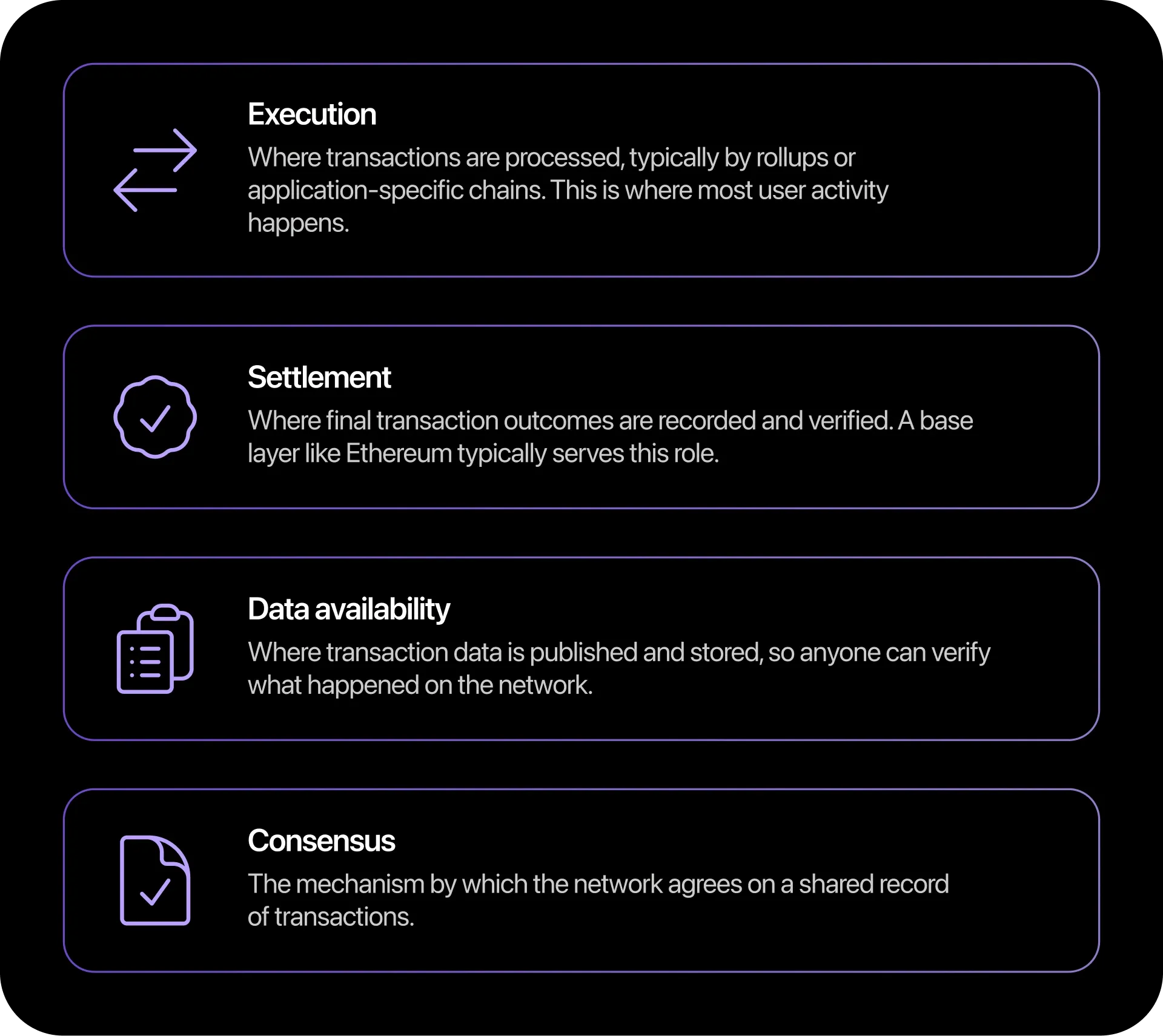
Modular chains take a different approach: splitting each function of a blockchain across layers each dedicated to a single function.
The Blockchain Trilemma
Modular design separates a blockchain’s functions so that one layer can be upgraded or expanded without changing the others. This way, adding capacity no longer requires altering the core network.
This approach is one response to the Blockchain Trilemma: the challenge of building a blockchain that is simultaneously secure, scalable, and decentralized. Traditional blockchains can only handle so many transactions at once. Modular design separates the layers that cause this bottleneck, so congestion in one area does not affect the whole system, and each layer can focus on what it does best.