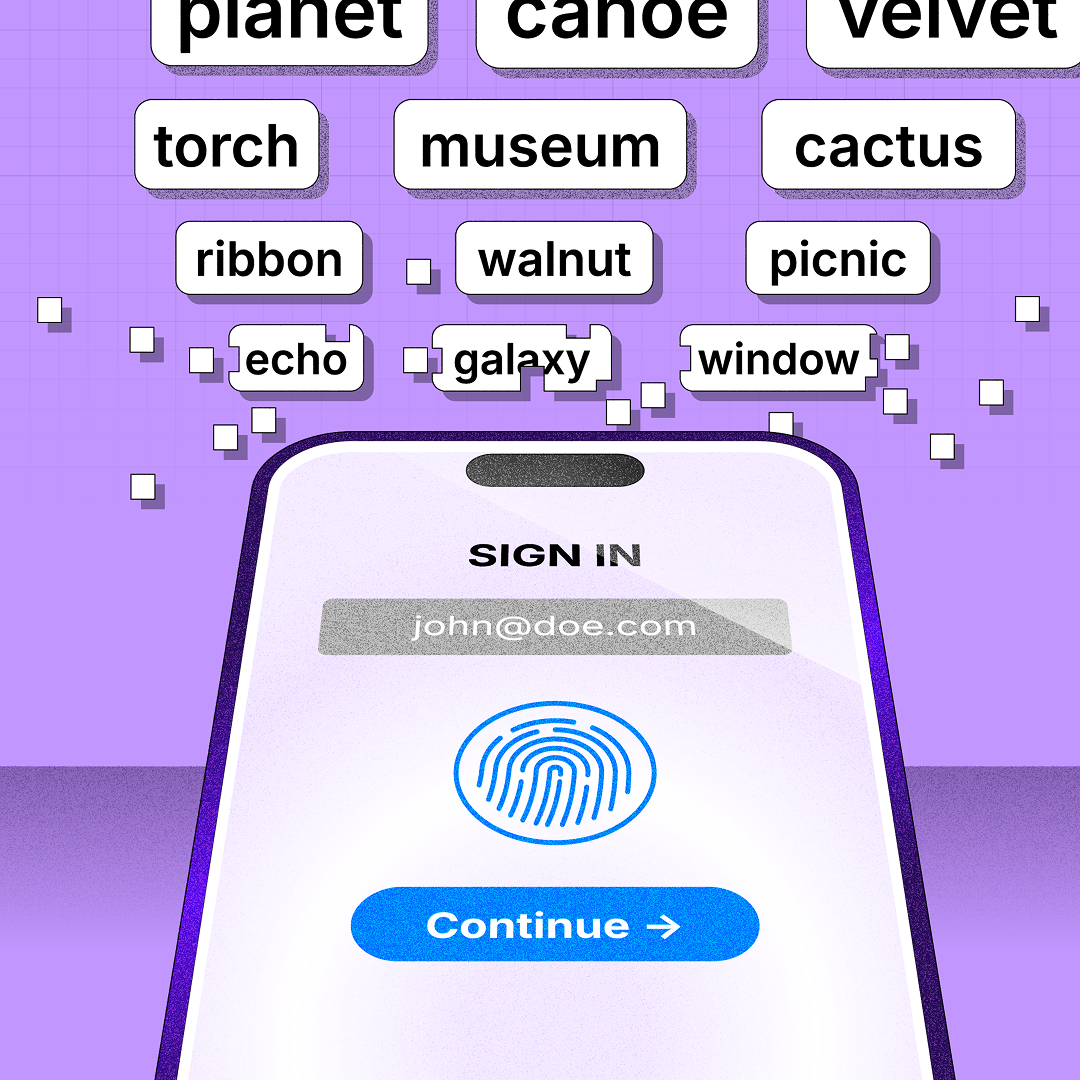
For most of crypto's history, the price of admission was a ritual: write down 12 words, in order, on something that can't catch fire or get wet, and guard them for the rest of your life. Get it right and you're your own bank. Get it wrong once, and nobody on Earth can help you.
That ritual filtered out more would-be users than fees or volatility ever did. Embedded wallets are the industry's answer to it. The wallet lives inside the app you're already using, created the moment you sign up with an email, a Google account, or a fingerprint. Nothing to install, nothing to transcribe. This article covers what embedded wallets are, how they secure keys without a seed phrase, how they compare to the wallets you download, and what you trade for the convenience.
In short: An embedded wallet is a crypto wallet built directly into an app and created behind a normal login. Software splits and secures the private key, usually across your device, secure hardware, and the provider's infrastructure, so there is no seed phrase to write down or lose. You sign in the way you sign in everywhere else. The tradeoffs live in custody and portability, and they're worth understanding before you rely on one.
Embedded wallets explained
An embedded wallet is a crypto wallet whose creation, key storage, and transaction signing all happen inside an application, instead of in a separate wallet product you download and manage yourself.
You already use this pattern daily, minus the crypto. Uber stores your card so the ride ends without a checkout screen. Your phone holds your boarding pass. Apps have spent fifteen years absorbing the fiddly parts of payments. An embedded wallet applies the same move to crypto's fiddliest part: the private key.
In practice it looks like this. You sign up for an app with your email or a social login, and somewhere inside that signup, a wallet quietly comes into existence, with a real address on a real blockchain. You can receive assets, hold them, and send them. You just never met a seed phrase along the way.
Two clarifications up front. Embedded wallets are not a single product; they're a design pattern, delivered to app builders by infrastructure providers. And "no seed phrase" does not mean "no private key." The key exists. What changes is who keeps it, and how.
Why the seed phrase became the bottleneck
The seed phrase is a brilliant piece of cryptography attached to a terrible piece of product design. Twelve or twenty-four words encode complete control of your funds, which means they also encode complete responsibility. There is no reset link. Support can't help. The words are the account.
The damage is measurable. Chainalysis has estimated that millions of bitcoin, as much as a fifth of everything mined at the time of its analysis, sit stranded in wallets whose keys are likely gone for good. Much of that is early coins and dead hard drives, but the mechanism hasn't changed: one misplaced backup and the money becomes a museum exhibit.
For newcomers, the phrase is a barrier before it's a risk. A first-time user who just wants to try a crypto app gets handed a wallet-installation detour, a hand-transcription exercise, and a warning that any mistake is permanent. Most people, reasonably, close the tab. Every app builder in crypto has watched signups die at exactly this screen.
For a decade the industry's answer was education: be careful, buy a steel backup plate, never take a screenshot. Embedded wallets are the quiet admission that the ritual itself was the problem.
How embedded wallets work without one
Removing the seed phrase doesn't remove the cryptography. It relocates it. Instead of one person guarding one string of words, the private key is split into pieces that live in different places and only ever act together. Two families of design dominate.
The first is multi-party computation, or MPC. The key is generated as separate shares from the start: typically one on your device, one with the infrastructure provider, one in backup. Signing a transaction is a joint calculation between the shares, and the complete key never exists anywhere, not even for an instant. We cover the mechanics in our MPC wallet explainer.
The second family splits the key with a secret-sharing scheme and reassembles it only inside a trusted execution environment: a hardware-isolated vault, such as AWS Nitro Enclaves, that even the provider's own engineers can't see into. One piece is tied to your login credential, the other sits in the enclave. When you hit send, the pieces meet inside the hardware for a few milliseconds, sign the transaction, and are destroyed.
Either way, recovery stops being a treasure hunt. Because part of the key is bound to your login, getting your wallet back looks like getting any account back: verify your email or use your passkey. Lose your phone and you haven't lost your crypto. You've lost a phone.
The best embedded setups pair this with account abstraction, the technology behind smart wallets, so the app can also sponsor gas fees and batch approvals. That's how you get the full effect: sign up with an email, receive a stablecoin, send it onward, and never learn what a gas token is. If the app also hides which blockchain you're on, that's chain abstraction, and the two layers work well together.
Embedded wallet, regular wallet, or smart wallet
These terms get tangled because they describe different layers, not rival products.
A regular wallet (MetaMask, Phantom, a hardware device) is standalone software you install once and carry between apps. An embedded wallet is defined by where it lives: inside one app. A smart wallet is defined by what the account can do: it's a programmable smart-contract account with features like passkey login and sponsored gas. An embedded wallet can be a smart wallet under the hood, and increasingly is.
Regular wallet | Embedded wallet | Smart wallet | |
What defines it | Standalone app or device you install | Lives inside another app | Programmable smart-contract account |
How you get in | Seed phrase or hardware device | Email, social login, or passkey | Passkey or whatever the account is configured for |
Who manages keys | You, alone | Split between your login, the provider, and secure hardware | Depends on the setup; often embedded-style |
Works across apps | Yes, anywhere | One app by default, unless you export | Yes, where supported |
Recovery | Seed phrase only | Account-style login recovery | Configurable, including trusted contacts |
One more term you'll meet if you build apps rather than use them: wallet as a service, or WaaS. That's the commercial name for embedded wallet infrastructure, the product a developer buys instead of building key management from scratch. Same technology, viewed from the build side. We cover the vendor side in our WaaS guide.
The custody question
Almost every embedded wallet describes itself as non-custodial, and the claim is usually true in the narrow sense: the provider can't unilaterally sign transactions with your funds, because no complete key exists on their side. But "non-custodial" is doing a lot of work in that sentence, and the label matters less than four practical questions.
Can the app move your money without you? In honest designs, no. Signing requires the piece tied to your authentication, which is the whole point of splitting keys.
Can the app lock you out? Often yes, at least temporarily. Your login is the door, and the app controls the door frame. That's meaningfully different from an exchange freezing your balance, and also different from a hardware wallet in a drawer that answers to no one.
What happens if the provider shuts down? This is the question to settle before you store more than pocket money. Reputable providers support key export: you can extract your private key and load it into any standard wallet, which turns "the app died" from a catastrophe into a chore. If there's no export path, then whatever the marketing says, you don't hold an asset; you hold an IOU on an app's uptime.
Where does this sit overall? Between the extremes. A custodial exchange holds everything for you; a seed-phrase wallet hands you everything, including all of the risk. Embedded wallets are the negotiated middle: distributed enough that no company can spend your funds, managed enough that you can't destroy them with one lost notebook.
What you give up
The convenience is real. So is the bill.
Portability comes first. A downloaded wallet is a passport, valid everywhere. An embedded wallet is a membership card for one app. Export exists but takes effort, and most people won't bother, which means fragmentation: three apps, three embedded wallets, three separate balances. Chain abstraction and newer portability standards are chipping at this, slowly.
Second, your security ceiling becomes your login. If recovery routes through your email, your crypto is exactly as safe as your inbox, and inboxes get phished. SIM swaps replace lost notebooks as the failure mode. For most people it's a far better risk profile than self-managed backups, but it is a different risk, not the absence of one.
Third, you're trusting an implementation you can't inspect. Enclaves and MPC are strong designs, and the serious providers carry real audits and certifications, but the strength lives in the execution, and the execution is invisible from the outside. Audit history and track record are your only instruments here.
And a smaller one: power users lose knobs. Custom networks, arbitrary app connections, fee controls, raw transaction detail. Embedded wallets sand these off on purpose. If you like the cockpit, keep a regular wallet too. Plenty of people run both.
Where you've already used one
Embedded wallets succeed by not being noticed, which makes their adoption easy to underestimate. If you've traded on a prediction market like Polymarket, an email login created a wallet for you before your first position. NFT checkouts that accept a card and deliver to "your collection" are minting to a wallet made on the spot. Games that let you own and trade items without a wallet popup are running one behind the inventory screen. And a new generation of stablecoin finance apps is built on the pattern end to end: accounts, payments, transfers, and cards that are blockchain settlement wearing a fintech interface.
The common thread is that the product is the point and the wallet is plumbing. People who would never call themselves crypto users are holding keys right now, in pieces, without knowing it. That is roughly what mainstream adoption was always going to look like.
How to judge an app with an embedded wallet
You can't audit an enclave from your couch, but you can read signals. Before an embedded wallet holds more than you'd carry in cash, check four things: whether the app names its wallet infrastructure or security model anywhere findable (silence is a choice), whether key export exists, what recovery actually routes through (an email protected by a strong password and app-based two-factor is a much better anchor than a phone number), and whether there's any stated answer to what happens to funds if the service winds down.
Apps that answer these questions easily have thought about your downside. Apps that bury them are hoping you won't ask.
Start with money in the wallet
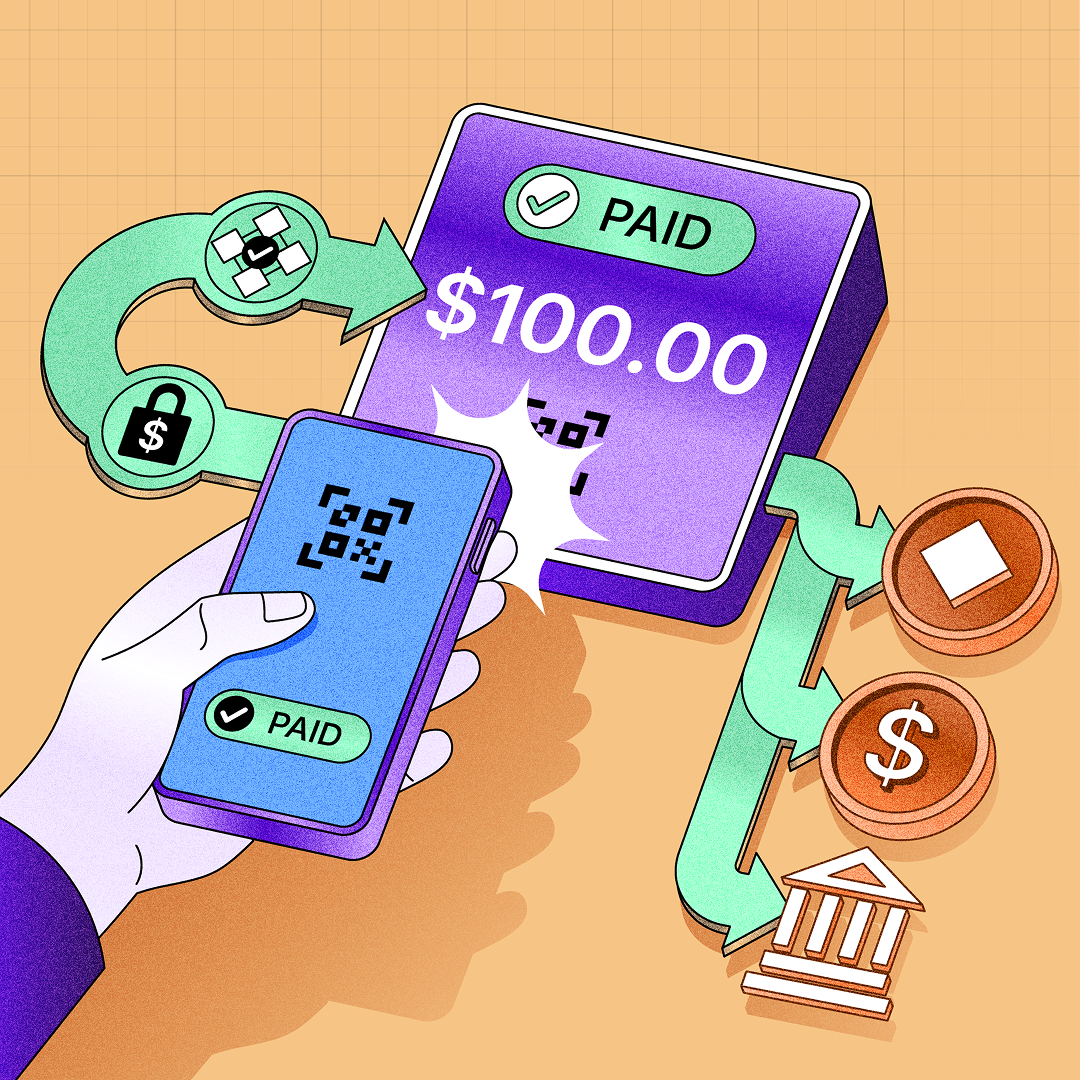
However the wallet is built, its first real moment is the same: money has to get into it. That's where most embedded experiences borrow one more piece of infrastructure, and it's the piece MoonPay builds.
MoonPay powers the buy step inside hundreds of apps and wallets, so funding an embedded wallet feels like the rest of the experience: pay with card, bank transfer, Apple Pay, or Google Pay, and the right asset lands on the right network without a detour through an exchange. For builders, MoonPay's ramps drop directly into embedded wallet flows, and MoonPay Institutional provides MPC-grade key infrastructure at the custody layer.
The seed phrase had a good run. It secured a trillion-dollar asset class with paper and discipline. But asking every person on Earth to run their own security operation was never the plan that scales. Embedded wallets are what scaling looks like: the same cryptography, moved out of your handwriting and into the machinery.
Frequently asked questions
What is an embedded wallet?
An embedded wallet is a crypto wallet built into an application rather than installed as separate software. The app creates it during signup behind an email, social, or passkey login, and manages the private key with techniques like MPC or hardware enclaves, so there is no seed phrase to record.
Are embedded wallets safe?
The serious implementations are strong: keys are split so that no single party, including the provider, can act alone, and hardware isolation protects the signing step. The honest caveats are that your login becomes the recovery anchor, so your email and phone security matter more than before, and that you're trusting the provider's engineering and audit record rather than your own backups.
Can I move my crypto out of an embedded wallet?
Usually, in two ways. You can send assets to any external address, the same as from any wallet, and most reputable providers also support key export, which lets you take the private key itself to a standard wallet. Check that export exists before storing significant funds. It's the difference between using an app and depending on one.