

Crypto payroll is the practice of paying employees or contractors using digital assets as the settlement rail, rather than traditional wire transfers or ACH. Workers may receive funds directly to a digital wallet, or convert to local fiat currency routed to a bank account.
In practice today, that almost always means using stablecoins, or cryptocurrencies pegged one-to-one with a fiat currency (“digital dollars”).
How crypto payroll works
Most companies use a hybrid model, in which the employer funds payroll in fiat or a stablecoin, and workers may choose how they want to receive it:
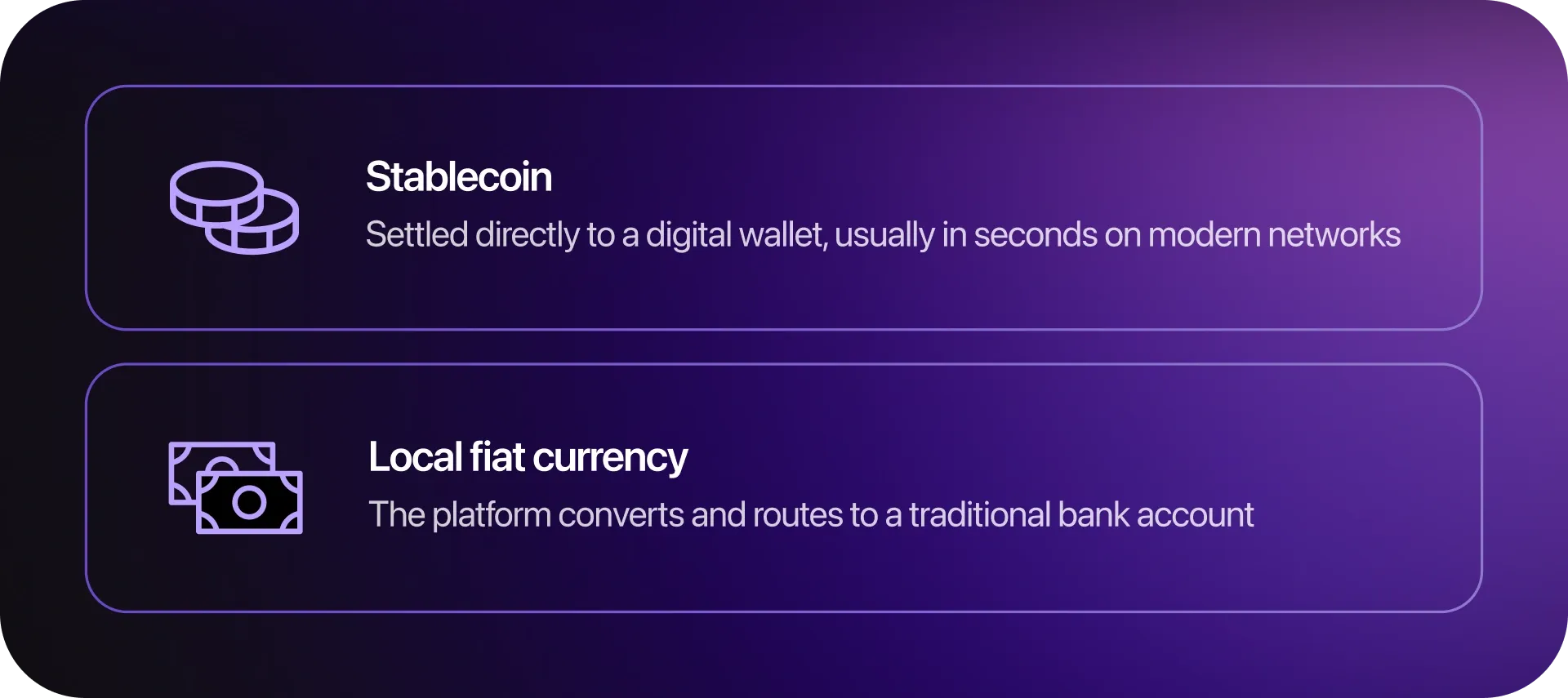
- Stablecoin: Settled directly to a digital wallet, usually in seconds on modern networks
- Local fiat currency: The platform converts and routes to a traditional bank account
Platforms handle the compliance layer, including tax documentation, KYC checks, and sanctions screening, reducing the compliance burden on employers.
Why companies are using crypto payroll
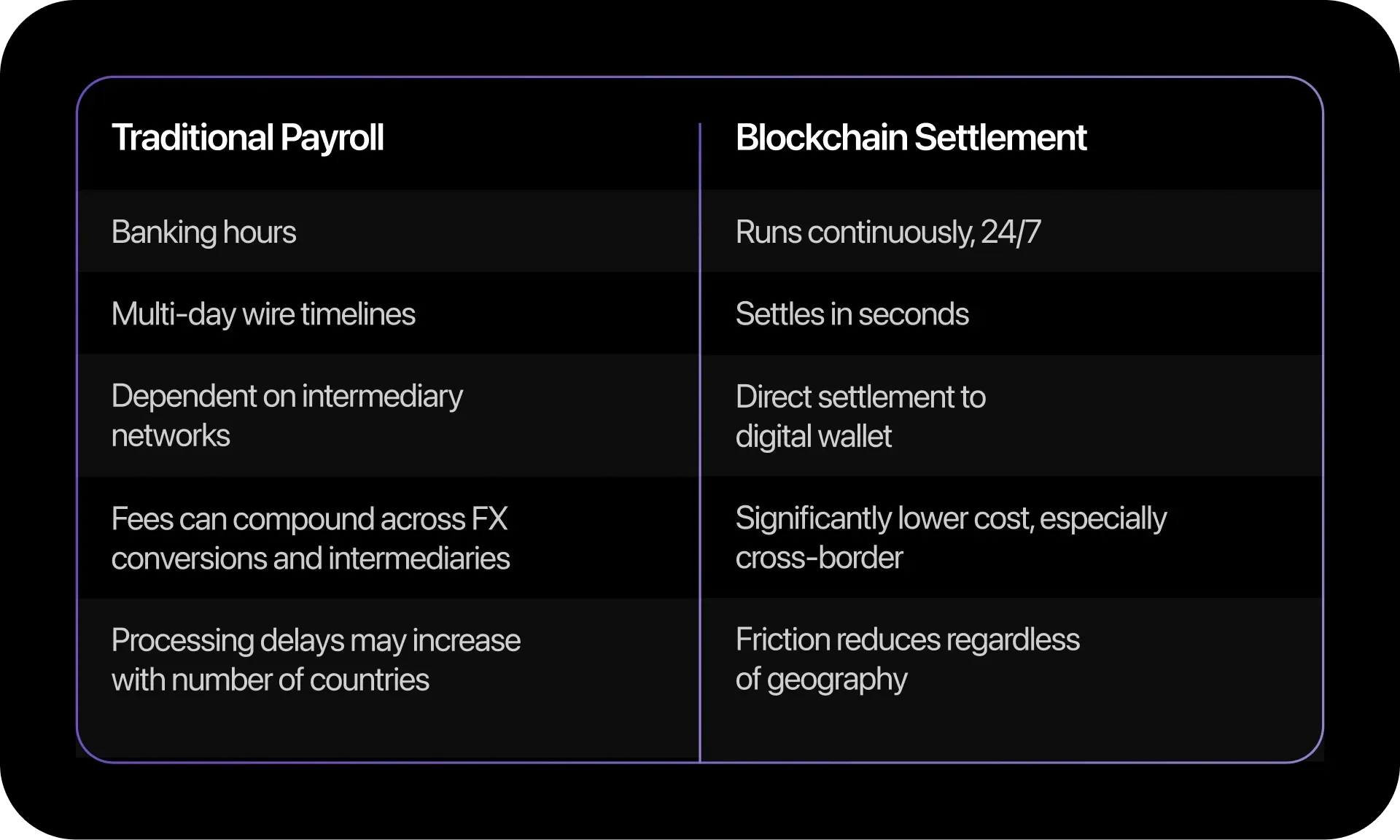
The gap is most pronounced for companies paying contractors across multiple countries, where fees, foreign exchange conversions, and processing delays can compound.
The bigger picture
Crypto payroll is part of a broader shift in how money moves globally.
Blockchain rails settle in seconds, operate 24/7, and reach workers in markets that may face friction with traditional banking systems. For companies managing distributed teams across multiple countries, that speed and reach changes the calculus of who they can hire and how quickly those workers get paid.