

Traditional blockchains process transactions, verify data, reach consensus, and settle the final state at once, all on a single layer.
Modular chains take a different approach: splitting each function of a blockchain across layers each dedicated to a single function.
The Blockchain Trilemma
Modular design separates a blockchain’s functions so that one layer can be upgraded or expanded without changing the others. This way, adding capacity no longer requires altering the core network.
This approach is one response to the Blockchain Trilemma: the challenge of building a blockchain that is simultaneously secure, scalable, and decentralized. Traditional blockchains can only handle so many transactions at once. Modular design separates the layers that cause this bottleneck, so congestion in one area does not affect the whole system, and each layer can focus on what it does best.
How modular chains work
A modular blockchain divides its core work across four layers:
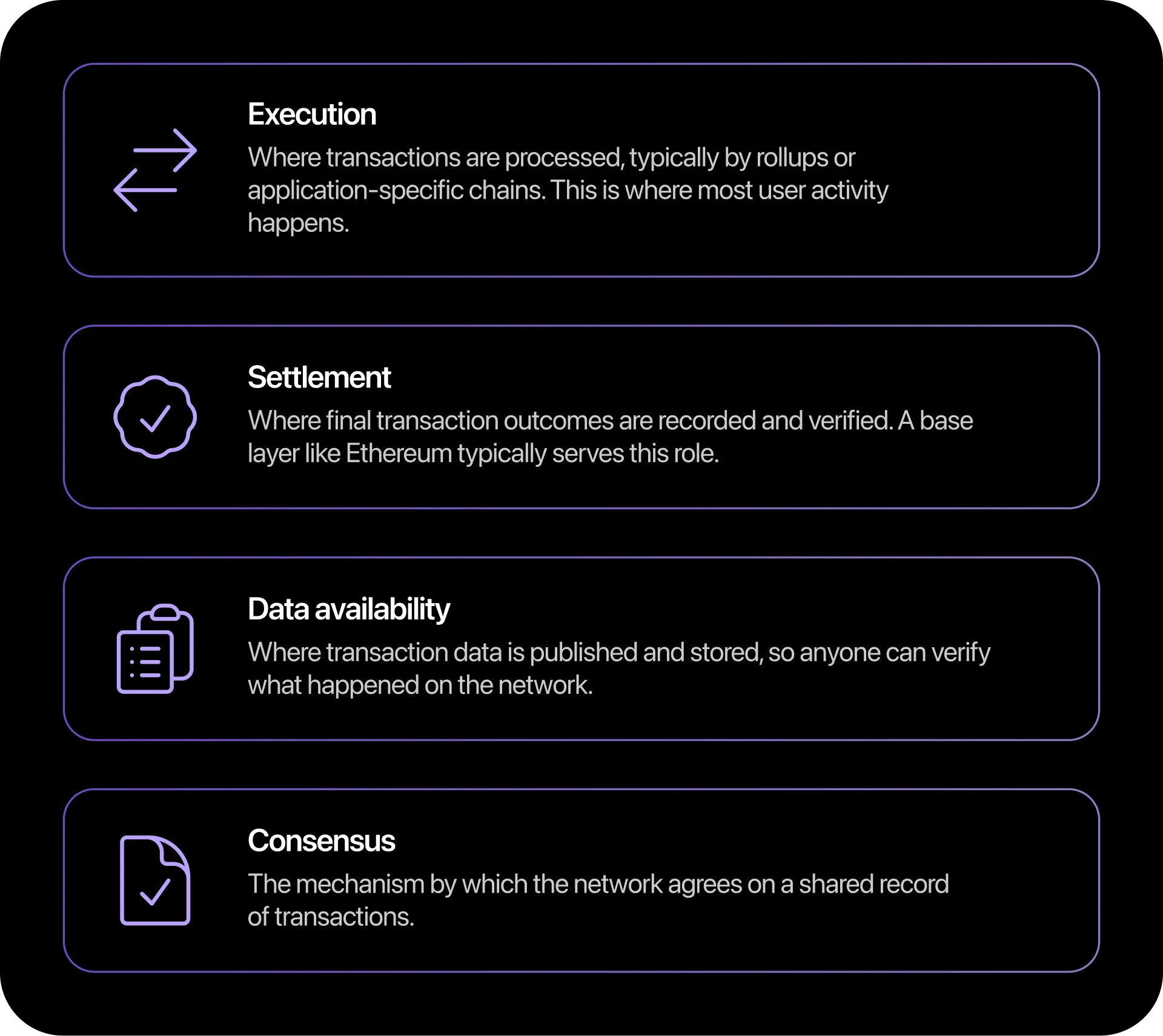
A rollup can process thousands of transactions off-chain and post compressed results back to a base layer for settlement, without requiring any changes to that base layer.
Why modular chains matter
For end users, the practical effect is lower fees and faster transactions. For developers, modular chains provide the ability to scale applications without waiting for changes to the base layer. The underlying network stays stable while new capacity is added on top.
Modular chains also make specialization possible. A chain built for gaming has different needs than one built for payments or financial applications. With a modular stack, developers can choose or build execution environments suited to their specific use case, rather than working within the constraints of a general-purpose chain.