

Stablecoins are digital assets pegged to a currency like the U.S. dollar, designed to match their value. A growing category of products now lets holders earn returns on those stablecoins, similar to how a savings account earns interest.
What is stablecoin yield?
Stablecoin yield is the return earned by deploying stablecoins through financial platforms, rather than simply holding them. The appeal is straightforward: the underlying value stays stable while income is generated on top of it. Returns typically range from 3% to 8% annually on established platforms.
How stablecoin yield works
Stablecoin yield is generated through a small number of well-established activities:
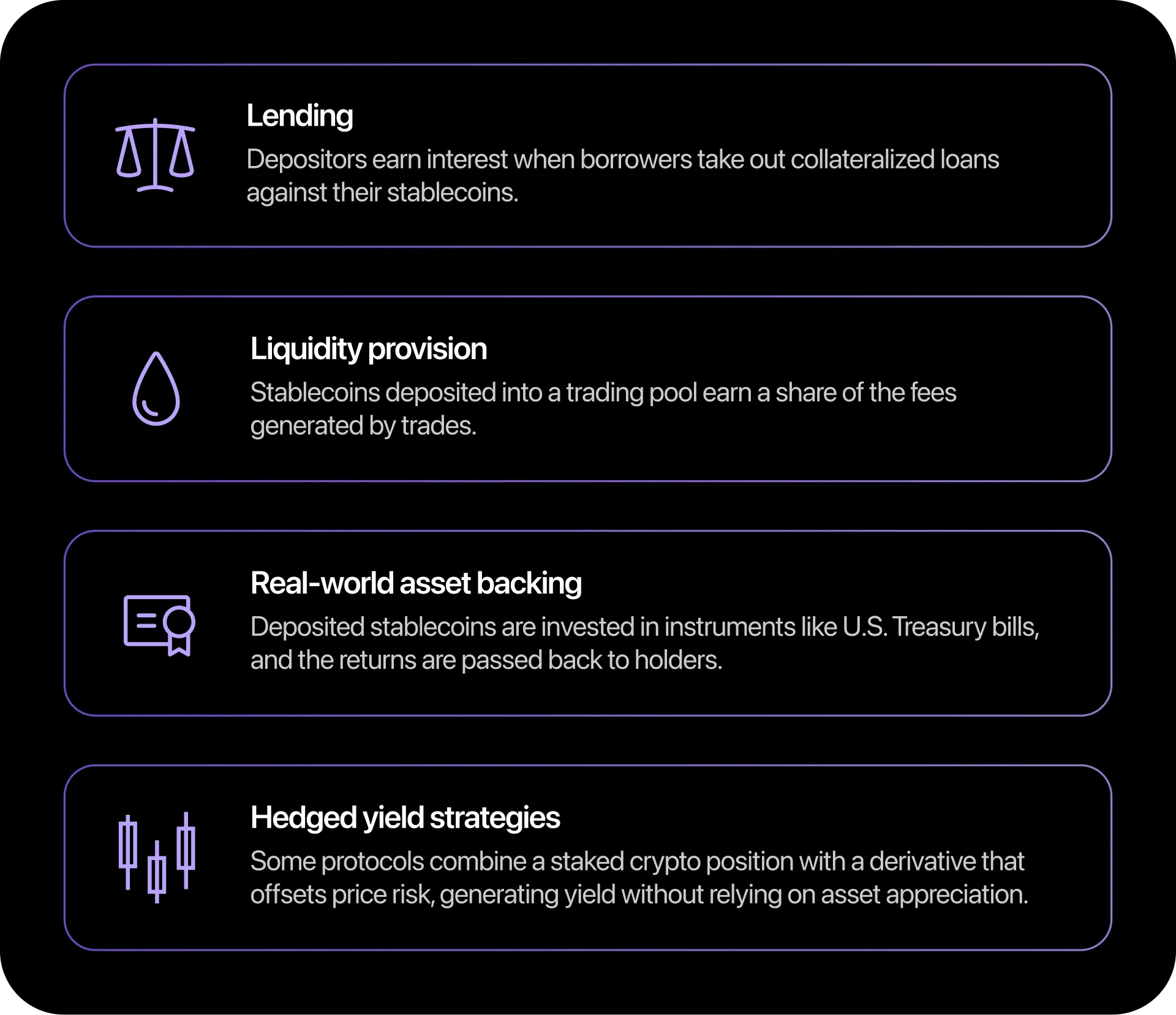
Most people access stablecoin yield through one of three paths: a centralized platform, a decentralized protocol, or through yield-bearing stablecoins themselves, where the asset is designed from the outset to accrue returns as you hold it, with no additional steps required.
Why this matters
The CLARITY Act is a piece of U.S. legislation working to establish a clear regulatory framework for digital assets, including how stablecoins can be issued and used.
In May 2026, a compromise on stablecoin yield was introduced, drawing a line between yield that mimics bank deposits and rewards earned through on-chain activity. This distinction could reshape how these products are designed.
The bigger picture
Stablecoin yield sits at the intersection of two fast-moving forces: the growth of digital dollar infrastructure and the ongoing effort to bring it under a U.S. regulatory framework. The lines being drawn now around what counts as yield, and who can offer it, will shape how these products are built and who can access them.