

Crypto options are financial contracts that give buyers the right, but not the obligation, to buy or sell a digital asset at a set price.
Options are one of the most established tools in traditional finance, and they are now becoming a meaningful part of how institutions and experienced investors manage exposure to crypto.
How options work
An option contract has three core elements:
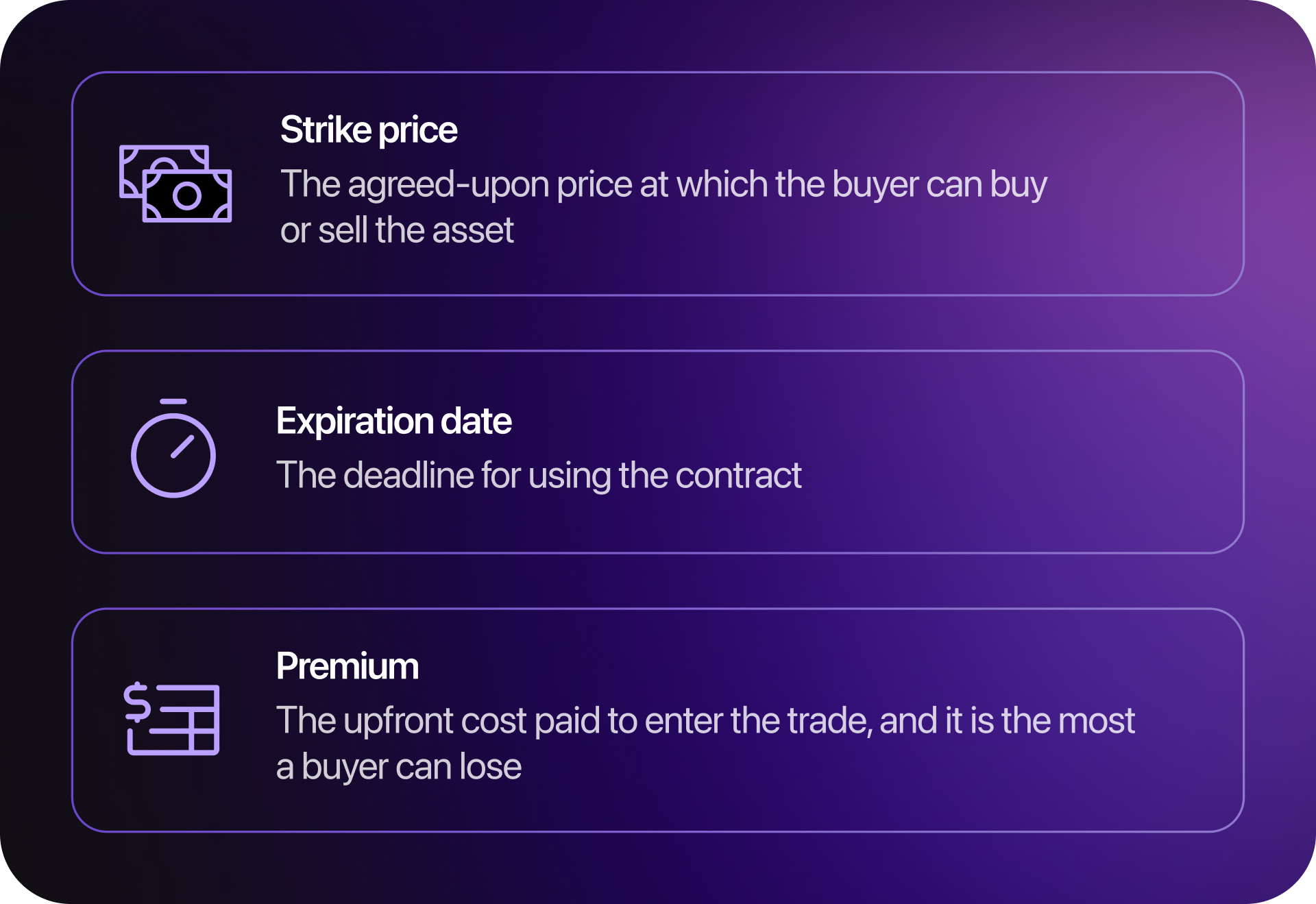
There are two types of options: calls and puts. A call option gives the investor the right to buy, and a put option gives the right to sell.
If you buy a call on Bitcoin at a $90,000 strike price, for example, and Bitcoin rises to $100,000 before expiry, you can exercise your right to buy at the lower price and capture the difference. If Bitcoin falls instead, you simply let the contract expire and your loss is limited to the premium paid.
What options are used for
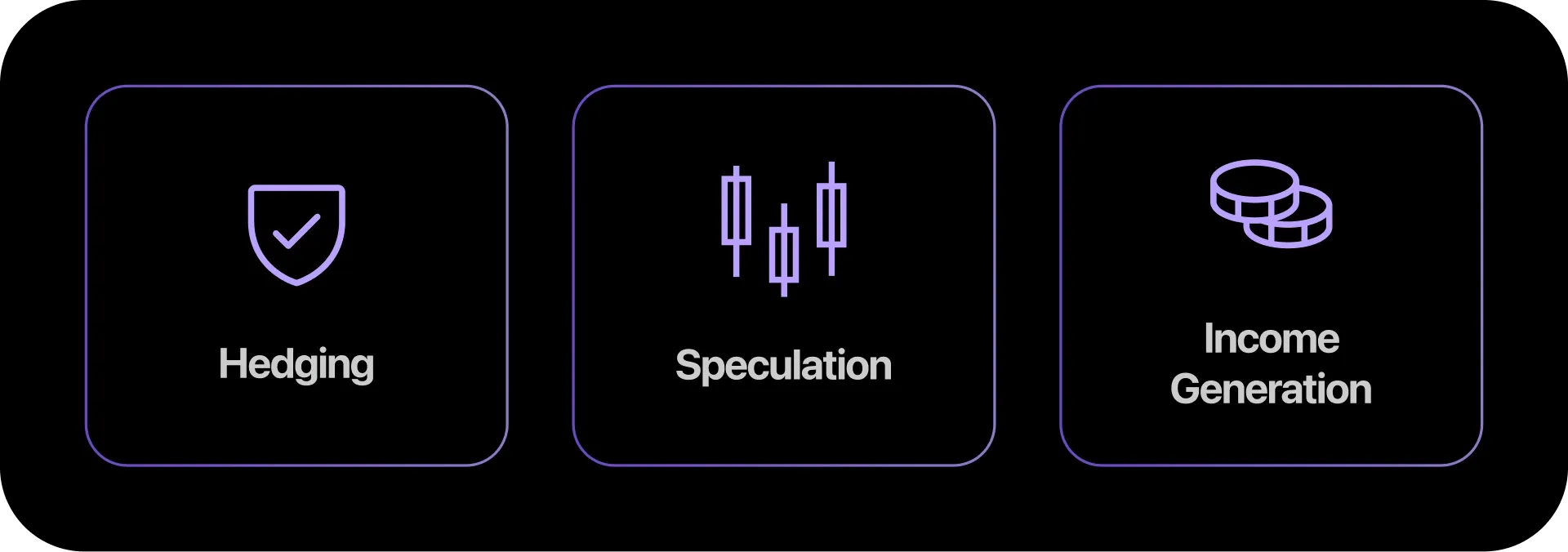
Options serve three main purposes: hedging, speculation, and income generation.
- For hedging, an investor holding Bitcoin long-term might buy put options as a form of insurance. If Bitcoin drops sharply, the put option increases in value and offsets some of the loss, similar to how a homeowner uses insurance to protect against damage without selling the house.
- For speculation, options allow traders to take a position on price direction using only a fraction of the capital required to buy the asset outright.
- For income, investors who already hold crypto can sell call options against their holdings to collect the premium as income. This is known as a covered call strategy.
The bigger picture
The growth of regulated crypto options reflects a broader shift: digital assets are increasingly being held, traded, and hedged using the same infrastructure that has long existed for stocks and commodities.