

Project Crypto is an initiative led by the SEC to modernize the U.S. regulatory framework for digital assets, with the CFTC joining as a partner on key elements.
Launched in 2025 by SEC Chairman Paul Atkins, the initiative signals a shift toward a clear regulatory framework that will enable the use of blockchain technology in markets.
A new token taxonomy
At the center of Project Crypto is a token taxonomy: a system for classifying different types of digital assets and how they are regulated.
On March 17, 2026, the SEC introduced five categories for digital assets. The first four categories are not considered securities:
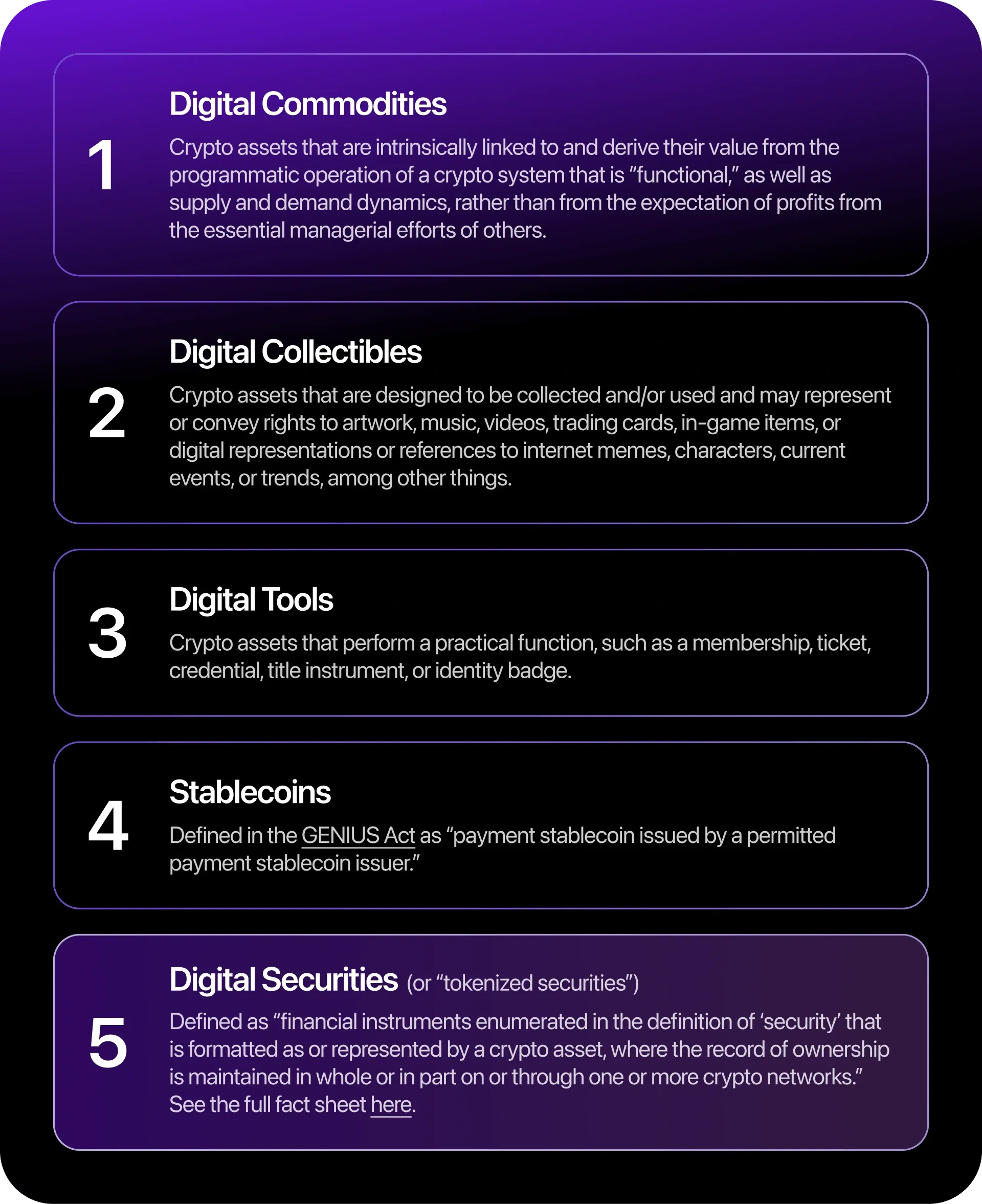
The CFTC also confirmed it will administer the Commodity Exchange Act consistently with the SEC's interpretation.
With the establishment of a U.S. token taxonomy, investors, traditional financial firms, and centralized exchanges have regulatory clarity before engaging with a token, creating a pathway for increased institutional adoption of digital assets.
How the SEC decides what counts as a security
Under the March 17 interpretation, most crypto assets are not themselves securities. What matters is how a token is offered and sold – specifically, whether the issuer made explicit promises to carry out essential managerial efforts that drive returns for buyers.
Investment contracts can evolve over time. When the promises required for an investment contract are fulfilled, or no longer apply, the token may no longer be treated as part of the contract and can trade more freely.
However, this does not change how the asset was originally offered. If an offering was not properly registered at launch, it may still be considered a violation, even if the token later operates independently.
The release also confirms that mining, staking, airdrops, and wrapping do not constitute securities offerings or transactions.
How the SEC and CFTC divide responsibility
Digital Commodities fall under CFTC oversight. Digital Securities remain under SEC jurisdiction.
The other three non-security categories — Digital Collectibles, Digital Tools, and Stablecoins — are carved out of the SEC’s reach, with their treatment depending on category-specific considerations and applicable legislation.
This framework is designed to resolve long-standing questions about which agency governs different types of digital assets.
What this means for crypto
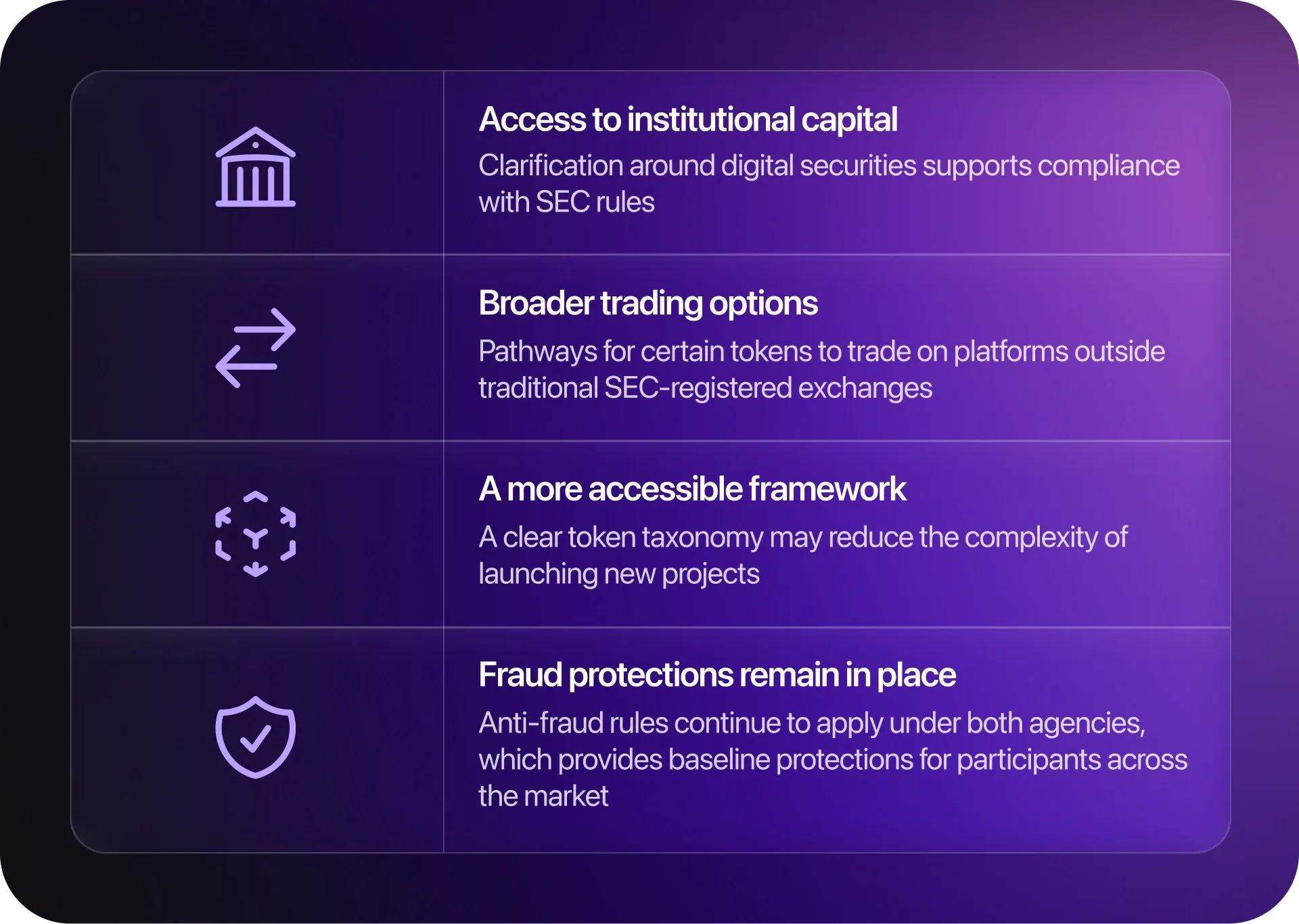
"By streamlining this process, innovators in the blockchain space can focus their energies on development and user engagement rather than navigating a maze of regulatory uncertainty. Additionally, this approach would cultivate a more inclusive and dynamic ecosystem, one in which smaller and less resource-intensive projects are free to experiment and to thrive."
Paul Atkins, Chairman of the SEC