

A prediction market is a place where people put money on what happens next. Will the Fed cut rates in September? Will Bitcoin close the year above $150,000? Each question becomes a contract you can buy and sell, and the price of that contract tells you what the crowd currently thinks the odds are.
These markets had their breakout during the 2024 US election, when traders moved more than $3 billion through a single platform, and they have not slowed down since. Wall Street analysts expect as much as $10 billion in volume on the 2026 World Cup alone. Before putting money in, it helps to know what you are actually buying and who guarantees you get paid.
What is a prediction market?
A prediction market is an exchange where people trade contracts tied to the outcome of a future event. Instead of buying a share of a company, you buy a position on a question: yes or no, will this thing happen by this date.
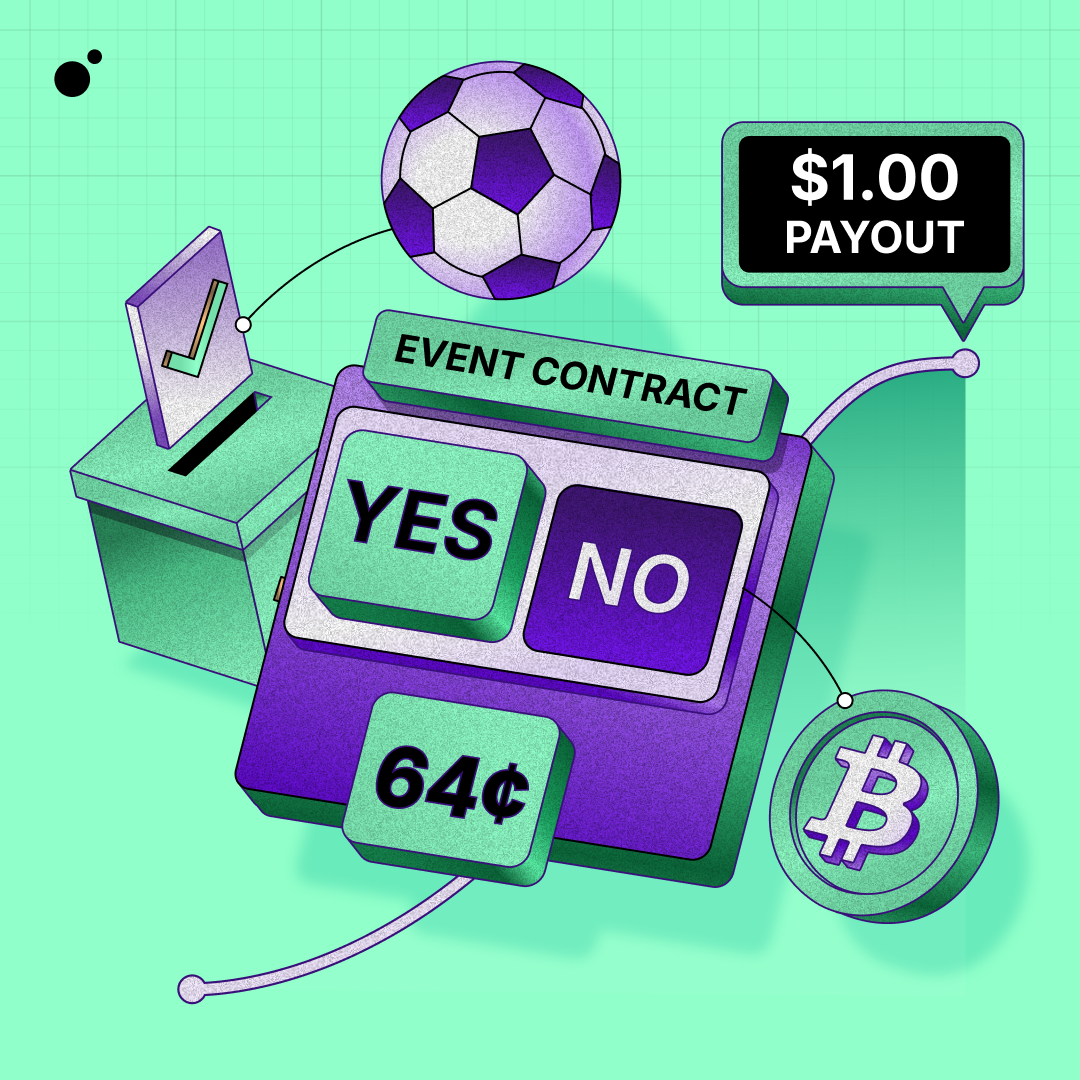
Prices work as probabilities. A contract that pays $1 if an event happens, trading at 60 cents, implies the market sees a 60% chance it happens. When new information arrives, traders react and the price moves the way a stock would. That constant repricing is the point. The market produces a live, money-backed forecast that updates faster than any poll.
The idea is older than it looks. The University of Iowa launched the Iowa Electronic Markets in 1988 so traders could stake small amounts on presidential races, and the CFTC has overseen US exchanges offering event-based contracts since 2004. What changed recently is scale. Platforms like Kalshi and Polymarket turned an academic tool into a consumer product, with markets on elections, sports, interest rates, award shows, and the price of Bitcoin.
How do prediction markets work?
Every market starts with a question that has a verifiable answer and a deadline. Will the S&P 500 close above 7,000 on December 31? The platform issues yes and no contracts on that question, each settling at $1 if correct and zero if not.
Say you buy 100 yes contracts at 25 cents each, a $25 stake. If the index closes above 7,000, each contract pays $1 and you collect $100, a $75 profit before fees. If it closes below, your contracts expire worthless and the $25 is gone. There is no partial credit.
You are not locked in until settlement, though. Contracts trade continuously, so if your position climbs from 25 cents to 80 cents as the outcome starts looking likely, you can sell early and book the gain. Plenty of traders never hold to resolution at all. They trade the swings in probability the way others trade price.
What is an event contract?
An event contract is the instrument underneath all of this. US regulators treat it as a type of derivative: a contract whose value comes from something external, in this case the outcome of an event rather than the price of a commodity. Most are binary, though some platforms offer multiple-choice structures or outcome ranges with partial payouts. Versions of these products have traded on regulated US exchanges for more than two decades.
Centralized vs decentralized prediction markets
Prediction markets come in two architectures, and the difference matters more than the marketing suggests.
Centralized platforms like Kalshi operate as regulated exchanges. You create an account, pass identity checks, deposit dollars, and trade on the company's order book. The exchange holds your funds, resolves markets through its own rules team, and answers to the CFTC. Brokerages such as Robinhood and Webull embed Kalshi's markets inside their own apps, which is a large part of how event contracts reached a mainstream audience.
Decentralized platforms like Polymarket run on public blockchains. Trades settle in USDC, a stablecoin pegged to the dollar, from a wallet you control. The platform never takes custody of your money. Positions, collateral, and payouts all live in smart contracts anyone can inspect onchain.
Centralized (e.g. Kalshi) | Decentralized (e.g. Polymarket) | |
Custody of funds | Exchange holds your deposits | You hold funds in your own wallet |
Trading currency | US dollars | USDC stablecoin |
Account setup | Full identity verification | Wallet connection; the US-regulated exchange adds identity checks |
Who resolves markets | The exchange's rules team | An oracle reports the outcome onchain |
Oversight | CFTC-regulated exchange | Smart contracts; the US arm operates a CFTC-registered exchange |
Neither model is simply better. With a centralized exchange you get familiar account recovery and a regulator to complain to. Go decentralized and you keep custody and gain global access, but managing your own wallet becomes your job.
[Visual: centralized vs decentralized comparison illustration]
How onchain prediction markets settle
What happens to your money on a decentralized market is the part mainstream coverage usually skips.
When you take a position, your USDC moves into a smart contract, a program on the blockchain that holds collateral and enforces the market's rules. Both sides of every trade are fully collateralized from the start. The $1 that will eventually pay the winner is already sitting in escrow, which is why these markets need no bookmaker and no clearinghouse to guarantee payment.
Settlement is the harder problem. A blockchain cannot see the outside world, so decentralized markets rely on oracles, services that report real-world outcomes onchain. In a common design, someone proposes a resolution and posts a bond, and a challenge window opens. If nobody disputes the answer, it stands and the contracts pay out automatically. If someone does dispute it, the question escalates to a vote among the oracle's token holders. Disputes are rare but consequential, and vague market wording is usually what causes them.
Once resolution lands, payment is an ordinary onchain transfer. Winning positions redeem for $1 of USDC each, straight to your wallet, usually within minutes. It is one of the cleaner demonstrations of onchain payments doing something traditional rails struggle with: settling thousands of individual payouts across borders with no payment processor in the loop. The same property explains why stablecoins became the default currency for these platforms. Traders want crypto's settlement speed without its volatility.
Prediction markets vs sports betting
On the surface the two look identical. You put money on the Mets, the Mets win, you get paid. The structure underneath is different.
A sportsbook sets its own odds and builds in a margin, the vig, so the house profits whatever happens. You are betting against the company. A prediction market matches you with other traders and earns flat fees on each trade instead of taking the other side. Prices come from supply and demand rather than a trading desk.
Prediction markets | Sports betting | |
Who sets the price | Other traders, continuously | The sportsbook, with a built-in margin |
Your counterparty | Another trader or market maker | The house |
Exiting a position | Sell anytime before resolution | Bets are usually locked once placed |
US oversight | Federal (CFTC), contested by states | State gaming regulators |
Availability | Nationwide under federal oversight, though two state bans are in litigation | 38 states plus DC |
Two honest caveats. Prediction platforms often rely on institutional market makers to fill orders, so a professional firm is frequently your real counterparty, pricing contracts slightly in its favor. And fees compound. Most frequent traders lose money over time on either kind of platform.
What are prediction markets used for?
Betting on sports and elections is the visible use. The original case for prediction markets was forecasting.
A market price aggregates information from everyone willing to back their view with money, which makes it a different kind of signal than a poll or an expert panel. The track record is real, if narrower than fans claim. Across the five US presidential elections from 1988 through 2004, the Iowa Electronic Markets produced more accurate estimates of the result than roughly three quarters of the major polls they were compared against. Researchers at Wharton note that the markets work because they reward people for revealing what they genuinely believe, and for doing the homework to believe something useful.
Hedging is the second use. The CFTC's own example is a citrus farmer buying a weather contract to offset losses from a sudden freeze. A business exposed to an election outcome, a rate decision, or a World Cup result can take the other side of its real-world risk, the same logic as any derivatives market applied to events instead of prices.
Companies and researchers have also run internal markets to forecast deadlines and product launches, and media outlets now quote market odds alongside polling. Whether the forecasts stay sharp as casual sports traders flood in is an open question economists are actively studying.
What are the risks of prediction markets?
Prediction markets concentrate several different kinds of risk in one product. They are worth separating.
Financial risk
Event contracts are short-term, all-or-nothing positions. A wrong call loses the entire stake, which makes them unsuitable for money you are counting on and closer to entertainment spending than investing. The pace and the binary payoff can also feed compulsive behavior. If gambling is a problem for you or someone close to you, the National Council on Problem Gambling runs a helpline at 1-800-GAMBLER.
Market integrity risk
The insider trading laws that police stock markets do not yet clearly apply here. In early 2026, newly opened accounts on Polymarket netted more than $1.2 million betting that US military strikes would happen days before they did, and Israeli authorities accused two people of trading on classified information. Platforms also control their own rulebooks. Kalshi declined to pay out a market with $54 million staked on the fate of Iran's supreme leader, citing a rule against death-related bets, and refunded stakes instead. A lawsuit over that decision is pending.
Crypto-specific risk
Decentralized platforms add their own layer. A smart contract bug can lock or drain funds. An oracle can resolve a market wrong, or a dispute can drag out a payout. A stablecoin depeg, rare as it has been for USDC, would hit every open position at once. Self-custody also means nobody can reset your password if you lose access to your wallet.
Regulatory risk
The rules are still moving. Nevada and Minnesota have banned prediction markets outright (both bans are now being fought in court), roughly fifteen other states are in active litigation with operators, and tax treatment is still settling. A platform that is legal where you live today could be ordered offline next quarter, with your positions caught in the middle.
Are prediction markets legal?
Prediction markets are legal in the United States, with a few important caveats worth understanding.. Regulated platforms operate as CFTC-supervised exchanges under the Commodity Exchange Act, the same framework that governs futures. Courts have largely backed that position — in April 2026, a federal appeals court ruled that New Jersey cannot regulate Kalshi under state gambling law, a decision widely read as affirming the federal model.
There's meaningful pushback at the state level.. Thirty-four states backed New Jersey's case in a joint brief, Arizona has pursued action against one operator, and some state-level restrictions remain in place while courts work through the jurisdictional questions. The CFTC has reaffirmed exclusive federal authority and proposed new prediction market rules in 2026, and a Supreme Court review looks increasingly likely. Polymarket, unavailable to US users from 2022-2025, restored access in May 2026 through a licensed exchange.
Outside the US, treatment ranges from regulated to prohibited, and decentralized platforms sit in gray zones in many countries.
*Please note- This is not legal advice. Refer to state and federal-level rules and regulations prior to trading. How to get started with crypto prediction markets
On a centralized platform the path is the same as any brokerage: create an account, verify your identity, deposit dollars.
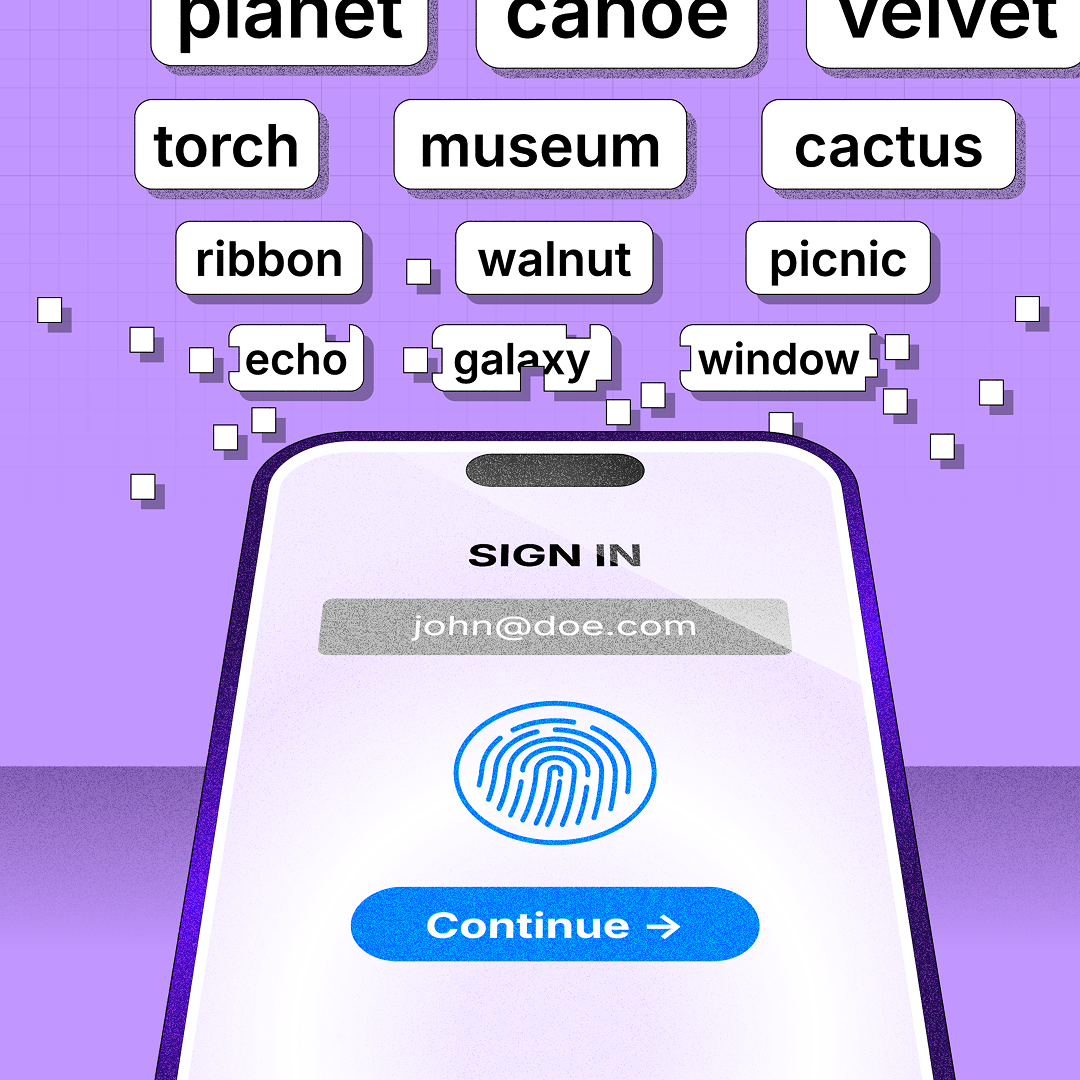
Decentralized markets take three pieces. You need a non-custodial wallet, some USDC, and a way to turn dollars into crypto in the first place. An onramp like MoonPay handles that last step, letting you buy USDC with a card or bank transfer and send it directly to a wallet you control. If managing seed phrases sounds like the part that would stop you, smart wallets now offer passkey logins and recovery options that make self-custody far less fragile for newcomers.
One boring rule, which happens to be correct: treat anything you stake as money you can afford to lose entirely, and read a market's resolution rules before you trade it, because that wording decides whether you get paid.
Frequently asked questions
Are prediction markets gambling?
Prediction markets are not legally classified as gambling. . Event contracts are regulated as derivatives, not wagers, which is why major platforms operate nationwide rather than state by state. Dozens of states are challenging that classification in court. Behaviorally, the all-or-nothing payouts may function similarly to gambling, so prediction market trading should still be approached with caution.
How accurate are prediction markets?
Often more accurate than polls on big, liquid questions. The Iowa Electronic Markets beat roughly three quarters of major polls across five presidential elections from 1988 to 2004. Accuracy drops on thin markets with few traders, and prices can be skewed by manipulation or hype.
Do people make money on prediction markets?
Some do, especially traders with genuine information edges or discipline about pricing. Most frequent traders lose over time once fees and winner-take-all settlement do their work, the same pattern seen in sports betting. Treat potential winnings as entertainment upside rather than income.
How are prediction market winnings taxed?
In the US, major platforms typically report net profits on a 1099-MISC, treated as ordinary income. Rules differ by state and are still evolving, and crypto settlement can add its own reporting questions. Talk to a tax professional about your situation.
Who regulates prediction markets?
In the US, the CFTC supervises regulated exchanges at the federal level, while several states contest that authority in court. Decentralized platforms operating outside the US may answer to no regulator at all, which shifts the burden of caution onto the trader.
This article is for general information and education. It is not investment, legal, or tax advice, and nothing in it is a recommendation to buy, sell, or trade any contract or token.

.png?w=3840&q=90)