
Altcoins, short for “alternative coins”, are all cryptocurrencies other than Bitcoin.
Sign up to our weekly MoonPay Minute newsletter
What gives Bitcoin the right?
The term may seem disparaging to non-Bitcoin cryptocurrencies, like if shoes that weren’t Nike were called “altshoes” or phones that weren’t iPhones were called “altphones”, and for Bitcoin maximalists (those who strongly believe in Bitcoin's supremacy), it certainly can be: “altcoin” (sometimes “sh*tcoin”) is used to signify inferiority or irrelevance.
For most, however, “altcoin” is a neutral term that simply acknowledges Bitcoin’s special status in the market:
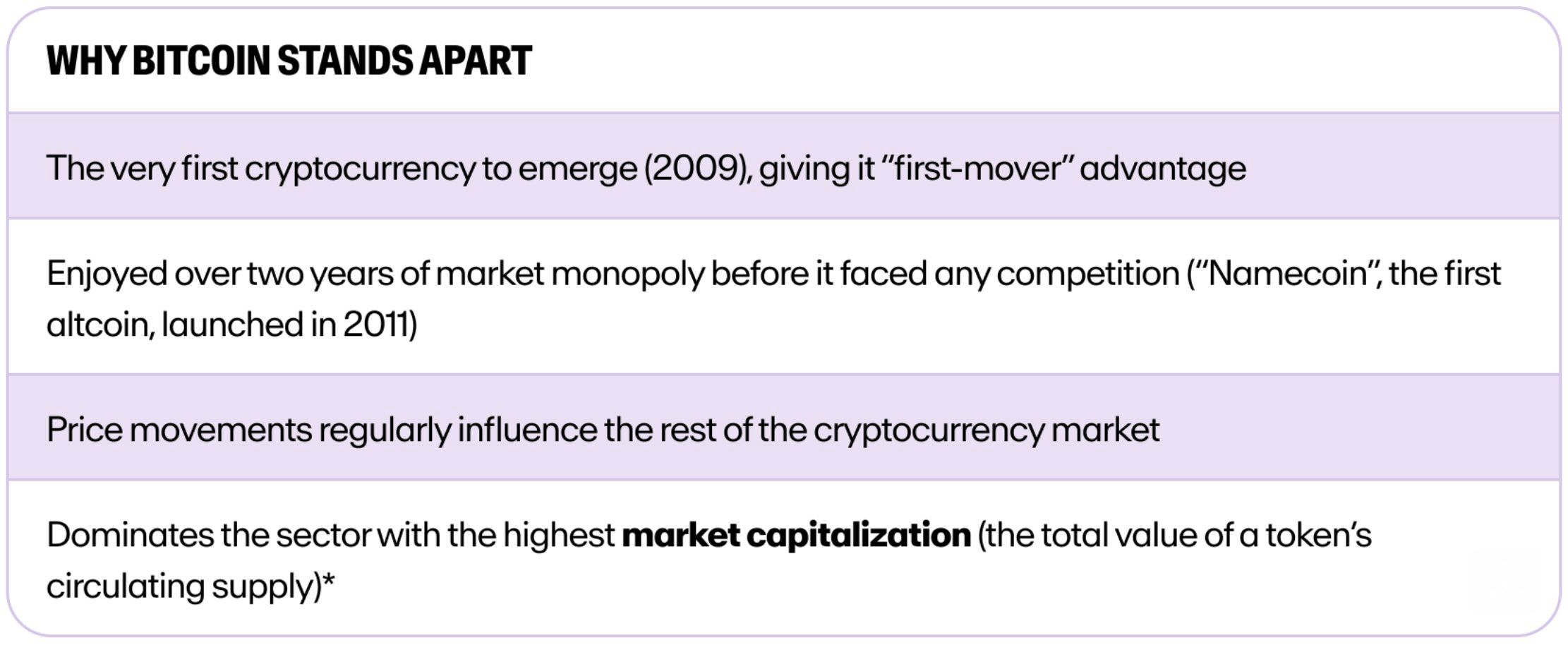
* The metric used to measure this is aptly called “Bitcoin dominance”, which is simply the ratio between the market cap of Bitcoin to the total market cap of every altcoin.
For these reasons, Bitcoin’s unique position separates it from the rest of the market, which falls under the umbrella term “altcoins”.
Further reading: What is Bitcoin dominance? Bitcoin's price and the crypto market
Token frenzy
A notable chapter in crypto’s history was the 2017 “ICO boom”, when the number of altcoins skyrocketed.
An ICO, or initial coin offering, is when a new cryptocurrency is introduced to the marketplace. It’s chiefly a fundraising strategy: blockchain projects sell their new tokens in a token sale to raise capital. Solana, for example, raised $1.76M in its March 2020 token sale by pricing SOL at $0.22 per token.
By most estimates, there were only around 600 altcoins before the ICO boom. By the end of 2017 this number more than doubled.
How many altcoins are there now?
The number is usually placed in the tens of thousands, but estimates can be inflated by coins that are either inactive or have negligible trading volume. CoinMarketCap, a popular website for tracking cryptocurrency prices, currently lists just over 10,000 altcoins.
Subscribe to our newsletter!
Did you like this article? Sign up to our weekly MoonPay Minute newsletter to get similar content delivered directly to your inbox.