

Disclaimer: This article is for general information only and does not constitute financial or legal advice. Regulatory requirements vary by jurisdiction. Always verify deadlines and compliance obligations with qualified advisors before making any transition.
Coinbase has announced it will permanently shut down its self-custodial Coinbase Commerce platform for merchants outside the United States and Singapore. The shutdown date is March 31, 2026, and no extensions will be offered. If your business relies on Coinbase Commerce to accept crypto payments, here is what you need to know, what steps to take, and how to evaluate alternatives so you can keep getting paid in crypto.
What is happening to Coinbase Commerce?
According to the notice sent to Commerce users, Coinbase is discontinuing its self-custodial merchant payment product for most international markets. The company is consolidating Commerce into its newer Coinbase Business platform, which launched internationally in late 2025 and uses custodial wallets, fiat off-ramps, accounting integrations (QuickBooks, Xero), and USDC payment rails.
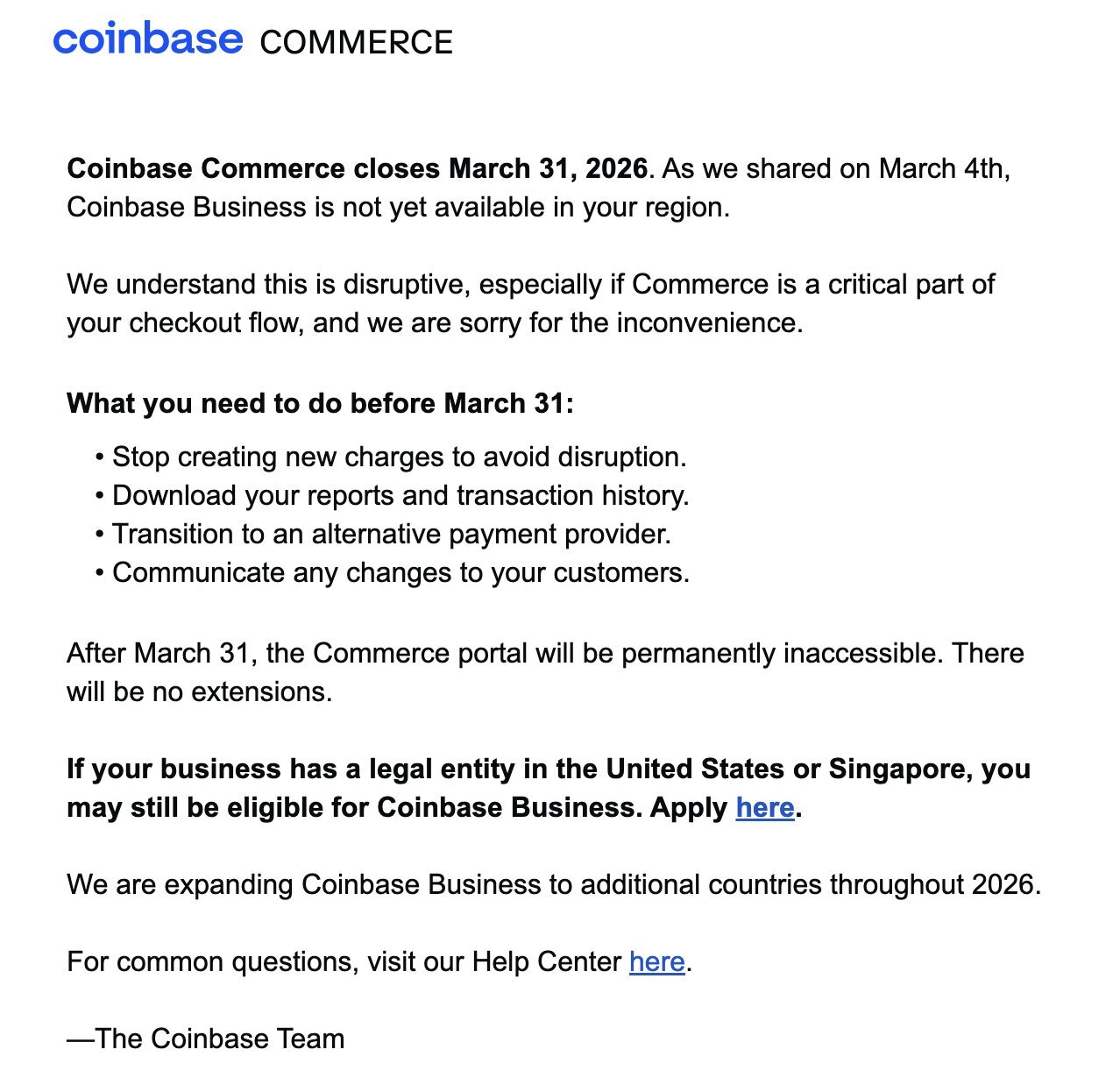
The Commerce shutdown notice instructs affected merchants to take three immediate actions:
- Stop creating new charges and begin winding down Commerce-based checkout flows.
- Export all transaction history for accounting, tax filing, and record-keeping before the portal becomes inaccessible.
- Migrate funds off Commerce using Coinbase's recommended withdrawal tool (which consolidates multiple deposits into one transfer) or through a seed-phrase import. Coinbase stresses that merchants holding Bitcoin or other UTXO-based assets should use the withdrawal tool before March 31.
After the deadline, Commerce's merchant portal will go offline permanently.
Steps merchants should take before March 31, 2026
Regardless of which provider you choose next, there are several actions every affected merchant should complete before the shutdown date.
- Confirm your specific deadline. The cutoff for most affected merchants is March 31, 2026. Merchants in the United States and Singapore may have different timelines. Verify the details directly from Coinbase's official communications.
- Export transaction records. Download transaction histories, statements, and tax exports. These records are critical for bookkeeping, tax filing, and proof-of-funds checks.
- Choose a safe withdrawal method. Use the official withdrawal tool where possible. Avoid entering recovery phrases on unfamiliar websites. Cybersecurity experts have flagged seed-phrase entry pages as common phishing vectors.
- Move assets to a wallet you control. As with any platform sunset, transferring funds to a self-custody wallet gives you control while you evaluate next steps.
- Evaluate alternative crypto payment providers. Decide whether to move to another custodial platform, set up a wallet-first workflow with on-ramp and off-ramp providers, or adopt a crypto payment gateway built for merchants.
Why is Coinbase shutting down Commerce?
The shutdown appears to be part of Coinbase's broader consolidation strategy. By merging its self-custodial Commerce product into Coinbase Business, the company is focusing on regulated, custodial payment infrastructure. Coinbase Business offers features like fiat off-ramps, accounting integrations, and enhanced compliance tooling designed for the evolving regulatory landscape.
For merchants outside the U.S. and Singapore who relied on Commerce, this means either migrating to Coinbase Business (where it is available) or finding an alternative way to accept crypto payments.
How to keep accepting crypto payments after Coinbase Commerce
Affected merchants generally have two paths forward.
Option A: Move to another custodial service
Some exchanges and payment processors offer merchant-oriented crypto checkout. If you go this route, confirm that the provider is licensed in your jurisdiction, supports the cryptocurrencies and stablecoins you need, and integrates with your existing e-commerce stack (whether that is Shopify, WooCommerce, or a custom build). Review regional restrictions, processing fees, and compliance obligations before committing.
Option B: Wallet-first setup with a crypto payment gateway
Another approach is to manage assets in a self-custody wallet and integrate a separate payment solution that handles on-ramping, checkout, and settlement for your customers. This architecture separates custody from payment processing, which gives you more flexibility to switch providers if availability changes. Merchants who accept stablecoin payments (such as USDC or USDT) often prefer this model because settlement is near-instant and avoids crypto-to-fiat volatility.
Where MoonPay Commerce fits in
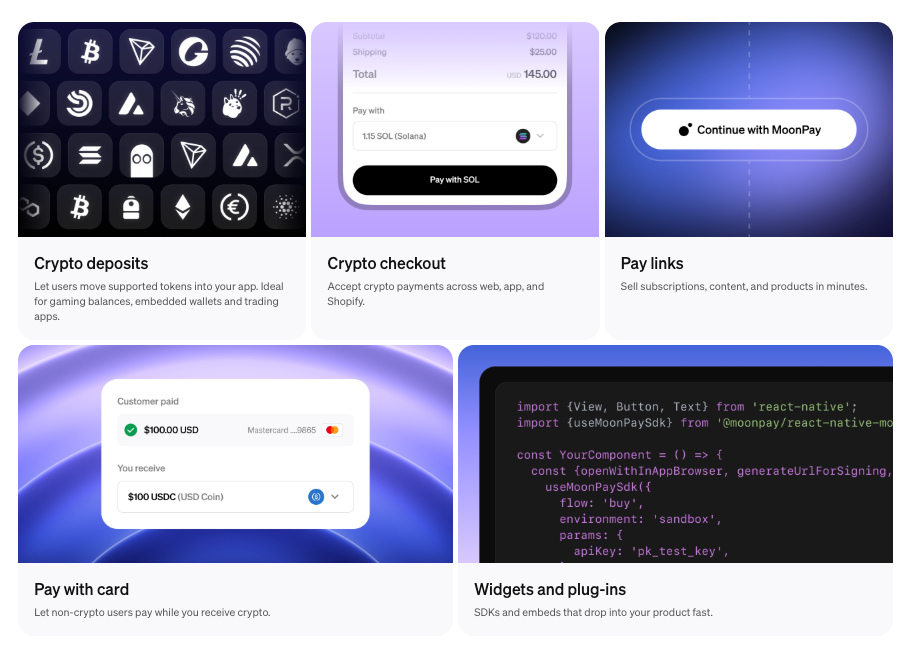
For merchants evaluating alternatives, MoonPay Commerce is one option worth exploring. MoonPay's merchant product is designed to help businesses accept crypto payments and stablecoin payments from customers worldwide. Below is an overview of what it offers.
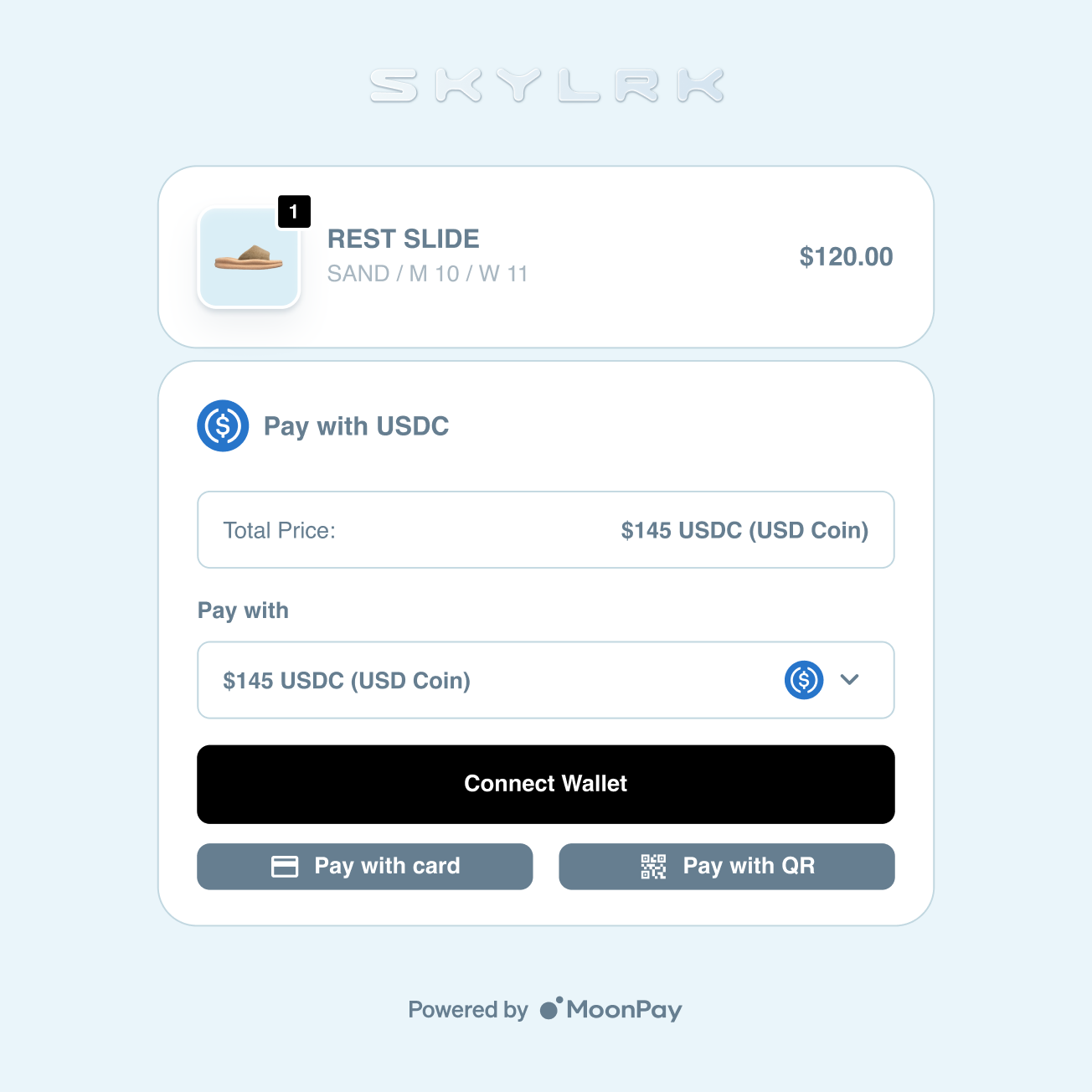
- Direct buyer-to-merchant payments. Customers pay directly from their wallets, reducing reliance on card networks and third-party intermediaries.
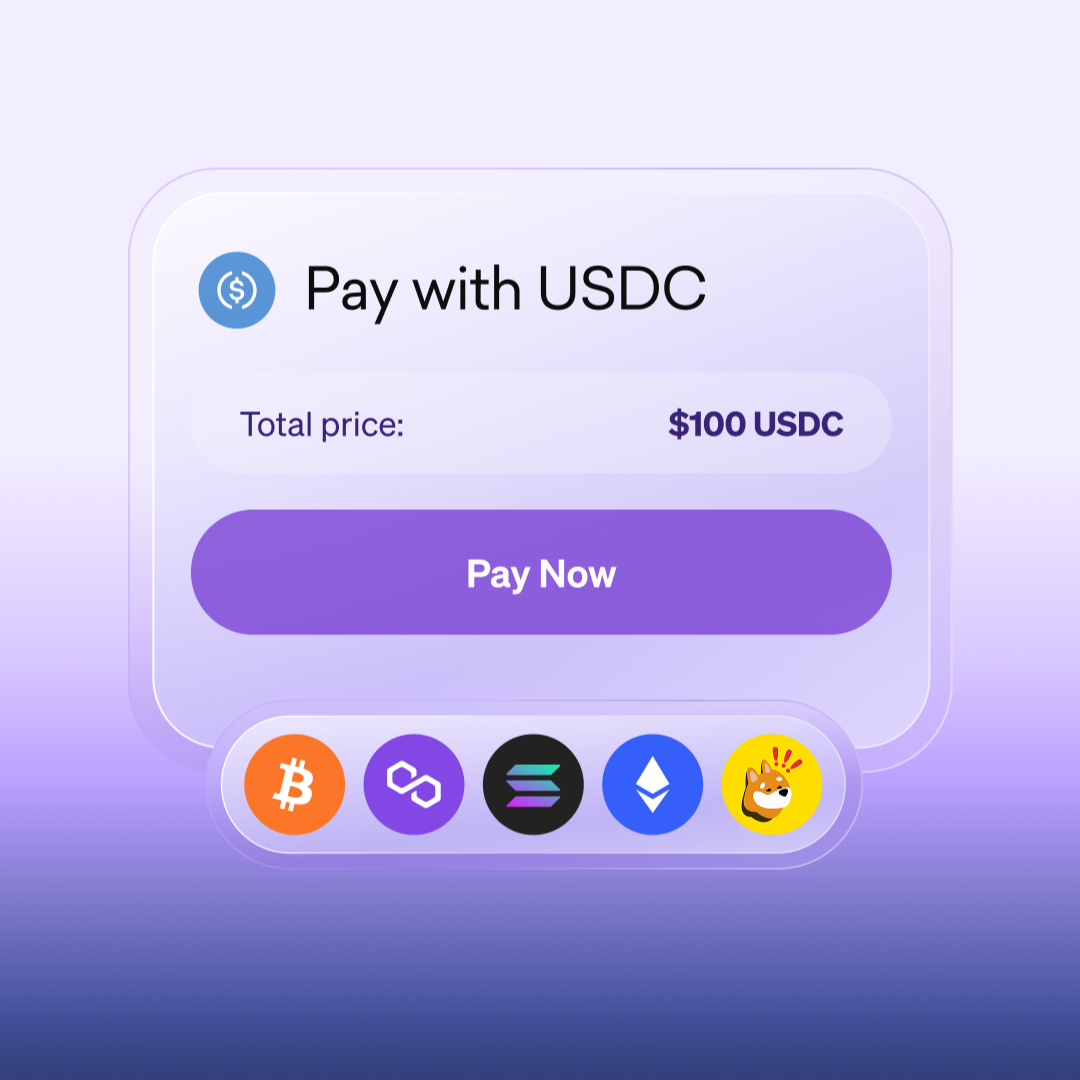
- Lower processing costs. Businesses can reduce fees and eliminate chargebacks by accepting crypto payments rather than routing through traditional card processors.
- Access to a large crypto audience. MoonPay states that merchants can reach more than 500 million people who already hold and spend crypto or stablecoins.
- Instant settlement with flexible payouts. Merchants receive crypto instantly or can auto-convert to fiat (USD, EUR, GBP) in supported regions.
- Built-in subscription and recurring payment support. Unlike many crypto payment providers, MoonPay Commerce supports native recurring subscriptions out of the box. Merchants can create subscription-based pay links with configurable billing periods and automated renewal reminders, making it possible to run membership programs, SaaS billing, or content subscriptions entirely on crypto rails without needing a separate billing platform.
- End-to-end payment stack. The platform consolidates checkout, swaps, bridging, settlement, and compliance into a single integration.
- E-commerce integrations. MoonPay supports crypto checkout across web, mobile app, and Shopify, along with pay links for subscriptions and one-off sales. Merchants who previously used Coinbase Commerce's Shopify or WooCommerce plug-ins can evaluate MoonPay's equivalent integrations.
- Regulatory coverage and compliance infrastructure. MoonPay holds money transmitter licenses in all 50 U.S. states (including a New York BitLicense), is registered with the UK's Financial Conduct Authority, and was one of the first crypto companies to secure a crypto-asset service provider license under the EU's MiCA regulation. The platform is independently certified to SOC 2, PCI DSS, and ISO 27001 standards. For merchants transitioning from Coinbase Commerce, this breadth of licensing can simplify the compliance evaluation process.
- Ready in minutes, not weeks. MoonPay Commerce is designed for fast implementation. Merchants can create their first payment link, checkout widget, or deposit flow in minutes using the self-serve dashboard with no complex setup required. For teams that need deeper integration, MoonPay provides headless APIs, SDKs, and webhooks alongside comprehensive developer documentation to get up and running quickly. This is especially relevant for merchants facing the March 31 Coinbase Commerce deadline who need a fast path to production.
MoonPay Commerce is available in various regions, but availability depends on licensing and local regulations. Businesses should review MoonPay's supported payment methods and country availability before proceeding. MoonPay also publishes details on its licenses and registrations to help merchants assess jurisdictional eligibility.
Frequently asked questions
When does Coinbase Commerce shut down?
Coinbase Commerce will be permanently shut down on March 31, 2026, for merchants outside the United States and Singapore. After that date, the merchant portal will be inaccessible and no extensions will be offered.
What happens to my funds on Coinbase Commerce after the shutdown?
Coinbase has instructed merchants to withdraw funds before the deadline using its official withdrawal tool or seed-phrase import. Merchants holding Bitcoin or other UTXO-based assets should prioritize using the withdrawal tool. After March 31, the portal will go offline.
Can I still accept crypto payments after Coinbase Commerce closes?
Yes. Multiple crypto payment gateways and merchant services exist that allow businesses to accept crypto payments on their websites, including through Shopify, WooCommerce, and custom API integrations. MoonPay Commerce is one such option. Evaluate providers based on licensing, supported currencies, fees, and e-commerce compatibility.
What is Coinbase Business?
Coinbase Business is Coinbase's custodial merchant platform launched internationally in late 2025. It integrates custodial wallets, fiat off-ramps, accounting software connections, and USDC payment rails. It is the company's replacement for the self-custodial Commerce product.
Is MoonPay Commerce available in my country?
MoonPay Commerce availability varies by region and depends on local licensing requirements. Check MoonPay's documentation on supported payment methods and country availability to confirm eligibility for your business.
Final considerations
The retirement of Coinbase Commerce emphasizes the importance of flexibility in how your business accepts crypto payments. By exporting your data, safeguarding your assets, and evaluating alternative crypto payment gateways before the March 31 deadline, you can minimize disruption and keep serving customers who want to pay with crypto or stablecoins.
Whether you choose a custodial exchange, a wallet-first setup, or a merchant-focused solution like MoonPay Commerce, the right path depends on your location, customer base, and risk tolerance. Always verify the regulatory standing and feature set of any provider before integrating it into your checkout flow.