Anyone who has used a regular crypto wallet knows the shape of the problem. You write down twelve words on a piece of paper. You hide the paper somewhere clever, then forget where. You pay gas in a token you don't have, on a network you didn't realize you were on, while a transaction you wanted to bundle turns into four separate approvals. The technology is brilliant. The user experience can feel like reading a flight manual.
Smart wallets are an attempt to fix the parts that hurt. They keep the thing crypto is good at, which is letting you control your own money without asking permission, while changing how you sign in, recover access, and pay for transactions. This guide covers what a smart wallet is, how the technology works, and why it matters if you care about self-custody but want it to feel less like a rescue mission.
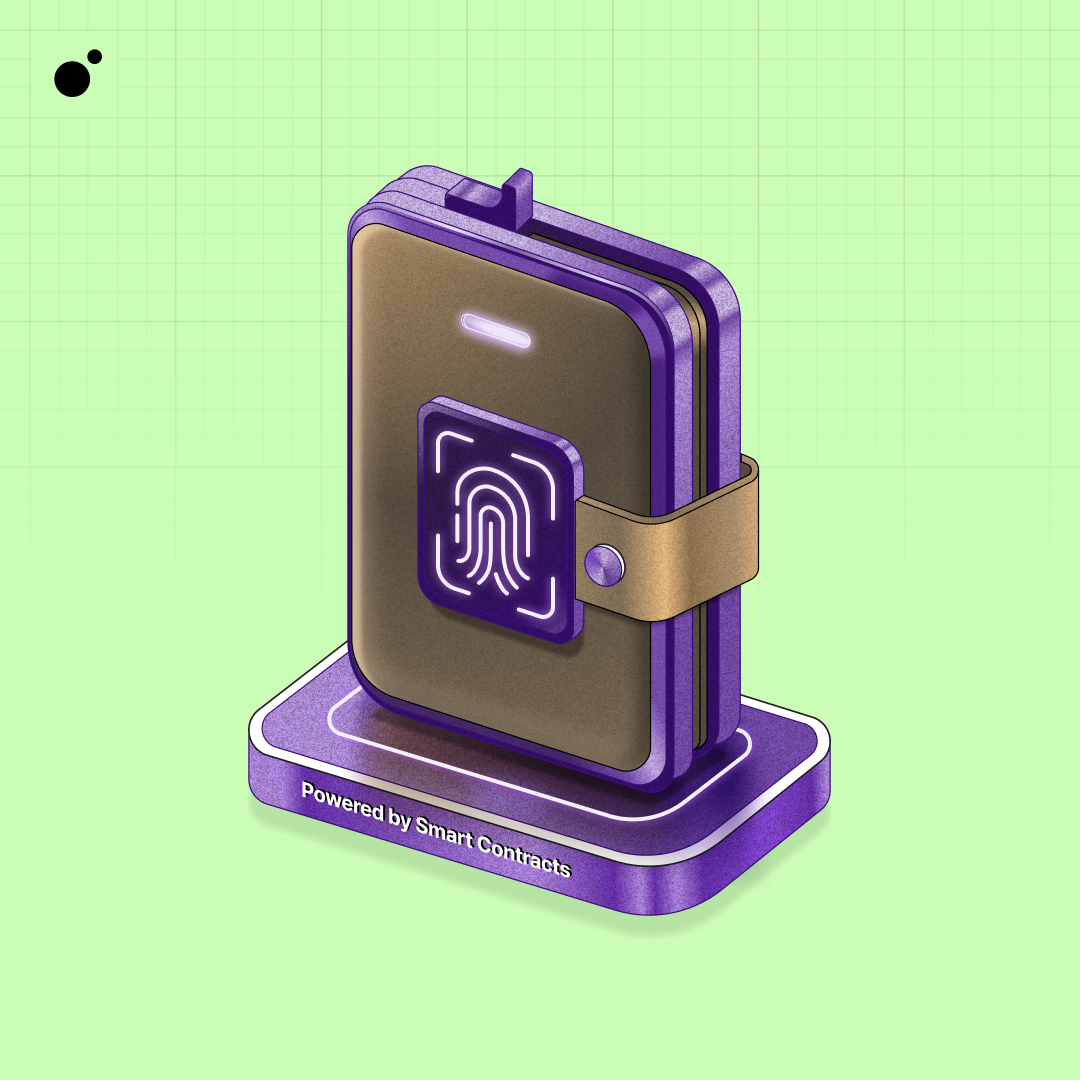
IN SHORT A smart wallet is a crypto wallet that runs as a smart contract on a blockchain rather than as a single private key. Because it is code, it can be programmed to recover access without a seed phrase, sponsor your gas fees, or batch multiple actions into one signature. |
What is a smart wallet?
A smart wallet is a crypto wallet whose account is a smart contract on the blockchain. That sentence does most of the work, but it is worth unpacking.
A traditional crypto wallet is built around a private key. The key is a long string of numbers and letters that proves you own a specific address. If you have the key, you have the funds. If you lose it, the funds are gone. The wallet app you use is a pretty interface for that key. Underneath, it does the same thing every Bitcoin or Ethereum wallet has done since the early days: hold a key, sign messages with it, broadcast transactions to the network. These are called externally owned accounts, or EOAs.
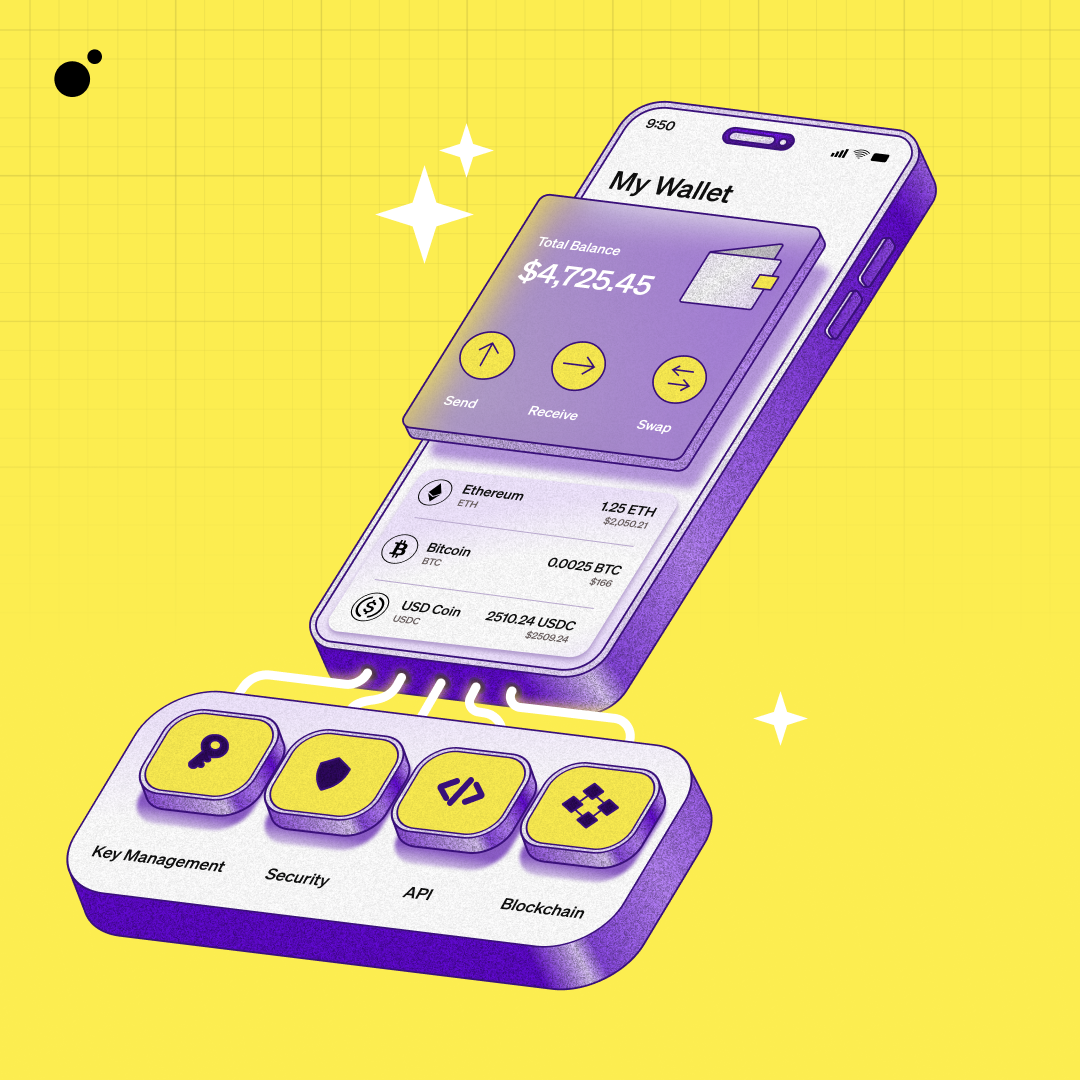
A smart wallet replaces the key with a contract. Your account becomes a small program that lives on-chain. The program decides who can sign for it, what counts as a valid signature, how the wallet recovers if you lose access, and even who pays the gas. Because it is code, the rules can be anything a developer can write, within the limits of the network.
You will sometimes see smart wallets called smart contract wallets, smart accounts, or account abstraction wallets. Same idea, slightly different emphasis. The shorthand most readers have settled on is smart wallet.
Smart wallet vs traditional crypto wallet
Traditional wallet (EOA) | Smart wallet | |
What controls the account | A single private key | A smart contract you can program |
Recovery if you lose access | Seed phrase or nothing | Passkey, social recovery, or hardware fallback |
Who pays gas | You, in the network's native token | You, the app, or a sponsor |
Multiple actions | One signature each | Many actions in one signature |
Signing method | Cryptographic key | Anything the contract accepts |
Account address | Fixed by the key | Fixed by the contract |
How smart wallets work
The technology breaks down into the contract that runs the account, the standard that gets it onto Ethereum, and an upgrade path for everyone already holding a regular wallet.
The smart contract layer
A smart wallet is a piece of code deployed to a blockchain. When you use the wallet, what actually happens is that you ask the contract to do something on your behalf, and the contract checks whether the request is allowed. The check can be as simple as "is this signed by the right key" or as complex as "has the user approved this kind of transaction in this time window from this device." The contract is the rulebook. The rulebook is yours to change.
Account abstraction and ERC-4337
Account abstraction is the umbrella term for the shift from EOAs to smart accounts. The word "abstraction" is doing technical work here: the rigid requirement that every Ethereum account be a key pair has been abstracted away.
For years, account abstraction was theoretical. In 2023, Ethereum activated ERC-4337, a standard that made smart accounts work on the existing network without changes to the protocol itself. ERC-4337 introduced a few new pieces, including bundlers (which package smart-account transactions and submit them on-chain) and paymasters (which can pay gas on the user's behalf). The Ethereum Foundation has a longer overview of account abstraction for anyone who wants to read deeper.
EIP-7702 and the upgrade path
If account abstraction is so good, why isn't every wallet a smart wallet already? The honest answer is migration cost. Hundreds of millions of EOAs are already in circulation. Asking everyone to move to a new account would have been disruptive.
In 2025, Ethereum's Pectra upgrade activated EIP-7702. The proposal lets an existing EOA temporarily act as a smart account during a transaction. You keep your address. You keep your seed phrase if you want it. You can opt into smart-wallet behavior for specific actions, like sponsoring gas or batching calls. It is a bridge, and it has changed the math on adoption. Wallet apps no longer have to ask users to migrate. They can offer smart features on the wallets users already have.
Why smart wallets matter for self-custody UX
Self-custody has always been the principle that makes crypto worth using. Your money, your keys, your responsibility. The trouble is that the responsibility part has historically meant memorizing twelve words, never losing your hardware device, and learning to read transaction data well enough not to sign the wrong thing. Smart wallets do not weaken self-custody. They redistribute the work it asks of you.
Recovery without seed phrases
The seed phrase is a cryptographic backup. It is also the single most common reason people lose their crypto. Lose the phrase, lose the wallet. Photograph the phrase, risk losing it to a cloud sync. There is no help desk.
Smart wallets can be configured to recover differently. Some use passkeys, the same Face ID and Touch ID standard your phone already uses for almost everything else. Lose your phone, restore your iCloud or Google account, and the passkey comes back with it. Others use social recovery, where you nominate a few trusted contacts (or a hardware key, or both) who can collectively help you regain access if you ever lose your device. The wallet contract checks that the recovery rules are satisfied and lets you back in. Your funds never moved.
Recovery without a seed phrase sounds small in the abstract. It is enormous if you have ever had to walk a friend through the panic of losing one.
Gas paid by apps, not users
Paymasters are the part of ERC-4337 that lets a third party pay gas on your behalf. The third party is usually the app you are using. A swap app can sponsor your fee so the trade feels free. A game can let you mint an item without ever holding the chain's native token.
This matters more than it sounds. New crypto users routinely buy a token, then discover they cannot move it because they need a different token to pay gas. The first transaction they make is often the one that explains why crypto is hard. Paymasters delete that first bad experience.
Many actions in one approval
A traditional wallet asks you to approve every action separately. Trade USDC for ETH, then stake the ETH, and you sign three or four transactions, each a separate approval. People stop reading the warnings after the second one, which is when mistakes happen.
Smart wallets can bundle a sequence into one signed message. The contract verifies the bundle, executes it atomically, and returns. If you swap crypto across chains on a smart wallet, what would have been four signatures becomes one. The cognitive load drops. So does the surface area for fat-finger errors.
Passkeys and biometric signing
Smart wallets can accept any signing method the contract is written to recognize. The most popular new option is the passkey, a credential stored in your device's secure enclave that you unlock with a fingerprint or face scan. No twelve words to memorize, no hardware fob, no browser extension. You sign in to a wallet the way you sign in to a banking app, with the difference that the keys never leave your device and no central server can be hacked to steal them.
This is the part that, in the long run, may matter most. Crypto adoption stalls every time the on-ramp asks normal people to learn a new security model. Passkeys do not ask them to learn anything.
The trade-offs of smart wallets
A smart wallet is still software, and software has costs. Here is where they show up.
Smart contract risk
A traditional wallet has one failure mode: lose the key. A smart wallet has more. The contract itself can have bugs. A bug in the wallet code is a bug in the wallet of every user who deployed that code. Reputable smart-wallet implementations are heavily audited and have been in production for years, but the risk is real and worth knowing about. If you use a smart wallet, prefer one whose contracts are open-source, audited by multiple firms, and battle-tested by other users with significant funds at stake.
Higher gas for first deployment
Deploying the contract that becomes your account costs gas. On Ethereum mainnet, that can be meaningful. On most Layer 2 networks, it is a few cents. Many smart wallets defer the deployment until your first real transaction, so the cost is folded in. EIP-7702 sidesteps the issue entirely by letting an EOA borrow smart-account behavior without deploying a new contract at all.
Cross-chain considerations
Your smart wallet's address is determined by the contract's deployment. The same contract code can be deployed at the same address on every EVM-compatible chain, but it is not automatic. Some smart wallets handle this for you. Others ask you to deploy per chain. If you move between networks often, ask before you commit. Non-EVM chains like Solana, Bitcoin, and Cosmos have different smart-account models, and not every smart-wallet provider supports all of them.
How to choose a smart wallet
There is no single right answer, but a few questions tend to surface the trade-offs.
Start with custody. A smart wallet should be self-custody, meaning you control the keys and the recovery method, not a service holding them for you. Some products marketed as "smart wallets" are custodial in disguise. Read carefully. If you want a wider look at wallet types, our guide on how to choose a crypto wallet walks through the decision.
Then look at chain support. If most of what you hold sits on Ethereum and a couple of Layer 2s, almost any smart wallet will work. If you hold across many ecosystems, the answer narrows.
Recovery options come next. Passkey-only is the convenient choice. The catch is that it locks you into a device ecosystem (Apple, Google, Microsoft). Social recovery gives you more flexibility, but only if you trust the contacts you nominate to be around and willing to help when you need them. Hardware-backed recovery is the most resilient. It is also the most setup-intensive. Mix and match if it suits your habits.
Audited contracts and an active development team are non-negotiable. A smart wallet abandoned by its team is a security liability dressed up as a feature.
Smart wallets and the future of crypto onboarding
For most of crypto's history, owning your own keys has been a binary trade. You either accepted the responsibility or you handed your funds to an exchange. Smart wallets soften the binary. You can hold your own keys in the form that matches how the rest of your digital life works, with the recovery options of a normal account and the sovereignty of a self-custodied one.
The industry is moving in this direction faster than most users have noticed. Wallet infrastructure projects, like the open wallet standard MoonPay launched in 2026, are working to make smart-account behavior portable across apps and chains. Layer 2 ecosystems are shipping native account abstraction so the experience is smooth from the first transaction. Newer crypto apps assume their users have smart accounts and design their flows around it.
The on-ramp is getting better because the on-ramp finally stopped pretending the seed phrase was an acceptable answer.
Frequently asked questions
What does a smart wallet do?
A smart wallet does what any crypto wallet does, which is hold assets, sign transactions, and interact with apps. It adds extra abilities baked in. Because the wallet is code, it can sponsor gas, batch transactions, recover without a seed phrase, and accept signatures from passkeys or hardware devices. The headline difference is that the rules of the wallet are programmable.
What's the difference between a smart wallet and a smart contract wallet?
These terms are usually interchangeable. Both refer to a wallet whose account is implemented as a smart contract instead of a private key. "Smart wallet" tends to be the consumer-facing label. "Smart contract wallet" and "smart account" are more common in technical documentation. The thing they describe is the same.
Are smart wallets self-custody?
Most are, but not all. A smart wallet is self-custody if you control the keys, the recovery method, and the underlying contract logic. Some products in the market use the language of smart wallets while still holding the keys themselves. Read the small print. If a service can freeze your funds without your involvement, it is custodial regardless of what it calls itself.
How do I recover a smart wallet if I lose my device?
It depends on the wallet. Passkey-based wallets recover when your phone or laptop account is restored. The passkey lives in a secure enclave that syncs with your device account. With social-recovery wallets, the contacts you nominated have to confirm a new device for you. Hardware-backed wallets recover from the hardware itself. Most smart wallets let you combine methods, so you can have a passkey for daily use and a hardware fallback for the worst case.
Is a smart wallet safer than a regular crypto wallet?
It depends on which threats you care about. A smart wallet removes the seed-phrase loss risk and adds smart-contract risk. For most users, the trade is favorable, because seed-phrase mistakes are the more common failure mode. For users holding very large balances, a hardware wallet, or a smart wallet using a hardware device as a co-signer, is still the gold standard.
Which chains support smart wallets?
Ethereum and most major EVM-compatible Layer 2 networks (Base, Arbitrum, Optimism, Polygon, and others) support ERC-4337 smart wallets. Some chains, like Starknet and zkSync, have account abstraction built in at the protocol level. Non-EVM chains have their own approaches, and not every smart-wallet product covers all of them.
What is account abstraction?
Account abstraction is the change that makes smart wallets possible. It removes the requirement that an Ethereum account has to be controlled by a single private key, allowing the account to be a smart contract instead. ERC-4337 and EIP-7702 are the two main standards that brought it into production.
Smart wallets do not change why self-custody matters. They change what taking it seriously costs you in time and effort. The sovereignty stays but the friction doesn’t have to.